
200 Smart Parcel Lockers Shipped to UAE and Chile
The timing of the underlying shipment event was not specified in the source material, but the reported export of 200 outdoor smart parcel lockers from Chengdu High-tech Zone to the UAE and Chile deserves attention as a compliance and market-access signal rather than as a routine shipment update. The combination of IEC 60529 IP55 protection certification, GCC/GSO explosion-compatibility pre-review, and 4G/5G remote management points to how certification, technical documentation, buyer requirements, and delivery planning are becoming more tightly linked for unmanned last-mile equipment entering overseas community logistics scenarios.
What has been confirmed in this shipment
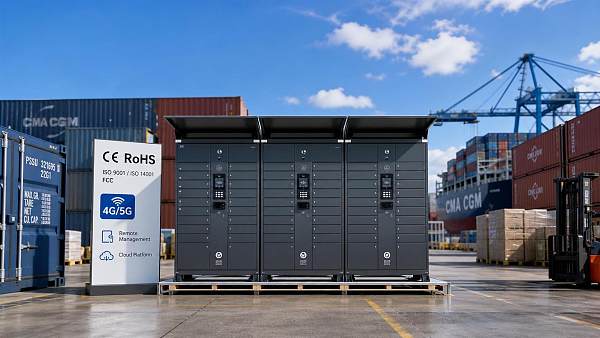
According to a report by National Business Daily on June 22, 2026, Chengdu Yuefan Innovation Technology, working with COSCO SHIPPING Holdings, completed the containerized export of the first 200 Outdoor Smart Parcel Lockers designed for high-temperature and high-humidity environments. The shipment destinations were Jebel Ali Free Zone in Dubai and the Port of San Antonio in Chile. The equipment had passed IEC 60529 IP55 protection certification and a GCC/GSO explosion-compatibility pre-review. It supports dual-mode 4G/5G remote management and was customized for high-frequency, low-density delivery scenarios in communities in the Middle East and Latin America. The order was jointly procured by local logistics operators and real estate groups.
Why this matters for trade and compliance workflows
Export equipment suppliers face a higher documentation burden
From an industry perspective, this case suggests that overseas delivery of unmanned parcel infrastructure is increasingly tied to demonstrable certification readiness and environment-specific specification alignment. For exporters and manufacturers, the impact is likely to appear first in product definition, bid documentation, conformity files, and pre-shipment verification, especially where buyers expect proof that equipment can operate in heat, humidity, and outdoor exposure conditions.
Certification and testing service providers may see earlier-stage involvement
Analysis shows that certification is not merely an end-stage formality in this type of transaction. Where IP protection and regional compatibility review are visible in the deal itself, testing bodies and compliance service providers may need to engage earlier in model evaluation, report preparation, and technical file review. What deserves closer attention is whether procurement processes increasingly treat such materials as entry requirements rather than supplementary documents.
Logistics and delivery partners must align shipment readiness with compliance status
For supply chain service providers, the transaction highlights the practical link between container export execution and conformity readiness. The relevant pressure point is not only transport scheduling, but whether the product, paperwork, and destination-market technical claims are aligned before shipment. That can affect booking preparation, customs-facing document consistency, and handover timing with local operators.
Buyers may tighten technical and after-sales expectations
For overseas purchasers such as logistics operators and property-related buyers, the visible combination of remote management capability and pre-reviewed compliance materials may influence how future tenders are written. Observably, purchasing decisions in this segment may pay closer attention to operating-condition adaptation, network management capability, and traceable compliance evidence, rather than hardware price alone.
Practical issues companies should track next
Watch how certification language is used in commercial documents
Companies participating in similar exports should pay close attention to how certification status, pre-review results, and technical claims are described in quotations, tender responses, contracts, and shipping files. Because the available information does not provide full execution details, it would be premature to assume a uniform market standard, but wording consistency will matter for compliance and delivery risk control.
Prepare technical files around operating conditions
What deserves closer attention is the need to align product specifications with actual service conditions such as outdoor placement, heat, humidity, and delivery frequency. In practice, that may affect test reports, product datasheets, installation requirements, maintenance manuals, and acceptance criteria used by overseas buyers and local project teams.
Check connectivity-related deliverables in advance
Because the shipped units support 4G/5G dual-mode remote management, exporters and integrators should closely review which technical documents, configuration materials, and support commitments are expected at delivery and commissioning stages. The current information does not confirm any specific telecom compliance outcome beyond the reported product features, so this remains an area for continued verification.
Link after-sales planning with traceability needs
Analysis shows that for smart outdoor delivery equipment, post-delivery service planning may become part of buyer evaluation earlier than before. Companies should therefore keep maintenance records, component traceability, inspection reports, and configuration archives organized in case local operators or property-side buyers require follow-up verification after deployment.
How to read the signal at this stage
Observably, this shipment is better understood as an execution signal showing that overseas buyers are placing visible weight on certification readiness, environmental adaptation, and remote operation capability when sourcing unmanned last-mile equipment. It is less appropriate, based on the currently available facts, to treat it as proof of a broad regulatory shift already finalized across all markets. Continued attention is still needed on how certification language, buyer specifications, and local implementation requirements evolve in actual tenders and deliveries.
A measured takeaway for the sector
From an industry perspective, the reported export indicates that cross-border sales of outdoor smart parcel infrastructure are becoming more dependent on the integration of product design, conformity review, and delivery execution. The clearest takeaway is not that the market has fully standardized, but that compliance-facing technical preparation is moving closer to the center of export competitiveness for this category.
Basis of this article and points requiring follow-up
This article is generated based on the user-provided news title, event timing, and event summary. For this type of development, commonly relevant source categories may include official announcements, releases from regulatory authorities, customs or trade administration information, industry association updates, standards organization documents, and reporting by established media outlets. No specific official source link was provided in the input, so any official documentation, detailed certification scope, procurement wording, and subsequent execution requirements still need ongoing verification. Further observation should focus on detailed compliance interpretation, certification enforcement practice, changes in tender documents, market feedback, and actual implementation by participating companies.
Have questions about this sector analysis, or seeking best practices specific to your niche? Drop us a line below and let the senior consultants at MHLS assist you.
We respect your privacy. Your information is strictly confidential.
Recommended News
 Physical Security Infrastructure Cost: Budgeting for Installation and MaintenanceUnmanned Terminal FellowUnderstand physical security infrastructure cost and build a smarter budget for installation, maintenance, and long-term ownership.
 Financial Facility Security: Choosing Vault Doors for Bank BranchesVault Structural ArchitectStrengthen financial facility security with the right bank vault door. Explore certification, installation, locking controls and maintenance before you buy.
 MACO Acquires Majority Stake in Fingerprint Access Provider ekeyProf. Elara SterlingMACO acquires a majority stake in ekey, bringing fingerprint access and door hardware closer together. Discover what the deal could mean for smart buildings.
 Physical Security System Engineering: From Risk Assessment to System DesignUnmanned Terminal FellowExplore physical security system engineering, from risk assessment to integrated design, procurement and testing. Build a safer, more resilient facility.
 Apple Home Collection Smart Lock and Other Accessories Open for Preorder November 13Biometric Auth ScientistApple Home Collection preorders open November 13, 2026. Explore the LG smart lock’s Matter and Aliro support and what buyers should verify before ordering.
 Choosing Servo-Driven Flap Barriers: Throughput, Safety and Access ControlAccess Control StrategistServo-driven flap barriers can balance throughput, safety and access control. Discover how to compare lanes, test performance and choose with confidence.
 Parcel Locker Network Pricing: Setup Costs, Fees and Contract TermsUnmanned Terminal FellowCompare parcel locker networks pricing, from setup costs and recurring fees to contract terms. Discover hidden charges and choose the right model.
 JR East Plans UWB Walk-Through Gates at 40 Stations in Spring 2028Access Control StrategistJR East plans UWB walk-through gates at 40 stations in spring 2028. Explore the rollout timeline and what suppliers should watch.
 Bank Vault Security Standards: UL and EN Ratings ExplainedVault Structural ArchitectExplore bank vault security standards and learn how UL 608 classes and EN 1143-1 grades differ, what they test, and how to verify certification before you buy.
 Mechanical Lock Hardware Prices: What Buyers Should Budget for Bulk OrdersMr. Gideon CrossMechanical lock hardware price is just the starting point. Discover what drives bulk-order costs and how to compare supplier quotes with confidence.
 IndexBox Forecasts Steady Global Security Keypad Market Growth Through 2035Dr. Valerius ThorneGlobal security keypad market growth is forecast at 3.3% annually through 2035. Explore the smart home and replacement trends shaping demand.
 Choosing an Infrared Safety Sensors Manufacturer: What Buyers Should CheckUnmanned Terminal FellowChoosing an infrared safety sensors manufacturer? Compare safety evidence, integration, environmental performance and lifecycle costs before you buy.











