
EU CE Rule Takes Effect for Smart Parcel Lockers
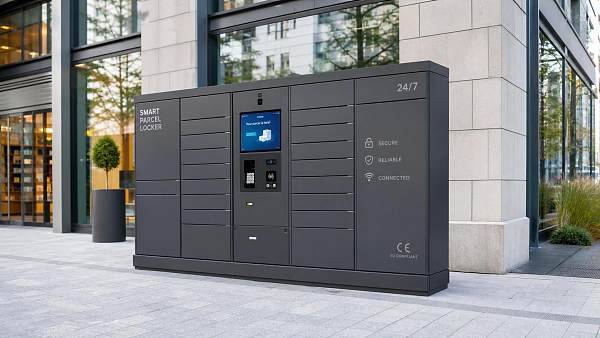
On August 1, 2026, the EU began enforcing EN 13031-2:2026 for outdoor smart parcel lockers deployed in public settings, tying market access more directly to CE compliance. The update matters not only to locker manufacturers, but also to exporters, importers, system integrators, procurement teams, and delivery network operators, because it combines physical anti-vandalism performance with connected security requirements in one compliance threshold and raises the risk of shipment rejection for products that do not meet it.
What the New Requirement Confirms
The confirmed change is that all outdoor smart parcel lockers intended for public deployment in the EU must, from August 1, 2026, comply with EN 13031-2:2026. Under the information provided, compliance now requires both physical anti-vandalism testing and cybersecurity assessment rather than only one of those dimensions.
The physical testing scope cited in the input includes pry-pressure resistance, drilling and cutting resistance, and hot-cutting resistance. The cybersecurity scope cited includes encrypted remote firmware updates, API access control, and localized data storage.
The standard is stated to be directly linked to CE marking compliance. Products that do not meet the requirement may be barred from entering the EU market and may also face customs return risk.
Where the Pressure Will Be Felt First
Product makers facing a dual compliance gate
From an industry perspective, manufacturers are likely to feel the most immediate impact because the requirement reaches both cabinet structure and connected system design. The affected business steps are product development, compliance testing preparation, technical documentation, and shipment readiness. What deserves closer attention is whether existing models marketed for public outdoor use can satisfy both the anti-vandalism and network security expectations at the same time.
Export and import teams working closer to customs risk
Direct trade businesses may be affected because the new requirement is linked to CE marking and market entry. The impact is likely to appear in order confirmation, pre-shipment review, customs documentation, and delivery timing. Observably, teams handling EU-bound shipments need to watch whether compliance evidence is complete before goods move, because the stated consequence of non-compliance includes being blocked from the EU market and possible return at customs.
Integrators and service operators checking deployment assumptions
Service providers and deployment partners may also be affected where public-site locker projects depend on hardware, software connectivity, and remote maintenance functions working together. The business impact is likely to fall on model selection, project acceptance conditions, and responsibility allocation between hardware and platform providers. What deserves closer attention is whether a locker that is mechanically robust still faces compliance issues if connected functions such as firmware update security or API controls are not aligned with the requirement.
Buyers and network operators revisiting procurement criteria
Procurement teams and end users operating parcel locker networks may need to reassess tender and sourcing criteria. The likely pressure points are supplier qualification, delivery commitments, and acceptance standards for public deployment in the EU. Analysis shows that purchasing decisions can no longer focus only on cabinet durability or deployment cost when the stated rule combines physical and cybersecurity conditions into the same compliance outcome.
What Companies Should Watch Now
Check whether current product definitions match the rule scope
Companies should first confirm whether their products fall within the described scope of outdoor smart parcel lockers for public deployment. This matters because the compliance consequence in the input is tied to access to the EU market, making scope judgment a practical issue rather than a purely legal one.
Review evidence for both hardware and connected functions
What deserves closer attention is the completeness of supporting materials across both testing areas. Based on the provided information, businesses should pay attention to how they document anti-vandalism performance as well as cybersecurity controls related to remote firmware encryption, API access management, and localized data storage.
Align shipment, documentation, and customer communication
For firms already supplying the EU, the practical issue is not only whether a product is designed to comply, but whether the relevant compliance status can be clearly communicated during ordering, export preparation, and customs handling. Observably, customer-facing and logistics-facing teams should be working from the same compliance position to reduce delivery disputes or unexpected return risk.
Keep watching for further clarification around implementation
Analysis shows that the current signal is already operational because an effective date and market consequence are stated. At the same time, companies should continue monitoring later clarifications, especially where implementation details, documentation expectations, or proof formats could affect lead time and acceptance in actual transactions.
How This Should Be Read by the Market
Observably, this is more than a narrow product update. The requirement brings physical resilience and connected security into the same compliance conversation for outdoor smart parcel lockers used in public settings. That does not by itself prove how quickly every market participant will adapt, but it does indicate that product qualification for the EU can no longer be treated as a purely mechanical or purely software matter.
It is more appropriate to understand this as a clear regulatory signal with immediate commercial consequences rather than a distant policy direction. The reason is straightforward: the effective date is specified, the compliance path is linked to CE marking, and the consequence of falling short is described in terms of market exclusion and customs return risk. Even so, some practical implications still require continued observation because the input does not provide further official implementation detail beyond the core requirement.
What This Update Means in Practical Terms
In practical terms, the August 1, 2026 enforcement of EN 13031-2:2026 signals that the EU is treating public outdoor smart parcel lockers as products that must prove both physical resistance and digital security in order to remain commercially viable in that market. For industry participants, the most reasonable reading at this stage is not to overstate the broader market outcome, but to recognize that compliance review, shipment preparation, and supplier evaluation for EU business now carry a more tightly defined threshold.
Basis of This Article
This article is based on the user-provided news title, event date, and event summary concerning the EU enforcement of EN 13031-2:2026 from August 1, 2026. In reporting and validating developments of this kind, the source types typically relevant may include official announcements, company disclosures, industry association updates, authoritative media reporting, and standards organization documents.
A specific official source link was not provided in the input, so further verification remains necessary. Continued attention should be paid to any later official clarification related to implementation details, compliance documentation expectations, and how the requirement is applied in actual EU market-entry and customs scenarios.
Have questions about this sector analysis, or seeking best practices specific to your niche? Drop us a line below and let the senior consultants at MHLS assist you.
We respect your privacy. Your information is strictly confidential.
Recommended News
 Physical Security Infrastructure Cost: Budgeting for Installation and MaintenanceUnmanned Terminal FellowUnderstand physical security infrastructure cost and build a smarter budget for installation, maintenance, and long-term ownership.
 Financial Facility Security: Choosing Vault Doors for Bank BranchesVault Structural ArchitectStrengthen financial facility security with the right bank vault door. Explore certification, installation, locking controls and maintenance before you buy.
 MACO Acquires Majority Stake in Fingerprint Access Provider ekeyProf. Elara SterlingMACO acquires a majority stake in ekey, bringing fingerprint access and door hardware closer together. Discover what the deal could mean for smart buildings.
 Physical Security System Engineering: From Risk Assessment to System DesignUnmanned Terminal FellowExplore physical security system engineering, from risk assessment to integrated design, procurement and testing. Build a safer, more resilient facility.
 Apple Home Collection Smart Lock and Other Accessories Open for Preorder November 13Biometric Auth ScientistApple Home Collection preorders open November 13, 2026. Explore the LG smart lock’s Matter and Aliro support and what buyers should verify before ordering.
 Choosing Servo-Driven Flap Barriers: Throughput, Safety and Access ControlAccess Control StrategistServo-driven flap barriers can balance throughput, safety and access control. Discover how to compare lanes, test performance and choose with confidence.
 Parcel Locker Network Pricing: Setup Costs, Fees and Contract TermsUnmanned Terminal FellowCompare parcel locker networks pricing, from setup costs and recurring fees to contract terms. Discover hidden charges and choose the right model.
 JR East Plans UWB Walk-Through Gates at 40 Stations in Spring 2028Access Control StrategistJR East plans UWB walk-through gates at 40 stations in spring 2028. Explore the rollout timeline and what suppliers should watch.
 Bank Vault Security Standards: UL and EN Ratings ExplainedVault Structural ArchitectExplore bank vault security standards and learn how UL 608 classes and EN 1143-1 grades differ, what they test, and how to verify certification before you buy.
 Mechanical Lock Hardware Prices: What Buyers Should Budget for Bulk OrdersMr. Gideon CrossMechanical lock hardware price is just the starting point. Discover what drives bulk-order costs and how to compare supplier quotes with confidence.
 IndexBox Forecasts Steady Global Security Keypad Market Growth Through 2035Dr. Valerius ThorneGlobal security keypad market growth is forecast at 3.3% annually through 2035. Explore the smart home and replacement trends shaping demand.
 Choosing an Infrared Safety Sensors Manufacturer: What Buyers Should CheckUnmanned Terminal FellowChoosing an infrared safety sensors manufacturer? Compare safety evidence, integration, environmental performance and lifecycle costs before you buy.











