
EU CE Update Tightens Rules for Smart Lockers
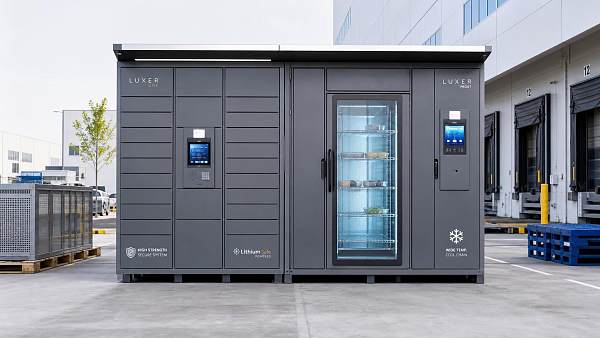
On July 31, 2026, the Official Journal of the European Union published amending Directive (EU) 2026/1428, introducing a stricter CE compliance threshold for Outdoor Smart Parcel Lockers and Refrigerated Smart Lockers entering the EU market. From October 1, 2026, these products must be certified under the updated EN 1865-2:2026 standard, with new requirements covering IK10 or higher impact resistance for metal enclosures, lithium battery thermal runaway containment verification, and operating reliability across -25C to 60C. For exporters, manufacturers, component buyers, and testing-related service providers, this is worth close attention because it directly touches product configuration, verification timing, and delivery planning.
What the New Requirement Formally Changes
The confirmed change is tied to an official EU regulatory action dated July 31, 2026. According to the provided event summary, amending Directive (EU) 2026/1428 makes compliance with EN 1865-2:2026 mandatory from October 1, 2026 for all Outdoor Smart Parcel Lockers and Refrigerated Smart Lockers entering the EU market.
The updated standard adds three clear compliance points: metal enclosure impact resistance at IK10 or above, verification of lithium battery thermal runaway containment, and reliability testing for operation in extreme temperatures from -25C to 60C. The provided information also states that the requirement directly affects Chinese exporters in product design, bill of materials selection, and third-party testing schedules.
Where the Pressure Will Appear First
Export-facing product suppliers may need to reassess configuration readiness
From an industry perspective, companies shipping smart lockers into the EU are likely to feel the impact most directly because market entry is now tied to the new certification basis. The most immediate pressure points are likely to be enclosure strength, battery-related safety design, and the ability of the full unit to maintain stable operation across the specified temperature range.
Manufacturing and sourcing teams may see the issue move into BOM decisions
Analysis shows that this is not only a documentation issue. Because the new requirement explicitly covers impact resistance, thermal runaway containment, and wide-temperature reliability, procurement and engineering teams may need to pay closer attention to whether current material and component selections still support compliance. In practice, the effect is likely to show up in BOM review, sample validation, and internal sign-off timing.
Testing and certification-linked service providers may face scheduling pressure
What deserves closer attention is the short gap between the publication date and the October 1, 2026 enforcement point. For third-party testing bodies and companies relying on them, the risk may center on queue management, test preparation completeness, and possible delays in shipment planning if certification work is not aligned early enough.
EU buyers and project operators may pay more attention to compliance evidence
For procurement-side participants, the regulatory change may shift attention toward technical files, certification status, and delivery commitments. Even where product demand remains unchanged, the compliance path behind each model may become a more visible part of supplier evaluation and project communication.
What Companies Should Track Now
Check whether affected models fall within the mandatory scope
Companies dealing with Outdoor Smart Parcel Lockers and Refrigerated Smart Lockers should first confirm which existing and planned products are intended for EU market entry after October 1, 2026. The practical issue is not abstract policy monitoring, but whether each model in the export pipeline is tied to the updated certification requirement.
Review design and materials against the new test points
The provided information already indicates direct implications for product design and BOM selection. Companies therefore need to focus on whether enclosure structures, battery-related protection arrangements, and temperature-related reliability assumptions are still aligned with the new EN 1865-2:2026 testing basis.
Rebuild testing timelines around certification capacity
Observably, the testing schedule itself may become a commercial issue. Where certification depends on external labs or third-party service providers, companies should pay close attention to booking windows, sample readiness, and the downstream effect on delivery dates and contract execution.
Keep customer communication tied to verifiable compliance status
For sales, account management, and project coordination teams, one practical point is to separate confirmed certification status from internal preparation status. This matters because the policy signal and actual shipment readiness are not the same thing, and customers may need clear updates on product scope, expected testing progress, and documentation availability.
Why This Looks Like More Than a Routine Update
This section is an editorial observation. Analysis shows that the change should not be read only as a narrow paperwork adjustment. The newly specified test areas point to a higher compliance emphasis on physical protection, battery-related safety, and environmental reliability for smart locker products entering the EU market.
At the same time, it is more appropriate to understand this as a confirmed regulatory shift with ongoing operational implications, rather than a fully settled market outcome. The rule itself is clear in the provided information, but the extent of its effect on design cycles, sourcing choices, and testing lead times still deserves continued attention from the industry.
How the Industry May Need to Frame This Development
In practical terms, this update is best understood as an immediate compliance requirement with broader supply-chain consequences. It does not by itself prove a wider restructuring of the market, but it does signal that technical access conditions for certain smart locker products in the EU are becoming more specific and more test-driven.
A neutral reading is that the most important issue right now is execution: identifying affected products, matching designs and BOMs to the new standard, and avoiding certification bottlenecks before shipment. For industry participants, this is less a topic for broad speculation than a matter of near-term operational discipline and continued regulatory tracking.
Basis of This Article and What Still Needs Verification
This article is based on the user-provided news title, event date, and event summary concerning the July 31, 2026 EU regulatory update for smart lockers. For this type of industry development, commonly relevant source categories may include official government or regulatory notices, company disclosures, industry association updates, authoritative media coverage, and standard-setting documents.
No specific official source link was provided in the input, so the exact document path should still be continuously verified in follow-up tracking. Areas worth monitoring next include any further official clarification on implementation language, standard application details, and practical certification arrangements affecting product launch and delivery schedules.
Have questions about this sector analysis, or seeking best practices specific to your niche? Drop us a line below and let the senior consultants at MHLS assist you.
We respect your privacy. Your information is strictly confidential.
Recommended News
 Parcel Locker Network Pricing: Setup Costs, Fees and Contract TermsUnmanned Terminal FellowCompare parcel locker networks pricing, from setup costs and recurring fees to contract terms. Discover hidden charges and choose the right model.
 JR East Plans UWB Walk-Through Gates at 40 Stations in Spring 2028Access Control StrategistJR East plans UWB walk-through gates at 40 stations in spring 2028. Explore the rollout timeline and what suppliers should watch.
 Bank Vault Security Standards: UL and EN Ratings ExplainedVault Structural ArchitectExplore bank vault security standards and learn how UL 608 classes and EN 1143-1 grades differ, what they test, and how to verify certification before you buy.
 Mechanical Lock Hardware Prices: What Buyers Should Budget for Bulk OrdersMr. Gideon CrossMechanical lock hardware price is just the starting point. Discover what drives bulk-order costs and how to compare supplier quotes with confidence.
 IndexBox Forecasts Steady Global Security Keypad Market Growth Through 2035Dr. Valerius ThorneGlobal security keypad market growth is forecast at 3.3% annually through 2035. Explore the smart home and replacement trends shaping demand.
 Choosing an Infrared Safety Sensors Manufacturer: What Buyers Should CheckUnmanned Terminal FellowChoosing an infrared safety sensors manufacturer? Compare safety evidence, integration, environmental performance and lifecycle costs before you buy.
 Choosing a Security Material Testing Service: What to Check for Lock and Safe MaterialsProf. Elara SterlingChoose a security material testing service with confidence. Learn what to check for lock and safe materials, from attack methods and accreditation to reliable reports.
 How Precision Anti-Pick Lock Cylinders Resist ManipulationSecurity Metallurgy ExpertDiscover how precision anti-pick lock technology resists manipulation, and learn what to check when comparing security features, test evidence, and everyday reliability.
 Dermalog Joins NIST FastCAP Program for Contactless Fingerprint TestingProf. Elara SterlingDermalog joins the NIST FastCAP program for contactless fingerprint testing. Discover what this means for biometric identification and digital identity.
 Choosing Security Export Compliance Services: What Providers Should CoverMr. Gideon CrossSecurity export compliance services can help prevent costly delays. Discover what to look for in classification, licensing, screening, and documentation.
 European Security Compliance Standards for Safes: EN 1143-1 vs EN 14450Dr. Valerius ThorneExplore security compliance standards Europe buyers need to know. Compare EN 1143-1 and EN 14450 to choose the right safe with confidence.
 HID Global Acquires inepro ID to Expand RFID and BLE Access SolutionsUnmanned Terminal FellowHID Global acquires inepro ID to expand RFID and BLE access solutions for printers, smart lockers and shared devices. Explore what the deal could mean for your organization.











