
FBX Surge Extends Smart Locker Export Lead Times
The timing of the broader market impact is not fully specified in the source input, but the reported price move is clear: Freightos Baltic Index (FBX) data shows that Asia-Europe container rates jumped 28% in a single week on July 12, 2026. For the Outdoor Smart Parcel Lockers segment, this is already becoming a practical delivery issue rather than only a freight cost story, with exporters, overseas distributors, and European buyers needing to watch how shipping disruption is now affecting lead times and fulfillment planning.
What has been confirmed so far
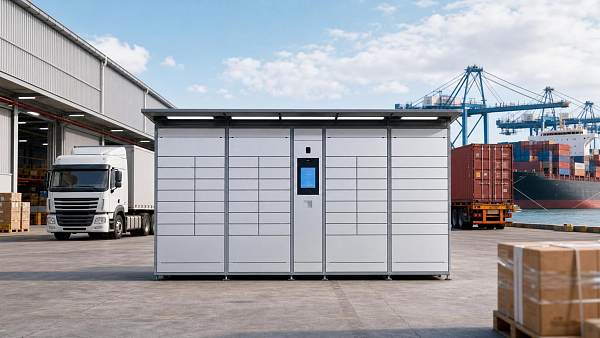
According to the provided information, the sharp increase in Asia-Europe container freight rates was linked to the normalization of Red Sea rerouting and higher Suez Canal transit charges. The impact has already reached the export side of Outdoor Smart Parcel Lockers. Feedback from leading manufacturers indicates that average lead times for European orders have extended from six weeks to around nine to eleven weeks. The same input also states that some customers have been pushed to shift toward a Southeast Asia assembly model combined with local warehousing and distribution.
Where the pressure is likely to show first
Export manufacturers face a delivery-cycle problem
From an industry perspective, manufacturers are likely to feel the impact first in production scheduling, shipment booking, and customer delivery commitments. The key issue is not only higher freight expense, but the fact that longer transit and export cycles can disrupt order planning for Europe-bound projects.
Distributors may have to rebalance inventory timing
Overseas distributors are likely to be affected through inventory coverage and replenishment timing. Analysis shows that when lead times move from six weeks to nine to eleven weeks, the timing of Q3 stock decisions becomes more sensitive, especially for businesses relying on imported finished units rather than local assembly or buffered warehouse stock.
Buyers and project-side customers may see fulfillment risk rise
For buyers, the main exposure is in delivery predictability. Observably, longer export lead times can affect installation schedules, rollout sequencing, and procurement windows for Outdoor Smart Parcel Lockers in Europe, even when product demand itself has not changed.
Supply chain service providers may need to adjust routing and execution
Logistics and fulfillment service providers are also part of the affected chain. What deserves closer attention is how routing changes, port handling, and onward local distribution may become more important in keeping delivery commitments, particularly when customers are already exploring Southeast Asia assembly plus local warehousing models.
What businesses should focus on now
Locking in Q3 inventory earlier
Based on the provided information, early inventory locking is one of the clearest immediate actions for overseas distributors. The practical issue is whether current ordering cycles still match the longer lead-time reality now reported by manufacturers.
Testing the feasibility of localized assembly
The input specifically notes that some customers have shifted toward Southeast Asia assembly combined with local warehousing and distribution. Analysis shows that businesses evaluating this route should focus on operational feasibility rather than treat it as a universal solution, because the immediate value lies in reducing export-cycle pressure and improving delivery flexibility.
Rechecking supplier commitments and delivery communication
For exporters and buyers, a near-term priority is to review promised lead times, shipping assumptions, and customer communication. Where orders were previously structured around a six-week expectation, the shift to nine to eleven weeks changes how delivery commitments should be discussed and documented.
Separating freight volatility from structural planning decisions
Observably, one week of sharp freight movement does not automatically define a permanent market structure. Even so, companies should distinguish between short-term freight spikes and operating decisions that require longer preparation, such as warehouse planning, assembly location choices, and order-cycle redesign.
Why this matters beyond one freight spike
Analysis shows that this development should not be read only as a transport cost increase. In the Outdoor Smart Parcel Lockers business, the more important signal is that logistics volatility is now changing delivery models and customer behavior. It is more appropriate to understand this as an operational warning sign: freight pricing pressure has already started to affect lead-time expectations and sourcing arrangements, but the full market effect still needs continued observation.
How to read the signal at this stage
At this point, the clearest industry meaning is that shipping disruption on the Asia-Europe lane is no longer confined to freight budgeting. It is beginning to reshape delivery timelines for Outdoor Smart Parcel Lockers and may influence how exporters, distributors, and buyers organize inventory and fulfillment. A balanced reading is that this is both an immediate short-term disruption and a possible longer-term supply chain signal, but not yet a basis for broad certainty about lasting market outcomes.
Basis of this article and what still needs verification
This article is based on the user-provided news title, the note that the event timing was not clearly specified in the source text, and the supplied event summary. For this type of industry update, relevant source categories would typically include official announcements, company statements, industry association information, authoritative media reporting, and standard-setting or logistics-related institutional documents. No specific official source link was provided in the input, so the precise source trail still requires ongoing verification. Areas that merit continued attention include whether freight conditions persist, whether lead times continue to lengthen, and whether localized assembly and local warehousing become more widely adopted in this product segment.
Have questions about this sector analysis, or seeking best practices specific to your niche? Drop us a line below and let the senior consultants at MHLS assist you.
We respect your privacy. Your information is strictly confidential.
Recommended News
 Parcel Locker Network Pricing: Setup Costs, Fees and Contract TermsUnmanned Terminal FellowCompare parcel locker networks pricing, from setup costs and recurring fees to contract terms. Discover hidden charges and choose the right model.
 JR East Plans UWB Walk-Through Gates at 40 Stations in Spring 2028Access Control StrategistJR East plans UWB walk-through gates at 40 stations in spring 2028. Explore the rollout timeline and what suppliers should watch.
 Bank Vault Security Standards: UL and EN Ratings ExplainedVault Structural ArchitectExplore bank vault security standards and learn how UL 608 classes and EN 1143-1 grades differ, what they test, and how to verify certification before you buy.
 Mechanical Lock Hardware Prices: What Buyers Should Budget for Bulk OrdersMr. Gideon CrossMechanical lock hardware price is just the starting point. Discover what drives bulk-order costs and how to compare supplier quotes with confidence.
 IndexBox Forecasts Steady Global Security Keypad Market Growth Through 2035Dr. Valerius ThorneGlobal security keypad market growth is forecast at 3.3% annually through 2035. Explore the smart home and replacement trends shaping demand.
 Choosing an Infrared Safety Sensors Manufacturer: What Buyers Should CheckUnmanned Terminal FellowChoosing an infrared safety sensors manufacturer? Compare safety evidence, integration, environmental performance and lifecycle costs before you buy.
 Choosing a Security Material Testing Service: What to Check for Lock and Safe MaterialsProf. Elara SterlingChoose a security material testing service with confidence. Learn what to check for lock and safe materials, from attack methods and accreditation to reliable reports.
 How Precision Anti-Pick Lock Cylinders Resist ManipulationSecurity Metallurgy ExpertDiscover how precision anti-pick lock technology resists manipulation, and learn what to check when comparing security features, test evidence, and everyday reliability.
 Dermalog Joins NIST FastCAP Program for Contactless Fingerprint TestingProf. Elara SterlingDermalog joins the NIST FastCAP program for contactless fingerprint testing. Discover what this means for biometric identification and digital identity.
 Choosing Security Export Compliance Services: What Providers Should CoverMr. Gideon CrossSecurity export compliance services can help prevent costly delays. Discover what to look for in classification, licensing, screening, and documentation.
 European Security Compliance Standards for Safes: EN 1143-1 vs EN 14450Dr. Valerius ThorneExplore security compliance standards Europe buyers need to know. Compare EN 1143-1 and EN 14450 to choose the right safe with confidence.
 HID Global Acquires inepro ID to Expand RFID and BLE Access SolutionsUnmanned Terminal FellowHID Global acquires inepro ID to expand RFID and BLE access solutions for printers, smart lockers and shared devices. Explore what the deal could mean for your organization.











