
How Can Locker Operators Reduce Package Loss Claims After Vandalism?
How Can Locker Operators Reduce Package Loss Claims After Vandalism?
Introduction: How can locker operators reduce package loss claims after vandalism? The answer starts with an immediate, evidence-based response that verifies losses, protects customers, and restores operational confidence.
Vandalized parcel lockers create more than repair costs. They can trigger customer complaints, carrier disputes, insurance notifications, fraudulent claims, service interruptions, and reputational damage across an operator's network.
Operators reduce exposure by connecting physical hardening, live monitoring, parcel-chain evidence, disciplined incident handling, and transparent reimbursement rules into one coordinated loss-control program.
The objective is not to deny legitimate customers compensation. It is to identify actual losses quickly, preserve recoverable evidence, prevent repeat attacks, and settle validated claims consistently.
Start With a Secure Incident Response Process
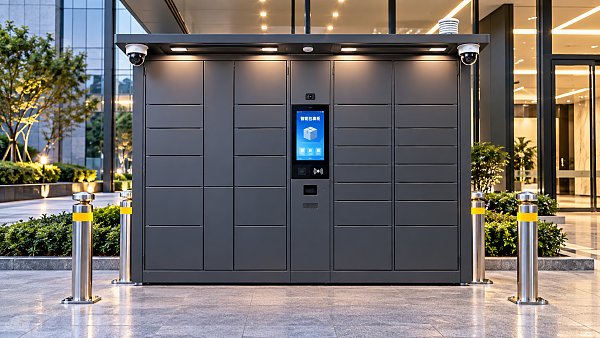
The first hours after vandalism are decisive. A slow or inconsistent response allows evidence to disappear, increases uncertainty, and makes every reported package loss harder to verify.
Every locker location should have a written incident playbook covering detection, remote assessment, site isolation, evidence preservation, customer notification, carrier communication, repair authorization, and claim review responsibilities.
When an alarm, camera alert, courier report, or customer complaint indicates vandalism, operators should immediately place affected compartments into an unavailable status through the locker management platform.
Remote suspension prevents additional collections, deposits, or door openings while operators determine whether the attack affected one compartment, a locker bank, network equipment, or the entire site.
Record the exact detection time, incident reporter, locker identification number, compartment numbers, active parcel count, access events, and system connectivity status before making physical repairs.
Technicians should avoid resetting controllers, clearing logs, replacing storage devices, or moving damaged doors before authorized personnel have captured the required forensic information.
Where practical, dispatch a trained field responder rather than only a repair contractor. Their role is to document conditions, preserve evidence, protect parcels, and coordinate secure recovery.
Photographs should show the full locker installation, surrounding approach routes, damaged components, forced-entry points, exposed parcels, serial numbers, and any signs of attempted tampering.
Use consistent image naming linked to the incident identifier, date, time, locker location, and compartment. This small discipline makes insurer, police, and carrier reviews substantially easier.
Operators should also log weather conditions, lighting failures, nearby construction, access obstructions, and visible surveillance coverage, because these factors may explain vulnerabilities or evidence gaps.
Establish What Was Actually Lost Before Paying Claims
A damaged locker does not automatically mean every stored parcel was stolen. Claims decisions should rely on parcel-level evidence rather than assumptions based only on visible damage.
Begin by producing an immutable inventory of all parcels assigned to affected compartments at the time of the suspected intrusion or equipment failure.
The inventory should include parcel identifier, carrier, delivery timestamp, compartment assignment, recipient notification time, pickup code status, door-opening events, and any subsequent collection record.
Compare the locker platform records with carrier scans, delivery photographs, recipient messages, and retailer order data. Differences often reveal whether a parcel was deposited, collected, relocated, or never delivered.
Door-open logs are especially valuable when paired with user authentication records. They can distinguish forced physical entry from a normal pickup completed shortly before vandalism occurred.
For electronically controlled lockers, preserve controller audit logs, application programming interface records, mobile credential events, one-time code issuance, remote unlock commands, and administrator access activity.
Logs should be exported promptly into protected storage. A later dispute may challenge whether the data was altered, overwritten, or incomplete after technicians restored the locker.
Operators should classify each parcel as confirmed stolen, confirmed collected, recovered intact, delivery unconfirmed, potentially compromised, or pending evidence. This creates disciplined and defensible claim handling.
Do not ask customers to prove every detail before offering support. Instead, explain what evidence is being reviewed, provide a realistic response timeline, and request confirmation where needed.
For high-value parcels, contact the carrier and retailer immediately. Their records may include declared value, signature requirements, product serial numbers, delivery exceptions, and shipment protection conditions.
A clear evidence matrix helps claims teams make similar decisions across locations. It should specify which evidence is mandatory, supportive, unavailable, or contradictory for each claim category.
Use Video, Access Logs, and Sensors as One Evidence Chain
Video footage is useful only when it connects reliably to locker events. Cameras, access logs, alarm data, and parcel records should share synchronized time sources.
Time drift between a camera recorder and locker controller can make a valid claim appear uncertain. Network time protocol monitoring should therefore be part of routine maintenance.
Cover the locker frontage, side access areas, service panels, rear maintenance zones, and likely approach routes. Camera placement should identify actions without unnecessarily capturing adjacent private spaces.
Higher resolution alone does not solve evidence problems. Operators need suitable night performance, correct viewing angles, retained footage, protected recording hardware, and a process for rapid export.
Link incident timestamps to video clips from before, during, and after the suspected event. Pre-incident footage can show parcel deposits, suspicious activity, or earlier tampering attempts.
Door position sensors can identify abnormal openings, repeated bounce events, prolonged open doors, or doors opened outside expected collection periods. These signals improve forensic interpretation considerably.
Vibration, tilt, enclosure-open, power-loss, and communication-loss sensors add useful context. However, they should trigger prioritized workflows rather than overwhelming operators with unmanageable false alarms.
Access logs should distinguish customer pickups, courier deliveries, maintenance visits, remote support sessions, emergency overrides, and failed authentication attempts. Generic event labels weaken investigations.
For shared sites, coordinate with property managers for access to building cameras, gate records, concierge logs, or parking footage. Relevant evidence may exist beyond the locker itself.
Retention periods should reflect claim timelines and local requirements. If disputes commonly arise weeks later, retaining footage for only a few days leaves operators exposed.
Protect privacy through role-based access, documented export approvals, audit trails, and retention policies. Evidence systems should support accountability without creating uncontrolled surveillance risks.
Harden Locker Hardware Against Repeat Vandalism
Incident response limits claim severity, but physical resilience reduces the number of incidents that generate claims. Operators should investigate the attack method before choosing upgrades.
Forced door attacks may indicate weak hinges, thin panels, inadequate frame reinforcement, exposed fasteners, or latch mechanisms unable to resist prying and impact loads.
Service-panel breaches can expose controllers, power supplies, network equipment, and emergency release components. These areas require the same security attention as parcel compartment doors.
Specify compartment doors with anti-pry edges, reinforced hinges, protected lock interfaces, concealed fasteners, and durable frames designed to resist common leverage tools.
Electronic locks should include monitored bolt position, attack-resistant housings, mechanical override protection, and failure behavior that does not create uncontrolled access during power disruptions.
For high-risk locations, separate the controller enclosure from public-facing compartments. A protected, alarmed technical zone makes sabotage more difficult and reduces single-point failures.
Anchor locker banks correctly to prepared foundations or structural surfaces. Poor anchoring allows attackers to tilt, pull, or deform the whole installation despite strong individual doors.
Consider site-specific barriers such as bollards, protective canopies, controlled entry doors, improved lighting, or camera-visible approaches. These measures can deter attacks before physical contact occurs.
Do not treat hardware specifications as a one-time procurement exercise. Review failure patterns after incidents and update standards according to observed attack techniques and operating environments.
Suppliers should provide test data, material details, lock cycle information, repair procedures, spare-part availability, and evidence that components remain secure after repeated outdoor exposure.
Make Customer Communication Part of Claim Control
Customers usually judge the operator by communication speed before they judge the final claim outcome. Silence encourages repeated contacts, social media escalation, and unnecessary chargeback attempts.
Send an initial notification promptly when an incident may affect a recipient's parcel. State that the locker is secured, the parcel status is under review, and updates will follow.
Avoid language that prematurely admits liability or assumes theft. Use factual wording while investigators confirm whether the parcel remains secure, was collected, or requires replacement.
Give customers a single support channel and case reference. Fragmented communications across carriers, retailers, property managers, and locker support teams create contradictory records and frustration.
For confirmed losses, explain the next step clearly. Depending on commercial arrangements, this may involve the retailer, carrier, insurer, or operator providing replacement, refund, or reimbursement.
Publish reasonable documentation requirements for exceptional cases, especially high-value items. Requirements should be proportionate and should not delay obvious, well-supported claims without cause.
Track claim turnaround time, customer contacts per incident, reopened cases, and escalation rates. These indicators expose process failures that a simple count of vandalism events may miss.
Consistent customer treatment also reduces fraud incentives. When claim decisions are transparent, fast, and evidence-based, opportunistic claimants have fewer gaps to exploit.
Coordinate Carriers, Retailers, Insurers, and Property Owners
Package loss responsibility may be divided across several parties. Operators need contractual clarity before an incident, not after a customer reports a missing parcel.
Service agreements should define custody transfer points, evidence-sharing duties, notification timelines, claim ownership, reimbursement limits, and escalation contacts for each carrier or retail partner.
Carriers should provide reliable delivery confirmation data, including scan events, route information, compartment assignment, and delivery photographs where applicable. Incomplete deposits undermine later reviews.
Retailers need a defined process for replacing customer orders while investigations continue. Customers should not be forced to navigate commercial arrangements they cannot reasonably understand.
Insurers may require specific evidence, incident reporting periods, damage photographs, police reports, asset values, repair estimates, and loss inventories. Build these requirements into the playbook.
Property owners and facility managers may control lighting, access routes, landscaping, camera infrastructure, and emergency response. Their cooperation can materially reduce recurrence at vulnerable sites.
Review insurance deductibles against incident patterns. A low-value recurring vandalism problem may justify operational investment even when individual claims fall below formal insurance thresholds.
After major incidents, conduct a joint review with stakeholders. Focus on facts, response timing, evidence gaps, costs, repeat risks, and practical corrective actions instead of blame.
Measure the Financial Case for Security Improvements
Locker security spending should be evaluated through total loss exposure, not only the purchase price of stronger doors, cameras, alarms, or monitoring services.
Calculate direct costs including parcel reimbursement, repair labor, replacement components, emergency visits, site cleanup, temporary storage, customer support, insurance deductibles, and police coordination.
Include indirect costs such as reduced locker availability, carrier dissatisfaction, lost site contracts, negative reviews, increased call-center volume, and management time spent resolving disputes.
Segment results by site, time, locker model, attack method, parcel value, neighborhood conditions, and repeat frequency. A small number of locations may create most of the loss.
Prioritize upgrades where expected loss reduction exceeds the combined cost of installation, maintenance, monitoring, downtime, and operational complexity over the equipment's useful life.
A pilot program can validate assumptions. Compare incident rates, verified losses, response times, repair costs, and customer claim outcomes before and after targeted improvements.
Report verified package loss separately from unverified claims. This distinction gives executives a clearer view of actual exposure and prevents misleading conclusions from raw complaint volumes.
Useful dashboard measures include vandalism incidents per thousand parcels, confirmed-loss rate, average claim resolution time, recovery rate, repeat-site rate, and repair-related downtime.
Build a Repeatable Post-Vandalism Operating Model
The strongest approach combines prevention and recovery. Hardware reduces attack opportunity, while evidence systems and trained workflows reduce uncertainty after an attack occurs.
Create a cross-functional incident owner with authority to coordinate operations, security, customer care, technology, suppliers, carriers, insurers, and property stakeholders during serious events.
Run tabletop exercises using realistic scenarios, including forced compartments, controller sabotage, network outages, false customer claims, mass-site disruption, and incomplete video evidence.
Exercises reveal whether staff can locate evidence, secure parcels, notify partners, protect privacy, and make customer decisions under pressure. Written procedures alone do not prove readiness.
Review each incident for root causes and corrective actions. Close the loop by assigning owners, deadlines, validation criteria, and follow-up checks rather than recording lessons without change.
Operators should also maintain a secure alternative parcel-handling method. Temporary relocation, controlled manual retrieval, or nearby backup lockers can reduce customer disruption during repairs.
As networks grow, standardize configurations, event labels, evidence retention, technician training, and supplier requirements. Consistency makes cross-site claims analysis faster and more credible.
Conclusion
Locker operators reduce package loss claims after vandalism by proving what happened quickly, protecting remaining parcels, communicating clearly, and preventing the same weakness from recurring.
The most effective programs connect tamper-resistant locker design with synchronized logs, usable video, disciplined incident workflows, parcel-level verification, and accountable commercial partnerships.
When operators can separate confirmed losses from uncertainty, they improve customer outcomes, reduce avoidable payouts, strengthen insurer discussions, and make better security investments across their locker estates.
Have questions about this sector analysis, or seeking best practices specific to your niche? Drop us a line below and let the senior consultants at MHLS assist you.
We respect your privacy. Your information is strictly confidential.
Recommended News
 Financial Facility Security: Choosing Vault Doors for Bank BranchesVault Structural ArchitectStrengthen financial facility security with the right bank vault door. Explore certification, installation, locking controls and maintenance before you buy.
 MACO Acquires Majority Stake in Fingerprint Access Provider ekeyProf. Elara SterlingMACO acquires a majority stake in ekey, bringing fingerprint access and door hardware closer together. Discover what the deal could mean for smart buildings.
 Physical Security System Engineering: From Risk Assessment to System DesignUnmanned Terminal FellowExplore physical security system engineering, from risk assessment to integrated design, procurement and testing. Build a safer, more resilient facility.
 Apple Home Collection Smart Lock and Other Accessories Open for Preorder November 13Biometric Auth ScientistApple Home Collection preorders open November 13, 2026. Explore the LG smart lock’s Matter and Aliro support and what buyers should verify before ordering.
 Choosing Servo-Driven Flap Barriers: Throughput, Safety and Access ControlAccess Control StrategistServo-driven flap barriers can balance throughput, safety and access control. Discover how to compare lanes, test performance and choose with confidence.
 Parcel Locker Network Pricing: Setup Costs, Fees and Contract TermsUnmanned Terminal FellowCompare parcel locker networks pricing, from setup costs and recurring fees to contract terms. Discover hidden charges and choose the right model.
 JR East Plans UWB Walk-Through Gates at 40 Stations in Spring 2028Access Control StrategistJR East plans UWB walk-through gates at 40 stations in spring 2028. Explore the rollout timeline and what suppliers should watch.
 Bank Vault Security Standards: UL and EN Ratings ExplainedVault Structural ArchitectExplore bank vault security standards and learn how UL 608 classes and EN 1143-1 grades differ, what they test, and how to verify certification before you buy.
 Mechanical Lock Hardware Prices: What Buyers Should Budget for Bulk OrdersMr. Gideon CrossMechanical lock hardware price is just the starting point. Discover what drives bulk-order costs and how to compare supplier quotes with confidence.
 IndexBox Forecasts Steady Global Security Keypad Market Growth Through 2035Dr. Valerius ThorneGlobal security keypad market growth is forecast at 3.3% annually through 2035. Explore the smart home and replacement trends shaping demand.
 Choosing an Infrared Safety Sensors Manufacturer: What Buyers Should CheckUnmanned Terminal FellowChoosing an infrared safety sensors manufacturer? Compare safety evidence, integration, environmental performance and lifecycle costs before you buy.
 Choosing a Security Material Testing Service: What to Check for Lock and Safe MaterialsProf. Elara SterlingChoose a security material testing service with confidence. Learn what to check for lock and safe materials, from attack methods and accreditation to reliable reports.











