
How Much Does Smart Parcel Locker Maintenance Cost?
A parcel locker rarely fails at a convenient moment. The issue often appears during a delivery peak, a holiday rush, or just after a resident has received a collection code but cannot open the assigned compartment. For property managers, logistics operators, and procurement teams, that is why the question is not simply whether lockers require maintenance. It is: how much does it cost to maintain a smart parcel locker?
The honest answer is that maintenance cost is not one fixed line item. It is a combination of routine servicing, software and connectivity, replacement parts, field call-outs, remote technical support, and the operational cost of locker downtime. A small indoor unit in a managed apartment lobby may need very little hands-on intervention. A large outdoor locker bank serving high parcel volumes, exposed to weather and used around the clock, will require a more deliberate maintenance plan.
Budgeting well means looking beyond the purchase price. A lower-cost locker installation can become expensive if its electronic locks are difficult to replace, its software support is limited, or every fault requires a technician to travel to site. Conversely, a system with a modest ongoing service fee may reduce disruption, protect customer trust, and extend the useful life of the hardware.
What makes up smart parcel locker maintenance cost?
Maintenance is usually best understood as a lifecycle budget rather than a single annual invoice. Some costs are predictable and recurring; others only appear when a component fails or the locker environment changes.
Routine inspection and preventive servicing
Preventive maintenance covers the physical checks that keep a locker bank dependable: inspecting door alignment, hinges, latches, lock operation, compartment sensors, display screens, scanners, payment devices where fitted, and emergency-release mechanisms. Technicians may also clean drainage paths, assess corrosion, inspect seals, tighten mounting hardware, and check that doors close without excessive force.
For indoor lockers, service visits may focus mainly on mechanical wear, user-interface condition, and electronics. Outdoor units need more attention because moisture, dust, UV exposure, temperature cycling, and vandalism can affect enclosures, door seals, cable entries, readers, and lock mechanisms. In coastal or industrial areas, corrosion control deserves particular attention.
The cost depends on the number of locker bays, site accessibility, service frequency, and whether the operator has an in-house facilities team capable of completing basic checks. A dispersed network of lockers across many sites usually costs more to maintain than a concentrated deployment at one logistics hub, even when the total number of compartments is similar.
Software, platform, and cybersecurity support
Smart lockers are physical assets connected to a digital service. Their operating cost may include a cloud platform subscription, fleet-management tools, user notification services, application programming interfaces, remote diagnostics, firmware updates, reporting, and technical support.
Software fees should not be treated as unrelated to maintenance. They are often central to maintenance efficiency. A platform that reports low battery conditions, repeated failed door openings, communication loss, or abnormal lock-cycle behavior can allow an operator to address a developing problem before it becomes a service outage.
Cybersecurity also belongs in the maintenance discussion. Remote access controls, credential management, software patching, encryption practices, and secure device onboarding affect the resilience of the locker network. For lockers integrated with building access systems, resident platforms, or courier applications, the cost of maintaining secure integration can be more significant than for a basic standalone installation.
Connectivity and power-related expenses
A smart parcel locker may rely on Ethernet, Wi-Fi, 4G, 5G, or a combination of local and cellular connectivity. Each model has different support needs. Cellular deployments can involve data plans and SIM management. Wired installations may depend on building network policies, router configuration, or managed network services. Weak signal quality is not always a maintenance issue, but it can create repeated service tickets that eventually become a maintenance burden.
Power quality matters as well. Surge protection, backup power, batteries in selected components, and the condition of wiring all influence system availability. If lockers are installed in older properties, the initial inspection should confirm that the electrical environment is stable enough for continuous electronic operation.
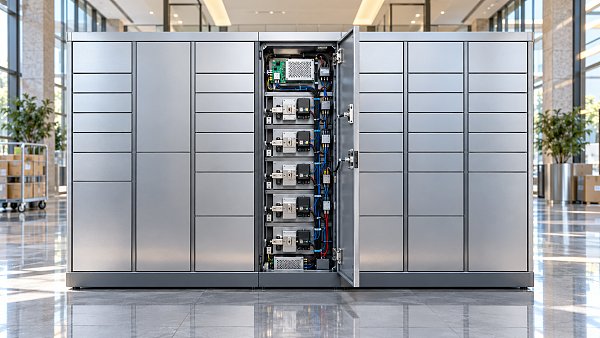
Electronic locks are often the most important cost variable
In a parcel locker, the electronic lock is both a security component and a high-cycle mechanical part. Every successful delivery and collection may involve a lock command, actuator movement, latch release, and door opening. In busy locations, that cycle repeats thousands of times across the locker’s service life.
Maintenance cost rises when lock modules are poorly matched to the duty cycle, difficult to access, or dependent on proprietary parts with long lead times. A procurement team should ask not only what lock is installed, but also how quickly it can be diagnosed and replaced. Can the lock be serviced from the front or rear? Is the wiring harness modular? Are spare parts held regionally? Does the operator need a software tool or technician credential to commission a replacement?
Door mechanics deserve equal attention. A perfectly functioning electronic lock cannot compensate for a warped door, damaged hinge, misaligned striker, or compartment that has been overloaded by parcels. Many “lock failures” are actually alignment or closure problems. A good maintenance contract defines whether adjustment work, damage inspection, and replacement of worn mechanical parts are included.
Fixed costs versus event-driven costs
A practical budget separates predictable operating expenses from fault-related expenses. This makes internal approval easier and helps teams compare supplier proposals fairly.
For many operators, remote support is the most cost-effective first layer. A support team may restore connectivity, resend a command, identify a user error, review event logs, or isolate a single faulty compartment without dispatching a field engineer. But remote support cannot fix a jammed door, a damaged reader, or an actuator that has reached end of life. The best service models combine digital visibility with clear on-site escalation.
Why maintenance costs differ so widely between sites
Locker quantity matters, but operating conditions often matter more. A locker with modest usage in a secure office reception has a different risk profile from an outdoor bank at a transport station or a high-turnover residential complex.
Parcel volume and door cycles: High-utilization compartments wear faster. Operators should review transaction data, not just total locker capacity. If a few medium-size doors receive most deliveries, those compartments may need more frequent inspection or rotation within the allocation logic.
Installation environment: Indoor, covered outdoor, and fully exposed outdoor deployments have different maintenance requirements. Rain, ice, dust, salt air, direct sunlight, and drainage conditions can influence enclosure integrity and electronics reliability. The cheapest enclosure is not always the lowest-cost choice over time.
Security exposure: Locations with frequent attempted forced entry, tampering, graffiti, or vehicle impact may need reinforced protection, inspection after incidents, and a clear repair process. Security hardware should be evaluated as a system: cabinet construction, door structure, lock retention, anchoring, alarm or event reporting, and camera coverage may all affect maintenance outcomes.
Integration complexity: A locker connected only to a courier workflow is relatively straightforward. One linked to tenant directories, mobile credentials, payment systems, building management software, access control, or several carrier networks has more potential integration points to monitor. That does not make integration undesirable; it simply means software support responsibilities must be defined carefully.
A realistic way to estimate your annual budget
Rather than asking a supplier for one broad “maintenance price,” build a site-specific estimate. Start with an equipment register: number of locker units, compartment types, lock models, screens, scanners, communication modules, power arrangements, and installation locations. Then record expected usage, operating hours, environmental exposure, and the consequence of downtime at each site.
From there, request a maintenance proposal that separates recurring charges from chargeable incidents. A transparent quote should identify what is covered by remote support, what triggers a technician visit, travel-zone assumptions, labor hours, spare-part pricing or price rules, firmware update responsibilities, and service-level response targets.
It is also wise to create a small contingency allowance for parts and unforeseen damage. This is not pessimism; it is operational discipline. Electronic lock modules, display assemblies, communication devices, hinges, and door hardware eventually require replacement. Planning for these events avoids the uncomfortable choice between an unplanned expense and a locker bank that remains partly out of service.
Questions that reveal hidden maintenance exposure
- Which components are considered wear items, and which are covered under warranty?
- Does the service agreement include remote diagnostics and firmware updates?
- What is the target response time for a locker that cannot release a parcel?
- Can individual components be replaced, or must a larger assembly be changed?
- How are parts stocked, shipped, and priced after the warranty period?
- What happens if mobile connectivity or a building network fails?
- Are site visits priced per incident, per hour, or included in a service plan?
- Who is responsible for cleaning, door alignment, and basic visual inspections?
Maintenance contracts should reflect the operational risk
Not every locker location needs the same service level. A low-volume locker in a staffed building may operate well with remote support, periodic inspections, and a standard repair response. A locker bank that handles time-sensitive medical deliveries, high-value goods, or a large residential population may justify stronger service commitments, faster parts availability, and proactive monitoring.
The important point is to avoid buying a contract based only on the lowest annual fee. A contract that excludes common failures, limits support hours, or provides vague response language can shift cost back to the operator when service is needed most. Review the definitions closely: response time is not always resolution time, and a technician dispatch is not the same as a repaired compartment.
For multinational or multi-site deployments, procurement teams should also confirm whether service coverage is consistent across regions. A manufacturer may supply hardware globally while relying on different local service partners. Ask how training, spare parts, escalation, and reporting are managed in each market.
Reducing maintenance cost without reducing reliability
The most effective savings usually begin before installation. Select locker hardware designed for the expected usage and environment. Ensure the site has suitable drainage, stable power, secure network coverage, adequate lighting, and enough clearance for doors and service access. Poor siting creates recurring service work that no contract can fully solve.
Operational habits matter too. Staff should know how to inspect for damaged doors, water ingress, loose panels, and repeated user complaints. Couriers need clear rules on parcel size and compartment use, since forcing oversized parcels into a compartment can lead to avoidable mechanical damage. Users benefit from clear collection instructions and a visible support route when a door does not open.
Data can turn maintenance from reactive to planned. Repeated lock retries, declining signal strength, unusually long door-open times, and frequent manual overrides are useful warning signs. When operators review these patterns, they can schedule a repair before a minor problem becomes a stranded parcel and a frustrated customer.
The cost question is really a reliability question
So, how much does it cost to maintain a smart parcel locker? The answer depends on the hardware design, network model, usage intensity, site environment, service coverage, and the operator’s tolerance for downtime. There is no meaningful single figure without those details.
A better procurement decision compares total lifecycle exposure: planned service, software and connectivity, parts availability, emergency response, and the business impact of an unavailable compartment. Smart parcel lockers are now part of the physical security and last-mile delivery infrastructure of many properties. Maintaining them well is not merely about keeping doors operational; it is about preserving secure handover, reliable access, and confidence in the service every day.
Have questions about this sector analysis, or seeking best practices specific to your niche? Drop us a line below and let the senior consultants at MHLS assist you.
We respect your privacy. Your information is strictly confidential.
Recommended News
 Physical Security Infrastructure Cost: Budgeting for Installation and MaintenanceUnmanned Terminal FellowUnderstand physical security infrastructure cost and build a smarter budget for installation, maintenance, and long-term ownership.
 Financial Facility Security: Choosing Vault Doors for Bank BranchesVault Structural ArchitectStrengthen financial facility security with the right bank vault door. Explore certification, installation, locking controls and maintenance before you buy.
 MACO Acquires Majority Stake in Fingerprint Access Provider ekeyProf. Elara SterlingMACO acquires a majority stake in ekey, bringing fingerprint access and door hardware closer together. Discover what the deal could mean for smart buildings.
 Physical Security System Engineering: From Risk Assessment to System DesignUnmanned Terminal FellowExplore physical security system engineering, from risk assessment to integrated design, procurement and testing. Build a safer, more resilient facility.
 Apple Home Collection Smart Lock and Other Accessories Open for Preorder November 13Biometric Auth ScientistApple Home Collection preorders open November 13, 2026. Explore the LG smart lock’s Matter and Aliro support and what buyers should verify before ordering.
 Choosing Servo-Driven Flap Barriers: Throughput, Safety and Access ControlAccess Control StrategistServo-driven flap barriers can balance throughput, safety and access control. Discover how to compare lanes, test performance and choose with confidence.
 Parcel Locker Network Pricing: Setup Costs, Fees and Contract TermsUnmanned Terminal FellowCompare parcel locker networks pricing, from setup costs and recurring fees to contract terms. Discover hidden charges and choose the right model.
 JR East Plans UWB Walk-Through Gates at 40 Stations in Spring 2028Access Control StrategistJR East plans UWB walk-through gates at 40 stations in spring 2028. Explore the rollout timeline and what suppliers should watch.
 Bank Vault Security Standards: UL and EN Ratings ExplainedVault Structural ArchitectExplore bank vault security standards and learn how UL 608 classes and EN 1143-1 grades differ, what they test, and how to verify certification before you buy.
 Mechanical Lock Hardware Prices: What Buyers Should Budget for Bulk OrdersMr. Gideon CrossMechanical lock hardware price is just the starting point. Discover what drives bulk-order costs and how to compare supplier quotes with confidence.
 IndexBox Forecasts Steady Global Security Keypad Market Growth Through 2035Dr. Valerius ThorneGlobal security keypad market growth is forecast at 3.3% annually through 2035. Explore the smart home and replacement trends shaping demand.
 Choosing an Infrared Safety Sensors Manufacturer: What Buyers Should CheckUnmanned Terminal FellowChoosing an infrared safety sensors manufacturer? Compare safety evidence, integration, environmental performance and lifecycle costs before you buy.











