
How Often Should Outdoor Parcel Lockers Be Inspected?
Outdoor parcel lockers should be inspected at several different intervals rather than on a single schedule. A brief operational check is appropriate daily or at each service visit; a more deliberate physical and electronic inspection should take place monthly; and a deeper preventive maintenance review is usually needed at least quarterly. High-traffic, exposed, or security-sensitive locations may require more frequent attention.
The practical question is not simply how often should outdoor parcel lockers be inspected, but what is likely to fail between inspections. A locker bank beside a busy residential entrance may handle constant door cycles, attempted access, rainwater, delivery carts, and changing mobile signals. A small locker installation at a sheltered site faces a different risk profile. Inspection frequency should follow usage, weather exposure, site conditions, and the consequences of a failed compartment or lost network connection.
Set the inspection interval by risk, not by calendar alone
A fixed annual inspection is rarely sufficient for an outdoor locker system. Damage and faults often develop gradually: a door begins to sag, a lock requires more force to release, water enters a cable route, or a weak cellular signal causes delayed status updates. By the time users report repeated collection failures, the underlying issue may already affect several compartments.
A layered schedule gives operators a more useful control point:
Locations exposed to coastal air, freeze-thaw cycles, direct sun, heavy rain, road salt, vandalism, or unusually high parcel volumes should move toward the shorter end of these intervals. The same applies where lockers are used for controlled deliveries such as medicines, confidential documents, keys, regulated goods, or high-value parcels.
Start with a short operational check
A daily or service-visit check does not need to involve opening every compartment or dismantling the enclosure. Its purpose is to identify conditions that could immediately interrupt use or compromise parcel security. It can often be completed through a combination of platform alerts, staff observation, and a walk-around inspection.
Look for compartments shown as permanently occupied, unavailable, forced open, or repeatedly failing to open. Compare those alerts with what is visible on site. A status error may indicate a faulty door sensor, a latch that does not return fully, or a door being held slightly open by an oversized parcel. Repeated failed collection codes or delivery access errors may point to user-interface faults, account configuration issues, connectivity interruptions, or a lock that is not completing its cycle.
At the cabinet itself, check whether any door is open, bent, loose, difficult to close, or making contact with the frame. Examine the touchscreen, keypad, scanner, card reader, or collection interface for cracked covers, water ingress, loose fixings, and signs of attempted tampering. Remove litter, packaging, or ice that interferes with door swing, ventilation openings, drainage paths, or wheelchair access.
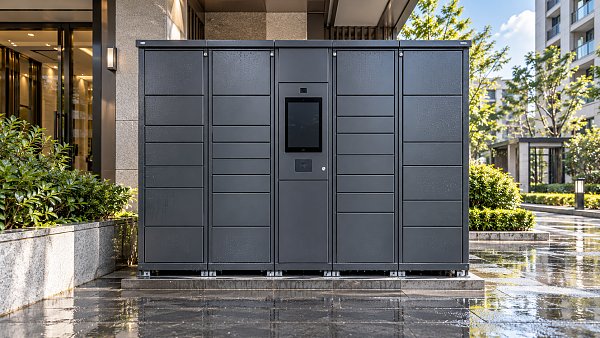
An operational check should also confirm that emergency contact instructions and collection guidance remain readable. Outdoor labels fade, peel, or become obscured by dirt. When users cannot understand the pickup process, staff may receive what appear to be technical fault reports that are actually instruction or access-control problems.
What the monthly inspection should cover
The monthly visit is where early wear becomes visible. It should be documented by locker bank, not just recorded as a generic “site checked” note. A useful record identifies the compartment number, observed condition, action taken, parts used, and whether follow-up is required. This history helps distinguish isolated damage from a recurring design, site, or operating problem.
Doors, hinges, and compartment alignment
Open and close a representative range of small, medium, and large doors. At high-use sites, test every door over a planned rotation rather than relying on a few sample compartments each month. Watch for uneven gaps, rubbing edges, latch misalignment, hinge play, loose fasteners, and doors that rebound rather than closing cleanly.
Door alignment matters because an electronic lock can appear defective when the real problem is mechanical load. A warped door or shifted cabinet can place pressure on the latch. The controller may send the release command correctly, but the latch cannot withdraw freely. This creates intermittent faults that are often mistaken for software or network failures.
Electronic locks and release behavior
Test the release function using the approved maintenance method, then confirm that the locker detects both the open and closed state accurately. Listen for abnormal actuator noise, delayed releases, repeated clicking, or a lock that only works after the door is pushed or pulled. Those symptoms can indicate worn latch parts, poor alignment, low power at the lock, moisture intrusion, damaged cabling, or a failing actuator.
Do not lubricate electronic lock assemblies with a general-purpose product unless the lock manufacturer permits it. Some lubricants attract dust, affect plastics, or migrate into electrical components. If lubrication is specified, use the recommended product sparingly and clean away accumulated debris first.
Weather protection and cabinet condition
Outdoor enclosures should be checked for corrosion, chipped coatings, damaged seals, blocked drainage, loose roof panels, cracked display covers, and gaps around cable entries. Pay close attention to lower cabinet edges and base areas, where standing water, soil, de-icing materials, and impact from carts can cause deterioration.
Inspect around the foundation or mounting points for movement, cracked anchors, settlement, or gaps that allow water to enter beneath the unit. A cabinet that is no longer level can affect door alignment and create unexpected stress on hinges and locks. Where the locker sits near landscaping, clear vegetation that traps moisture or obstructs access. Where snow or leaves build up, verify that drainage routes remain open.
Power, communications, and system health
A locker can look physically sound while becoming unreliable because of unstable power or communications. Check that power supplies, protective enclosures, visible cables, and connectors show no heat damage, corrosion, looseness, or unauthorized modification. Any electrical inspection beyond basic visible checks should be carried out by personnel qualified for the relevant equipment and site rules.
Review connection stability through the management system where available. Intermittent cellular, Wi-Fi, Ethernet, or IoT connectivity can cause delayed transaction records, failed remote unlock commands, outdated compartment status, and incomplete notifications. A weak signal should not automatically be blamed on the locker hardware; assess changes around the site, such as new construction, relocated equipment, altered router placement, damaged antennas, or water entering external connection points.
Inspect after events that change the risk
Scheduled maintenance is important, but some circumstances justify an additional inspection immediately or as soon as the site is safe to access. Waiting for the next monthly visit can extend downtime or leave a security weakness unaddressed.
- Attempted forced entry, graffiti, prying marks, drilled surfaces, or unexplained open-door events.
- Flooding, severe storms, prolonged freezing conditions, heat exposure, lightning-related power disturbance, or impact from a vehicle or delivery equipment.
- A spike in user complaints about failed pickups, unavailable doors, duplicate notifications, or missing parcel records.
- Repeated lock failures in the same zone, even when individual doors appear to recover after a reset.
- Changes to the site’s power source, network equipment, access route, lighting, building works, or drainage pattern.
After tampering, preserve relevant system records and inspect surrounding compartments rather than focusing only on the visibly damaged door. An attempted attack can affect frame alignment, cable routes, door sensors, and cabinet fixings. Any compartment that cannot be verified as secure should be removed from service until it has been checked and restored.
Use fault patterns to adjust the schedule
Inspection intervals should be reviewed when operational data shows a repeating problem. A site with stable door operation, clean environmental conditions, reliable communication, and low transaction volume may remain on a standard monthly and quarterly routine. A location with recurring exceptions needs a more frequent inspection cycle until the cause is understood and corrected.
For example, faults concentrated after rain suggest a weatherproofing, drainage, seal, or electrical ingress issue. Failures that occur mainly during cold periods may involve ice, condensation, stiffened seals, battery performance where applicable, or mechanical tolerances. Problems clustered in the largest compartments can point to door weight, hinge wear, bulky parcel obstruction, or different lock loading. A pattern appearing across all compartments at the same time is more likely related to power, network connectivity, system configuration, or central control hardware.
Keep separate records for user-reported issues, remote alarms, confirmed component faults, and site observations. Treating all errors as one category makes it harder to decide whether to replace a part, improve sheltering, retrain delivery personnel, adjust parcel-size rules, or investigate the communication path.
Make inspections practical for the people doing them
A maintenance plan fails when it asks site staff to perform tasks they cannot safely verify or when records are too vague to support repair decisions. Divide responsibilities clearly. Routine personnel can inspect visible damage, cleanliness, door operation, displayed instructions, and reported faults. Trained maintenance personnel can test locks, sensors, internal hardware, alignment, approved electrical connections, and controlled system functions. Specialist support may be required for persistent access-control errors, compromised enclosures, electrical faults, water ingress into electronic assemblies, or structural movement.
Each inspection should end with a clear disposition for any affected compartment: returned to service, monitored, temporarily disabled, awaiting parts, or escalated. Leaving a door technically operational but difficult to open may create a failed pickup later, when there is no staff member present to assist. Likewise, repeatedly resetting a locker without identifying why it entered a fault state can conceal a developing issue.
For procurement and deployment planning, ask suppliers how inspections are expected to be performed, which parts are field-replaceable, how fault logs are exported, what environmental limits apply, and whether individual compartments can be isolated without shutting down the complete locker bank. These details influence the realistic maintenance burden far more than a generic statement that a locker is designed for outdoor use.
Questions that affect inspection planning
Should every locker door be tested every month?
At a low-use site, a rotating test plan may be reasonable if remote monitoring and daily observations are reliable. At high-use, high-risk, or complaint-prone locations, testing every door monthly is more appropriate. Any door with a prior fault history should be checked more often until the cause is resolved.
Can remote monitoring replace physical inspection?
No. Remote systems can reveal connectivity loss, door-state anomalies, low power warnings, and transaction faults, but they cannot reliably identify corrosion, loose anchors, degraded seals, water pooling, vandalism marks, obstructed doors, or physical alignment problems. Remote monitoring is most effective when it directs attention to the right site visit.
When should a compartment be taken out of service?
Disable it when it cannot be confirmed as secure, opens unpredictably, fails to latch, shows evidence of tampering, has damaged wiring or lock components, or presents a sharp edge, pinch risk, or electrical concern. A short-term loss of capacity is usually preferable to placing parcels in a compartment with uncertain security or access reliability.
Have questions about this sector analysis, or seeking best practices specific to your niche? Drop us a line below and let the senior consultants at MHLS assist you.
We respect your privacy. Your information is strictly confidential.
Recommended News
 Physical Security Infrastructure Cost: Budgeting for Installation and MaintenanceUnmanned Terminal FellowUnderstand physical security infrastructure cost and build a smarter budget for installation, maintenance, and long-term ownership.
 Financial Facility Security: Choosing Vault Doors for Bank BranchesVault Structural ArchitectStrengthen financial facility security with the right bank vault door. Explore certification, installation, locking controls and maintenance before you buy.
 MACO Acquires Majority Stake in Fingerprint Access Provider ekeyProf. Elara SterlingMACO acquires a majority stake in ekey, bringing fingerprint access and door hardware closer together. Discover what the deal could mean for smart buildings.
 Physical Security System Engineering: From Risk Assessment to System DesignUnmanned Terminal FellowExplore physical security system engineering, from risk assessment to integrated design, procurement and testing. Build a safer, more resilient facility.
 Apple Home Collection Smart Lock and Other Accessories Open for Preorder November 13Biometric Auth ScientistApple Home Collection preorders open November 13, 2026. Explore the LG smart lock’s Matter and Aliro support and what buyers should verify before ordering.
 Choosing Servo-Driven Flap Barriers: Throughput, Safety and Access ControlAccess Control StrategistServo-driven flap barriers can balance throughput, safety and access control. Discover how to compare lanes, test performance and choose with confidence.
 Parcel Locker Network Pricing: Setup Costs, Fees and Contract TermsUnmanned Terminal FellowCompare parcel locker networks pricing, from setup costs and recurring fees to contract terms. Discover hidden charges and choose the right model.
 JR East Plans UWB Walk-Through Gates at 40 Stations in Spring 2028Access Control StrategistJR East plans UWB walk-through gates at 40 stations in spring 2028. Explore the rollout timeline and what suppliers should watch.
 Bank Vault Security Standards: UL and EN Ratings ExplainedVault Structural ArchitectExplore bank vault security standards and learn how UL 608 classes and EN 1143-1 grades differ, what they test, and how to verify certification before you buy.
 Mechanical Lock Hardware Prices: What Buyers Should Budget for Bulk OrdersMr. Gideon CrossMechanical lock hardware price is just the starting point. Discover what drives bulk-order costs and how to compare supplier quotes with confidence.
 IndexBox Forecasts Steady Global Security Keypad Market Growth Through 2035Dr. Valerius ThorneGlobal security keypad market growth is forecast at 3.3% annually through 2035. Explore the smart home and replacement trends shaping demand.
 Choosing an Infrared Safety Sensors Manufacturer: What Buyers Should CheckUnmanned Terminal FellowChoosing an infrared safety sensors manufacturer? Compare safety evidence, integration, environmental performance and lifecycle costs before you buy.











