
How to Choose Outdoor Smart Parcel Lockers for Apartments, Campuses, and Retail Sites
Choosing outdoor smart parcel lockers for apartments, campuses, and retail sites is no longer a narrow logistics decision. It sits at the intersection of physical security, property operations, user convenience, and digital infrastructure.
That shift matters because parcel volume keeps rising, while unattended deliveries create theft exposure, congestion, and service complaints. In practice, the right locker system must work as a security asset, not just a storage cabinet.
From the broader SHPS perspective, outdoor smart parcel lockers belong to the same decision framework as electronic locks, access control, protective hardware, and connected site management. The core question is simple: will the system stay secure, reliable, and manageable after deployment, not just during procurement?
What outdoor deployment really changes
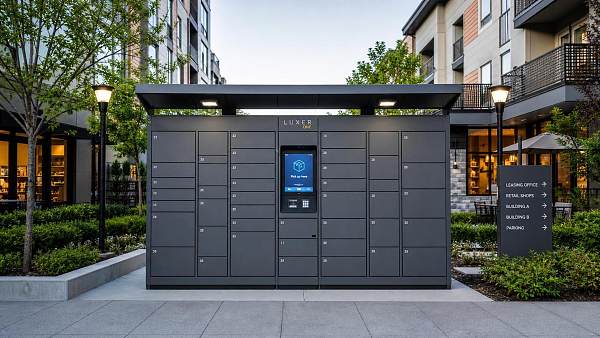
Indoor lockers and outdoor smart parcel lockers may share software logic, but the operating environment is very different. Weather, vandalism risk, temperature fluctuation, and unstable network conditions all affect long-term performance.
A unit placed outside a residential tower faces rain, direct sun, and high daily use. A campus installation may face seasonal extremes and wide traffic peaks. A retail site often adds public exposure, short dwell time, and mixed delivery patterns.
This is why selection should begin with site conditions, not brochures. Steel thickness, coating quality, sealing design, lock endurance, drainage, and remote monitoring often matter more than interface design alone.
Security should be evaluated as a system
Many buyers focus on app access or one-time pickup codes. Those features matter, but they are only one layer. Outdoor smart parcel lockers should be judged as a complete physical and electronic security system.
The enclosure should resist forced entry, prying, and repeated impact. Door alignment, hinge protection, electronic lock quality, and anti-tamper structure deserve close review.
Software security also deserves attention. Event logs, access records, role permissions, and alert rules help operators investigate disputes and identify misuse quickly.
In higher-risk locations, it is useful to ask whether the lockers can integrate with cameras, site access control, or building management alerts. That kind of connection turns isolated equipment into part of a wider security workflow.
- Check whether doors and frames resist prying at common attack points.
- Review electronic lock cycle life and emergency override design.
- Confirm audit trails are stored reliably and exported easily.
- Look for alarm reporting on forced access, door open timeout, or offline status.
Weather resistance is not a minor specification
Outdoor smart parcel lockers fail early when environmental design is treated as a secondary detail. Water ingress, corrosion, screen readability loss, and lock faults usually begin as small weaknesses.
IP ratings help, but they do not tell the whole story. Material selection, coating process, gasket durability, ventilation, and condensation control are equally important.
In coastal or industrial areas, corrosion resistance becomes especially important. In hot climates, touchscreen usability and internal electronics protection should be verified under real temperature conditions.
The practical question is not whether the locker can survive installation day. It is whether the system can maintain dependable service after months of UV exposure, rain, dust, and constant opening cycles.
Useful environmental checkpoints
Site type changes the locker strategy
Outdoor smart parcel lockers should not be specified the same way for every property. The traffic pattern, parcel mix, and risk profile vary by location.
Apartments
Residential sites usually need predictable access, strong anti-theft performance, and low management effort. Tenant turnover and delivery peaks require a system that is intuitive and easy to administer.
Locker placement should support visibility and convenience without blocking pedestrian flow. It also helps to consider oversized compartments for groceries, household supplies, and recurring e-commerce deliveries.
Campuses
Campuses often need higher throughput, flexible compartment allocation, and extended operating hours. Users may arrive in concentrated waves, especially around class changes or residence hall delivery windows.
Network resilience matters here because outdoor smart parcel lockers may be distributed across multiple buildings. Remote diagnostics and centralized software control can reduce service disruption.
Retail sites
Retail environments often combine parcel pickup, returns, and short-duration visits. Public exposure is higher, so vandal resistance and intuitive collection steps become more important.
These sites may also benefit from integration with order management or branded customer communication. The locker is partly an operations tool and partly a service touchpoint.
Capacity planning is more than counting compartments
A common mistake is selecting outdoor smart parcel lockers by total box count alone. Real performance depends on parcel turnover rate, compartment mix, redelivery frequency, and seasonal peaks.
If too many compartments are small, larger parcels will spill into manual handling. If all compartments are oversized, utilization drops and the footprint becomes inefficient.
Historical delivery data is useful, but layout planning should also account for future growth. Property occupancy changes, click-and-collect expansion, and return parcel volume can quickly alter demand.
- Map average daily deliveries against peak-day demand.
- Estimate how long parcels remain uncollected.
- Balance small, medium, and oversized compartments.
- Reserve expansion space where growth is likely.
Connectivity, software, and maintenance shape lifetime cost
In many projects, hardware gets the most attention during tender review. Yet long-term cost often depends more on software stability, network recovery, spare parts access, and service response.
Outdoor smart parcel lockers may rely on Ethernet, Wi-Fi, 4G, or 5G. The right choice depends on site infrastructure, coverage consistency, and fallback requirements.
A well-designed platform should support remote health checks, firmware updates, user administration, and fault alerts. Without those tools, routine issues become expensive site visits.
SHPS often frames these questions in the same way it examines access control and smart locking systems: reliability is a lifecycle issue, not a one-time specification item.
Questions worth asking suppliers
- What happens if connectivity drops during pickup or delivery?
- How are firmware updates managed across multiple sites?
- Which components fail most often, and how quickly are they replaced?
- Can the platform integrate with site access control or property systems?
- What reporting is available for usage, faults, and compartment occupancy?
How to make a practical selection decision
The best selection process compares outdoor smart parcel lockers across five linked dimensions: physical security, environmental durability, user flow, system manageability, and total operating cost.
That evaluation works better when based on a real deployment map. Entrance visibility, loading access, ADA or local accessibility requirements, lighting, drainage, and power availability all influence the final result.
Pilot testing is often the clearest way to validate assumptions. A short trial can reveal screen readability issues, courier behavior, queue formation, or service bottlenecks that specifications do not show.
It also helps to score suppliers on operational transparency. Clear maintenance terms, realistic service commitments, and evidence of past outdoor deployments are usually better indicators than broad feature claims.
Where to focus next
A strong decision rarely starts with a product catalog alone. It starts with a site-specific checklist covering delivery volume, weather exposure, security expectations, network options, and service support.
From there, compare outdoor smart parcel lockers using measurable criteria, not general promises. Review enclosure quality, lock architecture, software visibility, maintenance structure, and expansion flexibility side by side.
For properties treating parcel handling as part of their wider physical security strategy, the locker decision becomes easier to frame. The objective is not simply parcel storage. It is safer delivery, smoother operations, and a system that remains dependable under real conditions.
Have questions about this sector analysis, or seeking best practices specific to your niche? Drop us a line below and let the senior consultants at MHLS assist you.
We respect your privacy. Your information is strictly confidential.
Recommended News
 Parcel Locker Network Pricing: Setup Costs, Fees and Contract TermsUnmanned Terminal FellowCompare parcel locker networks pricing, from setup costs and recurring fees to contract terms. Discover hidden charges and choose the right model.
 JR East Plans UWB Walk-Through Gates at 40 Stations in Spring 2028Access Control StrategistJR East plans UWB walk-through gates at 40 stations in spring 2028. Explore the rollout timeline and what suppliers should watch.
 Bank Vault Security Standards: UL and EN Ratings ExplainedVault Structural ArchitectExplore bank vault security standards and learn how UL 608 classes and EN 1143-1 grades differ, what they test, and how to verify certification before you buy.
 Mechanical Lock Hardware Prices: What Buyers Should Budget for Bulk OrdersMr. Gideon CrossMechanical lock hardware price is just the starting point. Discover what drives bulk-order costs and how to compare supplier quotes with confidence.
 IndexBox Forecasts Steady Global Security Keypad Market Growth Through 2035Dr. Valerius ThorneGlobal security keypad market growth is forecast at 3.3% annually through 2035. Explore the smart home and replacement trends shaping demand.
 Choosing an Infrared Safety Sensors Manufacturer: What Buyers Should CheckUnmanned Terminal FellowChoosing an infrared safety sensors manufacturer? Compare safety evidence, integration, environmental performance and lifecycle costs before you buy.
 Choosing a Security Material Testing Service: What to Check for Lock and Safe MaterialsProf. Elara SterlingChoose a security material testing service with confidence. Learn what to check for lock and safe materials, from attack methods and accreditation to reliable reports.
 How Precision Anti-Pick Lock Cylinders Resist ManipulationSecurity Metallurgy ExpertDiscover how precision anti-pick lock technology resists manipulation, and learn what to check when comparing security features, test evidence, and everyday reliability.
 Dermalog Joins NIST FastCAP Program for Contactless Fingerprint TestingProf. Elara SterlingDermalog joins the NIST FastCAP program for contactless fingerprint testing. Discover what this means for biometric identification and digital identity.
 Choosing Security Export Compliance Services: What Providers Should CoverMr. Gideon CrossSecurity export compliance services can help prevent costly delays. Discover what to look for in classification, licensing, screening, and documentation.
 European Security Compliance Standards for Safes: EN 1143-1 vs EN 14450Dr. Valerius ThorneExplore security compliance standards Europe buyers need to know. Compare EN 1143-1 and EN 14450 to choose the right safe with confidence.
 HID Global Acquires inepro ID to Expand RFID and BLE Access SolutionsUnmanned Terminal FellowHID Global acquires inepro ID to expand RFID and BLE access solutions for printers, smart lockers and shared devices. Explore what the deal could mean for your organization.











