
How to Evaluate an Unmanned Delivery Terminals Supplier for Outdoor Parcel Locker Projects
Choosing an unmanned delivery terminals supplier for an outdoor parcel locker project is a long-horizon decision, not a simple equipment purchase. Locker uptime, enclosure strength, lock reliability, connectivity stability, and service response all shape operating cost, user trust, and deployment speed. In a market where parcel security, smart hardware integration, and physical risk control increasingly overlap, supplier evaluation needs a broader lens than unit price alone.
Why supplier evaluation matters more in outdoor locker projects
Outdoor parcel lockers work in harsher conditions than indoor pickup systems. They face rain, dust, UV exposure, temperature swings, vandalism attempts, unstable network conditions, and inconsistent maintenance access.
That changes the procurement logic. A weak cabinet design or unstable electronic lock can create recurring field failures, service complaints, missed deliveries, and expensive replacement cycles.
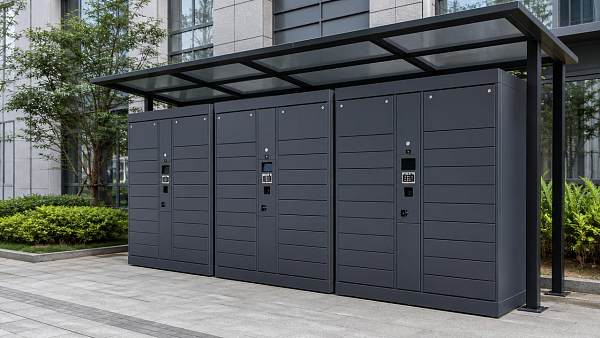
This is why the right unmanned delivery terminals supplier should be assessed as a systems partner. The locker body, access control logic, communication module, remote monitoring tools, and after-sales capability all need to work together.
From the SHPS perspective, this topic also sits inside a larger smart hardware and physical security framework. Parcel lockers are no longer just delivery equipment. They are part of secured last-mile infrastructure.
What an unmanned delivery terminals supplier is really providing
A qualified unmanned delivery terminals supplier does not only provide metal boxes with software access. The offer usually includes several connected layers of value.
- Cabinet engineering for outdoor durability and anti-tampering performance
- Electronic lock systems with repeatable opening and closing reliability
- IoT communication through 4G, 5G, Ethernet, or hybrid networking
- Control software for user access, courier workflows, and remote diagnostics
- Maintenance support, spare parts planning, and deployment guidance
In practice, supplier quality determines whether the locker network performs like resilient infrastructure or behaves like a fragmented collection of field devices.
That is why experienced buyers compare suppliers across physical security, electronics, software, compliance readiness, and installation support at the same time.
The first screening: technical fit before commercial comparison
Before reviewing quotations, it helps to confirm whether the unmanned delivery terminals supplier fits the intended deployment environment. This first filter saves time and reduces comparison noise.
Outdoor enclosure and structural design
Check steel thickness, corrosion protection, coating quality, sealing design, drainage strategy, and door alignment consistency. Outdoor parcel lockers need structural stability over years, not only during factory inspection.
Ask how the cabinet resists forced entry, hinge damage, prying, and repeated impact. In many projects, visible durability directly influences site owner confidence.
Locking system reliability
The lock is often the highest-risk component in daily operation. A strong unmanned delivery terminals supplier should explain lock cycle testing, failure rates, emergency opening methods, and power-loss behavior clearly.
Suppliers with real security hardware experience usually provide more mature thinking around lock body design, anti-tampering logic, and secure access records.
Connectivity and remote management
Outdoor sites often have uneven network conditions. The supplier should support stable communication architecture, local data protection, and remote status visibility.
If lockers will connect to access control platforms, property systems, or logistics software, interface maturity matters as much as hardware performance.
How to judge supplier capability beyond the brochure
Many suppliers can present a polished specification sheet. The harder task is understanding whether those claims hold up under real deployment pressure.
Case references deserve close attention. A supplier may be credible in indoor smart lockers but underprepared for coastal, high-heat, or vandalism-prone outdoor sites.
It is also useful to ask for failure history and design revisions. Honest discussion about past issues often reveals more than a perfect sales presentation.
Security, compliance, and lifecycle risk
An outdoor parcel locker sits at the intersection of physical protection and digital control. That means evaluation should include both attack resistance and system governance.
From a physical security angle, review door strength, lock protection, service access control, audit records, and emergency override design. Weak service doors or exposed mechanisms can undermine an otherwise solid product.
From a system angle, review user authentication options, communication encryption, firmware update process, and fault reporting. A capable unmanned delivery terminals supplier should explain how data and device integrity are maintained after installation.
Compliance also matters. Requirements vary by market, but buyers usually benefit from checking electrical safety, environmental protection, telecom compatibility, and local installation standards early.
Within the SHPS ecosystem, these questions are familiar. Smart parcel lockers increasingly borrow evaluation logic from broader physical security categories, where material performance, lock reliability, and certification readiness are already central.
Different project scenarios call for different supplier strengths
Not every outdoor parcel locker project needs the same supplier profile. The right unmanned delivery terminals supplier for a residential complex may not be the best fit for a transport hub or industrial campus.
Residential and mixed-use properties
Appearance, quiet operation, access convenience, and property platform integration usually matter more here. Weather resistance still matters, but user experience strongly affects acceptance.
Retail and commercial sites
High parcel turnover, branding consistency, and faster service response often become priorities. Remote diagnostics can reduce site visits and improve network uptime.
Public or exposed locations
This is where structural security, anti-vandal design, camera compatibility, and stronger lock protection become more critical. A supplier without field experience in exposed environments may create long-term risk.
A practical supplier evaluation checklist
A useful procurement process usually combines document review, technical questioning, and sample validation. This keeps selection grounded in operational reality.
- Define site conditions, parcel volume, user flow, and integration requirements before asking for quotes
- Request evidence for weather testing, lock durability, and network resilience
- Compare component quality, not only cabinet dimensions and price
- Review software functions for logs, alerts, and remote maintenance visibility
- Check whether the unmanned delivery terminals supplier has relevant outdoor references
- Clarify spare parts policy, warranty terms, and on-site support expectations
- Use a pilot deployment when the project scale or environment is complex
In many cases, a pilot reveals issues that factory demonstrations cannot show, such as condensation behavior, unstable mobile signals, courier usage patterns, or unexpected maintenance burden.
Turning comparison into a better decision
The best unmanned delivery terminals supplier is rarely the one with the lowest entry price. It is usually the one that balances enclosure quality, lock reliability, software visibility, deployment experience, and lifecycle support most effectively.
Outdoor parcel locker projects succeed when supplier evaluation reflects real operating conditions. That means translating broad requirements into measurable criteria, then testing supplier claims against field evidence.
A sensible next step is to build a weighted evaluation sheet around environment, security, connectivity, service, and reference projects. That approach makes supplier comparison clearer and helps reduce avoidable risk before rollout.
Have questions about this sector analysis, or seeking best practices specific to your niche? Drop us a line below and let the senior consultants at MHLS assist you.
We respect your privacy. Your information is strictly confidential.
Recommended News
 Parcel Locker Network Pricing: Setup Costs, Fees and Contract TermsUnmanned Terminal FellowCompare parcel locker networks pricing, from setup costs and recurring fees to contract terms. Discover hidden charges and choose the right model.
 JR East Plans UWB Walk-Through Gates at 40 Stations in Spring 2028Access Control StrategistJR East plans UWB walk-through gates at 40 stations in spring 2028. Explore the rollout timeline and what suppliers should watch.
 Bank Vault Security Standards: UL and EN Ratings ExplainedVault Structural ArchitectExplore bank vault security standards and learn how UL 608 classes and EN 1143-1 grades differ, what they test, and how to verify certification before you buy.
 Mechanical Lock Hardware Prices: What Buyers Should Budget for Bulk OrdersMr. Gideon CrossMechanical lock hardware price is just the starting point. Discover what drives bulk-order costs and how to compare supplier quotes with confidence.
 IndexBox Forecasts Steady Global Security Keypad Market Growth Through 2035Dr. Valerius ThorneGlobal security keypad market growth is forecast at 3.3% annually through 2035. Explore the smart home and replacement trends shaping demand.
 Choosing an Infrared Safety Sensors Manufacturer: What Buyers Should CheckUnmanned Terminal FellowChoosing an infrared safety sensors manufacturer? Compare safety evidence, integration, environmental performance and lifecycle costs before you buy.
 Choosing a Security Material Testing Service: What to Check for Lock and Safe MaterialsProf. Elara SterlingChoose a security material testing service with confidence. Learn what to check for lock and safe materials, from attack methods and accreditation to reliable reports.
 How Precision Anti-Pick Lock Cylinders Resist ManipulationSecurity Metallurgy ExpertDiscover how precision anti-pick lock technology resists manipulation, and learn what to check when comparing security features, test evidence, and everyday reliability.
 Dermalog Joins NIST FastCAP Program for Contactless Fingerprint TestingProf. Elara SterlingDermalog joins the NIST FastCAP program for contactless fingerprint testing. Discover what this means for biometric identification and digital identity.
 Choosing Security Export Compliance Services: What Providers Should CoverMr. Gideon CrossSecurity export compliance services can help prevent costly delays. Discover what to look for in classification, licensing, screening, and documentation.
 European Security Compliance Standards for Safes: EN 1143-1 vs EN 14450Dr. Valerius ThorneExplore security compliance standards Europe buyers need to know. Compare EN 1143-1 and EN 14450 to choose the right safe with confidence.
 HID Global Acquires inepro ID to Expand RFID and BLE Access SolutionsUnmanned Terminal FellowHID Global acquires inepro ID to expand RFID and BLE access solutions for printers, smart lockers and shared devices. Explore what the deal could mean for your organization.











