
Last-Mile Delivery Security Systems for Multifamily Buildings: Common Risks and Fixes
Why are last-mile delivery security systems now a building-level priority?
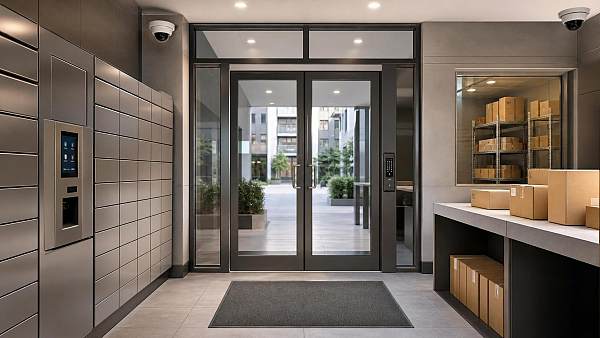
Package traffic in multifamily buildings is no longer occasional. It is constant, layered, and difficult to supervise at every handoff point.
That shift explains why last-mile delivery security systems matter far beyond convenience. They now affect theft rates, resident trust, access discipline, and incident response speed.
In many properties, the weak point is not the courier. It is the building process around entry, drop-off, storage, and pickup verification.
A secure setup usually combines physical security hardware, controlled access, audit trails, and parcel-specific handling rules. If one layer fails, complaints and losses rise quickly.
This is why industry platforms such as SHPS increasingly connect parcel lockers, smart locks, electronic lock reliability, access control, and smart building integration in one framework.
The practical question is not whether a building needs last-mile delivery security systems. It is which risks appear most often, and which fixes actually reduce them.
Where do multifamily buildings usually fail first?
The first failure is often uncontrolled access. Delivery personnel, temporary staff, visitors, and tailgaters may all use the same entrance path without clear separation.
The second issue is unattended parcel staging. Packages left in lobbies, mailrooms, or leasing offices create easy opportunities for theft, misplacement, or false delivery claims.
Another common gap is weak verification. A building may know a parcel arrived, but not who accessed the room, when the locker opened, or whether pickup matched the intended resident.
Mechanical weaknesses also matter. Poor door hardware, low-grade cylinders, exposed hinges, or unreliable electronic locks can turn a controlled room into a soft target.
In larger sites, visibility breaks down across systems. Access logs, video, intercom records, and parcel notifications often sit in separate platforms with no usable incident timeline.
A simple risk table helps clarify where last-mile delivery security systems should focus first.
Is a smart parcel locker always the best answer?
Not always. Smart parcel lockers solve many problems, but only when matched to parcel volume, carrier behavior, layout limits, and building turnover.
In high-density properties, lockers reduce exposed packages and improve accountability. Each drop-off and pickup can be linked to a specific event record.
Still, lockers are not a substitute for access control. If unauthorized people can enter the locker area, the system only moves risk from the lobby to another room.
Some buildings perform better with a secured package room using electronic locks, monitored entry, and digital chain-of-custody rules. This is often true for oversized items.
The better comparison is not locker versus room in the abstract. It is which setup creates stronger verification with fewer operational exceptions.
- Choose lockers when parcel volume is predictable and standard-size deliveries dominate.
- Choose a secured package room when item sizes vary and overflow handling happens daily.
- Use both when the site needs resident convenience and controlled overflow at peak periods.
In practice, the most reliable last-mile delivery security systems combine locker technology with hardened entry points, dependable electronic locks, and connected access logs.
What should be checked before choosing a system?
Selection mistakes usually start with buying around features instead of failure modes. A touchscreen and mobile app look useful, but they do not prove real security.
A better starting point is to map the delivery path. Entry, drop-off, storage, notification, pickup, exception handling, and log retention should all be reviewed together.
Then check the hardware layer. Door structure, lock body strength, cylinder resistance, hinge protection, and emergency override design all influence daily reliability.
This is where SHPS-style technical evaluation is useful. Parcel security is not only software. It depends on mechanical locking structures, IoT connectivity, and compliance-minded deployment.
The most useful evaluation points are usually these:
- Whether access credentials can be limited by role, time, and entrance location.
- Whether the electronic lock keeps working after power, network, or battery disruption.
- Whether pickup records are searchable during complaints or insurance review.
- Whether the system supports oversized parcels, returns, and courier exceptions.
- Whether video, intercom, and access control can produce one usable incident trail.
If these basics are weak, the most advanced interface will not fix operational exposure.
Why do some installations still struggle after deployment?
Because implementation gaps often matter more than the equipment list. Many last-mile delivery security systems fail through poor rules, not poor specifications.
One frequent problem is unclear courier workflow. If carriers do not know where to enter or how to complete delivery, they revert to the lobby.
Another issue is exception overload. Overflow parcels, resident absences, damaged packages, and repeated notifications need defined handling before the system goes live.
Maintenance is also underestimated. Locker doors, sensors, readers, backup power, and network modules need routine checks, not just reactive service calls.
More importantly, data should be reviewed, not only collected. A building that never audits repeated failed pickups or after-hours access misses early warning signals.
A practical rollout checklist usually includes operational controls as much as hardware controls.
How can fixes be prioritized without overspending?
The most effective upgrades usually follow risk concentration, not feature ambition. Start where losses, blind spots, or resident friction happen most often.
If parcels are stolen from open areas, move quickly to controlled storage. If package rooms are breached, strengthen doors, cylinders, and monitored entry first.
If disputes are the main problem, prioritize traceability. Reliable event logs, video alignment, and pickup confirmation often deliver faster value than cosmetic upgrades.
For larger portfolios, standardization matters. Consistent access policies, lock specifications, and reporting rules make multi-site quality control far easier.
It also helps to separate immediate fixes from structural improvements.
- Immediate fixes: remove open staging, tighten entry permissions, improve camera coverage, and retrain delivery flow.
- Structural fixes: deploy smart parcel lockers, integrate access control, harden doors, and establish audit-based maintenance.
The strongest last-mile delivery security systems are rarely built in one step. They improve through phased controls that are measurable and easy to verify.
What does a sensible next step look like?
Start with a simple site review: where parcels enter, where they wait, who can access them, and what evidence remains after a complaint.
Then compare current exposure against practical controls such as smart parcel lockers, stronger mechanical hardware, electronic lock resilience, and integrated access records.
The most useful benchmark is not a brochure promise. It is whether the building can prevent casual theft, limit unauthorized access, and prove what happened during disputes.
That is where informed review of physical security infrastructure becomes valuable. Good decisions depend on understanding hardware strength, system integration, and operational fit together.
If the goal is better parcel accountability with fewer complaints, map the risks first, rank them by frequency, and build last-mile delivery security systems around the actual weak points.
Have questions about this sector analysis, or seeking best practices specific to your niche? Drop us a line below and let the senior consultants at MHLS assist you.
We respect your privacy. Your information is strictly confidential.
Recommended News
 Physical Security Infrastructure Cost: Budgeting for Installation and MaintenanceUnmanned Terminal FellowUnderstand physical security infrastructure cost and build a smarter budget for installation, maintenance, and long-term ownership.
 Financial Facility Security: Choosing Vault Doors for Bank BranchesVault Structural ArchitectStrengthen financial facility security with the right bank vault door. Explore certification, installation, locking controls and maintenance before you buy.
 MACO Acquires Majority Stake in Fingerprint Access Provider ekeyProf. Elara SterlingMACO acquires a majority stake in ekey, bringing fingerprint access and door hardware closer together. Discover what the deal could mean for smart buildings.
 Physical Security System Engineering: From Risk Assessment to System DesignUnmanned Terminal FellowExplore physical security system engineering, from risk assessment to integrated design, procurement and testing. Build a safer, more resilient facility.
 Apple Home Collection Smart Lock and Other Accessories Open for Preorder November 13Biometric Auth ScientistApple Home Collection preorders open November 13, 2026. Explore the LG smart lock’s Matter and Aliro support and what buyers should verify before ordering.
 Choosing Servo-Driven Flap Barriers: Throughput, Safety and Access ControlAccess Control StrategistServo-driven flap barriers can balance throughput, safety and access control. Discover how to compare lanes, test performance and choose with confidence.
 Parcel Locker Network Pricing: Setup Costs, Fees and Contract TermsUnmanned Terminal FellowCompare parcel locker networks pricing, from setup costs and recurring fees to contract terms. Discover hidden charges and choose the right model.
 JR East Plans UWB Walk-Through Gates at 40 Stations in Spring 2028Access Control StrategistJR East plans UWB walk-through gates at 40 stations in spring 2028. Explore the rollout timeline and what suppliers should watch.
 Bank Vault Security Standards: UL and EN Ratings ExplainedVault Structural ArchitectExplore bank vault security standards and learn how UL 608 classes and EN 1143-1 grades differ, what they test, and how to verify certification before you buy.
 Mechanical Lock Hardware Prices: What Buyers Should Budget for Bulk OrdersMr. Gideon CrossMechanical lock hardware price is just the starting point. Discover what drives bulk-order costs and how to compare supplier quotes with confidence.
 IndexBox Forecasts Steady Global Security Keypad Market Growth Through 2035Dr. Valerius ThorneGlobal security keypad market growth is forecast at 3.3% annually through 2035. Explore the smart home and replacement trends shaping demand.
 Choosing an Infrared Safety Sensors Manufacturer: What Buyers Should CheckUnmanned Terminal FellowChoosing an infrared safety sensors manufacturer? Compare safety evidence, integration, environmental performance and lifecycle costs before you buy.











