
Outdoor Smart Parcel Lockers vs Building Mailrooms for Last-Mile Parcel Security
Outdoor Smart Parcel Lockers vs Building Mailrooms for Last-Mile Parcel Security
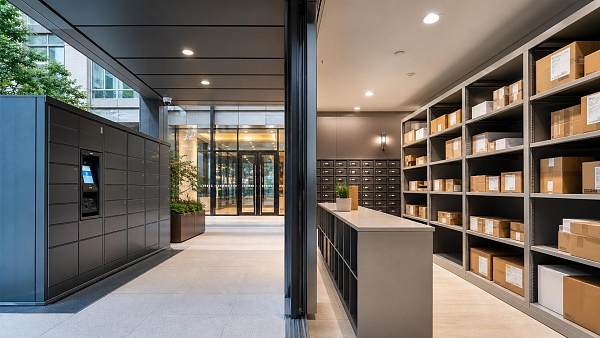
For procurement teams, delivery infrastructure is no longer a minor facility decision. It now affects theft exposure, labor cost, resident satisfaction, and the resilience of daily operations.
That is why last-mile parcel security solutions are getting more scrutiny in residential towers, mixed-use properties, campuses, and commercial buildings.
The core choice often comes down to two models. One is an outdoor smart parcel locker network. The other is a traditional building mailroom with controlled access.
Both can work. But they solve risk differently, and they create very different cost structures over time.
In practice, the better option depends on parcel volume, staffing model, property layout, access policy, and how much control the operator needs over chain of custody.
Why the comparison matters now
Parcel traffic has changed fast. E-commerce growth and flexible work patterns mean more deliveries arrive across longer windows, often with fewer staff available to supervise handover.
That shift raises a simple procurement question. Which last-mile parcel security solutions reduce loss without creating new bottlenecks for carriers, building teams, or end users?
Traditional mailrooms were designed for letters, smaller parcel counts, and more predictable staffing. Many buildings now push those spaces beyond their original operating limits.
Outdoor smart parcel lockers emerged because they separate parcel access from internal building circulation. That can reduce congestion and simplify secure delivery workflows.
Outdoor smart parcel lockers: strengths and tradeoffs
Outdoor locker systems are purpose-built last-mile parcel security solutions. Carriers deposit packages into locked compartments, and recipients retrieve them using digital credentials.
The strongest advantage is controlled handoff. Each delivery event can be logged by compartment, time, user, and access method.
That creates a cleaner audit trail than many open or semi-supervised mailrooms. It also helps during disputes involving missing, damaged, or misdelivered parcels.
Another benefit is deployment flexibility. Outdoor units can be placed near entrances, parking areas, perimeter gates, or community access points where carriers already stop.
This matters because it shortens delivery routes inside the property. Drivers spend less time seeking staff, waiting for entry, or moving through restricted corridors.
For procurement, outdoor systems also support phased scaling. Operators can add modules as parcel volume grows instead of expanding a staffed room.
The tradeoffs are just as real. Outdoor infrastructure must handle weather, vandalism risk, power reliability, and network uptime.
That means material quality, electronic lock durability, IP protection, anti-pry design, and remote monitoring are not optional details. They are core selection criteria.
- Best for properties needing low-touch access and extended pickup hours
- Useful where internal circulation should stay restricted
- Strong fit for multi-building sites and distributed communities
- Requires careful review of enclosure strength and service support
Building mailrooms: where they still perform well
A building mailroom can still be a viable part of last-mile parcel security solutions, especially in properties with stable staffing and lower parcel peaks.
Its main advantage is flexibility. Oversized parcels, special deliveries, returns, and service exceptions are often easier to manage in a staffed indoor space.
Mailrooms also benefit from environmental protection. They avoid direct exposure to rain, heat, dust, and extreme cold, which can simplify maintenance planning.
However, their security performance depends heavily on daily discipline. Access control, package logging, camera coverage, staffing consistency, and shelf organization all matter.
If any of those controls weaken, the room becomes a concentration point for loss. High parcel density can also create visual clutter and retrieval mistakes.
There is also a space cost. Internal square footage in urban buildings carries a premium, and a larger mailroom can compete with revenue-generating uses.
Security comparison: access, chain of custody, and exposure
When buyers compare last-mile parcel security solutions, the first lens should be exposure points. Every extra handoff increases uncertainty.
Outdoor smart parcel lockers reduce shared contact with parcels. Carrier access is brief, recipient access is compartment-based, and the audit trail is usually more structured.
Mailrooms can be secure too, but only when entry credentials, surveillance, staffing, and package handling rules stay consistently enforced.
In mixed-tenant buildings, shared mailrooms often face tailgating, temporary access abuse, and confusion around responsibility when parcels go missing.
This is where locker-based last-mile parcel security solutions usually outperform. They create a narrower attack surface and a clearer accountability model.
Cost analysis beyond the purchase price
Procurement decisions usually fail when buyers compare only the initial capital number. Last-mile parcel security solutions should be evaluated on five-year operating impact.
Outdoor lockers often require higher upfront hardware investment. But they can reduce front-desk handling time, internal delivery interruptions, and package investigation workload.
Mailrooms may seem cheaper at first, especially if the room already exists. Yet hidden costs appear in staffing, package sorting, tenant complaints, and loss resolution.
There is also an opportunity cost with indoor space. If prime internal area is used for parcel overflow, the real cost may be much higher than the fit-out budget suggests.
From a total-cost view, locker-based last-mile parcel security solutions often improve as parcel volume rises. Mailrooms perform better when volume is moderate and staffing already exists.
What buyers should check in a supplier evaluation
Supplier comparison should go beyond cabinet appearance or software screenshots. In practical procurement, security performance depends on design detail and service capability.
For outdoor smart parcel lockers, focus on enclosure material, anti-pry structure, lock cycle durability, environmental sealing, remote diagnostics, and parts replacement commitments.
For mailroom solutions, review access control integration, visitor flow separation, camera coverage, shelving logic, exception handling, and staffing assumptions.
Across both models, buyers should ask for failure data, service response times, deployment references, and evidence of secure software and credential management.
- How many access events can the system support each day?
- What happens during power or connectivity loss?
- How are oversized, damaged, or returned parcels handled?
- What is the maintenance interval for locks and electronic modules?
- Which references match the intended property type and parcel profile?
When each model makes the most sense
Choose outdoor locker-based last-mile parcel security solutions when access must stay available beyond office hours, internal traffic should be limited, or parcel counts are climbing fast.
They are especially effective in large residential communities, student housing, business parks, healthcare campuses, and mixed-use sites with multiple entrances.
Choose a building mailroom when the property already has reliable staff, oversize parcel handling is frequent, and internal secure space is readily available.
That model can still work well for lower-volume commercial buildings, managed offices, and properties with high-touch concierge expectations.
Some operators will land on a hybrid model. Standard parcels move through lockers, while large or exceptional items go through a controlled indoor room.
Final procurement takeaway
The best last-mile parcel security solutions are the ones that match operating reality, not just design preference. That means mapping risk, volume, staffing, and user access patterns first.
Outdoor smart parcel lockers usually win on traceability, modular growth, and lower-touch delivery control. Building mailrooms still hold value where flexibility and staffed exception handling matter most.
Before issuing an RFQ, define parcel volume bands, peak-hour assumptions, service-level expectations, and acceptable loss thresholds. That will make supplier comparison faster and more defensible.
In a market where delivery risk is now part of building security, better procurement starts with choosing last-mile parcel security solutions that can scale without weakening control.
Have questions about this sector analysis, or seeking best practices specific to your niche? Drop us a line below and let the senior consultants at MHLS assist you.
We respect your privacy. Your information is strictly confidential.
Recommended News
 Parcel Locker Network Pricing: Setup Costs, Fees and Contract TermsUnmanned Terminal FellowCompare parcel locker networks pricing, from setup costs and recurring fees to contract terms. Discover hidden charges and choose the right model.
 JR East Plans UWB Walk-Through Gates at 40 Stations in Spring 2028Access Control StrategistJR East plans UWB walk-through gates at 40 stations in spring 2028. Explore the rollout timeline and what suppliers should watch.
 Bank Vault Security Standards: UL and EN Ratings ExplainedVault Structural ArchitectExplore bank vault security standards and learn how UL 608 classes and EN 1143-1 grades differ, what they test, and how to verify certification before you buy.
 Mechanical Lock Hardware Prices: What Buyers Should Budget for Bulk OrdersMr. Gideon CrossMechanical lock hardware price is just the starting point. Discover what drives bulk-order costs and how to compare supplier quotes with confidence.
 IndexBox Forecasts Steady Global Security Keypad Market Growth Through 2035Dr. Valerius ThorneGlobal security keypad market growth is forecast at 3.3% annually through 2035. Explore the smart home and replacement trends shaping demand.
 Choosing an Infrared Safety Sensors Manufacturer: What Buyers Should CheckUnmanned Terminal FellowChoosing an infrared safety sensors manufacturer? Compare safety evidence, integration, environmental performance and lifecycle costs before you buy.
 Choosing a Security Material Testing Service: What to Check for Lock and Safe MaterialsProf. Elara SterlingChoose a security material testing service with confidence. Learn what to check for lock and safe materials, from attack methods and accreditation to reliable reports.
 How Precision Anti-Pick Lock Cylinders Resist ManipulationSecurity Metallurgy ExpertDiscover how precision anti-pick lock technology resists manipulation, and learn what to check when comparing security features, test evidence, and everyday reliability.
 Dermalog Joins NIST FastCAP Program for Contactless Fingerprint TestingProf. Elara SterlingDermalog joins the NIST FastCAP program for contactless fingerprint testing. Discover what this means for biometric identification and digital identity.
 Choosing Security Export Compliance Services: What Providers Should CoverMr. Gideon CrossSecurity export compliance services can help prevent costly delays. Discover what to look for in classification, licensing, screening, and documentation.
 European Security Compliance Standards for Safes: EN 1143-1 vs EN 14450Dr. Valerius ThorneExplore security compliance standards Europe buyers need to know. Compare EN 1143-1 and EN 14450 to choose the right safe with confidence.
 HID Global Acquires inepro ID to Expand RFID and BLE Access SolutionsUnmanned Terminal FellowHID Global acquires inepro ID to expand RFID and BLE access solutions for printers, smart lockers and shared devices. Explore what the deal could mean for your organization.











