
Parcel Locker Deployment Cost Breakdown: Site, Hardware, Software, and Installation Factors
Parcel Locker Deployment Cost Breakdown: Site, Hardware, Software, and Installation Factors
Understanding parcel locker deployment cost is essential when comparing vendors, rollout speed, and long-term operating value.
A locker project may look simple on paper, yet real budgets move quickly once site conditions, integration needs, and service scope become clear.
That is why smart buyers focus on total deployed cost, not cabinet price alone.
This guide explains the main cost drivers behind parcel locker deployment cost, with practical checkpoints for budgeting and supplier evaluation.
1. Start with the Site, Because It Changes Everything
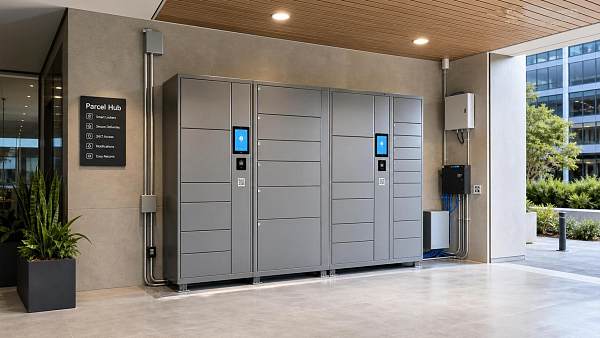
Site preparation is often the first hidden variable in parcel locker deployment cost.
An indoor lobby installation usually costs less than an outdoor installation beside a parking area or retail frontage.
Indoor sites may already provide level flooring, stable power, and internet access.
Outdoor sites often need concrete pads, drainage review, weather sealing, canopy considerations, and stronger anchoring.
This also affects labor scheduling, transport access, and installation equipment.
Key site cost items
- Floor leveling, wall clearance, and access path checks
- Concrete base or structural reinforcement
- Electrical wiring, breaker extension, and surge protection
- Network cabling, router placement, or cellular signal improvement
- Permits, property approvals, and contractor coordination
In actual projects, site readiness can shift parcel locker deployment cost by a meaningful margin before hardware even arrives.
A pre-installation survey is usually one of the cheapest ways to avoid budget surprises.
2. Hardware Cost Depends on More Than Locker Count
Hardware is the most visible line item, but not always the largest driver of parcel locker deployment cost.
Cabinet quantity matters, yet configuration matters more.
A compact indoor bank with standard compartments has a very different price profile from a modular outdoor system with oversized parcel doors.
Hardware variables that affect cost
- Number of doors and mix of small, medium, and large compartments
- Steel thickness, anti-pry strength, and corrosion resistance
- Indoor or outdoor enclosure rating
- Touchscreen size, scanner type, and user interface module
- Electronic lock quality, emergency access design, and audit capability
- ADA-friendly layout or custom accessibility requirements
Outdoor lockers usually push parcel locker deployment cost higher because they need stronger coatings, sealed electronics, and temperature-tolerant components.
Custom branding can also add cost through powder coating changes, wrapped panels, and modified interface screens.
If the project includes refrigerated, laundry, or return compartments, pricing moves again.
This is why the lowest unit quote is rarely the lowest deployed cost.
3. Software and Platform Fees Shape Long-Term Value
Software is where parcel locker deployment cost shifts from one-time spend to operating expense.
Some suppliers offer a bundled platform. Others charge separately for licenses, support tiers, API access, and feature upgrades.
That difference matters during multi-site expansion.
Common software cost elements
- Annual platform license or monthly SaaS fee
- User management, reporting, and operator dashboard access
- Mobile app support and notification workflows
- API integration with property, carrier, or access control systems
- Cybersecurity updates, backups, and remote diagnostics
From a procurement angle, recurring software charges deserve the same attention as equipment pricing.
A cheaper cabinet can become expensive if the platform locks you into rising annual fees.
More importantly, weak software support can increase downtime, which raises the real parcel locker deployment cost over time.
Questions worth asking suppliers
- Is the license charged per locker, per site, or per transaction?
- Which features require paid upgrades later?
- Are software updates included in the support contract?
- What happens if the site loses internet access?
4. Connectivity, Power, and Integration Often Sit Outside the Main Quote
A frequent budgeting mistake is assuming connectivity is a minor add-on.
In practice, it can materially change parcel locker deployment cost.
Some locations support wired Ethernet with little effort. Others need 4G or 5G service, signal boosters, or IT security review.
Power can be just as variable, especially in retrofits.
This becomes even more important in commercial buildings, mixed-use projects, and logistics networks with central reporting needs.
If the locker must connect with resident apps, carrier systems, or building access control, integration work should be priced early.
5. Installation Labor and Commissioning Are Not Just a Final Step
Installation labor is often treated as a simple service line, but it deserves a closer look.
Depending on the project, it can significantly influence parcel locker deployment cost.
The final number depends on access conditions, crew size, assembly time, and testing scope.
Labor and commissioning tasks
- Delivery handling and staging
- Cabinet assembly and anchoring
- Power-up, network setup, and software activation
- Door testing, lock calibration, and user flow validation
- Operator training and handover documentation
A rushed install can create expensive service calls later.
That is especially true when alignment, drainage, or network stability issues are missed during commissioning.
For regional rollouts, travel and local subcontractor coordination may also raise parcel locker deployment cost.
6. The Best Cost Model Compares CapEx, OpEx, and Risk
Recent buying patterns show a clear shift toward lifecycle thinking.
Teams are no longer asking only for purchase price.
They want to know how parcel locker deployment cost behaves over three to seven years.
That is the more useful decision frame.
A practical comparison checklist
- Separate one-time site and hardware cost from recurring software and connectivity cost.
- Model maintenance, warranty terms, and expected service response time.
- Estimate occupancy, parcel volume, and future expansion needs.
- Check whether the system can scale without replacing the core platform.
- Review lock reliability, vandal resistance, and outdoor durability claims.
This approach makes vendor comparisons sharper and more realistic.
It also helps explain why a mid-range proposal can outperform a low-price quote on total return.
7. How to Build a Smarter Budget Before You Issue an Order
The most reliable way to control parcel locker deployment cost is to define scope early and price it in layers.
Start with the site. Then confirm cabinet configuration. After that, lock down software, connectivity, and commissioning assumptions.
This sequence keeps the budget grounded in deployment reality.
Useful actions before final selection
- Request a detailed bill of scope, not only a product quotation
- Ask for exclusions, assumptions, and optional charges in writing
- Require a site survey for each location type
- Verify recurring fees over the planned contract term
- Test support responsiveness before rollout commitment
Parcel locker deployment cost is manageable when each cost layer is visible, measurable, and tied to operational value.
A better budget does more than reduce spending.
It reduces change orders, shortens deployment delays, and improves confidence in supplier selection.
When reviewing the next proposal, treat parcel locker deployment cost as a full system decision, not a cabinet purchase.
Have questions about this sector analysis, or seeking best practices specific to your niche? Drop us a line below and let the senior consultants at MHLS assist you.
We respect your privacy. Your information is strictly confidential.
Recommended News
 Parcel Locker Network Pricing: Setup Costs, Fees and Contract TermsUnmanned Terminal FellowCompare parcel locker networks pricing, from setup costs and recurring fees to contract terms. Discover hidden charges and choose the right model.
 JR East Plans UWB Walk-Through Gates at 40 Stations in Spring 2028Access Control StrategistJR East plans UWB walk-through gates at 40 stations in spring 2028. Explore the rollout timeline and what suppliers should watch.
 Bank Vault Security Standards: UL and EN Ratings ExplainedVault Structural ArchitectExplore bank vault security standards and learn how UL 608 classes and EN 1143-1 grades differ, what they test, and how to verify certification before you buy.
 Mechanical Lock Hardware Prices: What Buyers Should Budget for Bulk OrdersMr. Gideon CrossMechanical lock hardware price is just the starting point. Discover what drives bulk-order costs and how to compare supplier quotes with confidence.
 IndexBox Forecasts Steady Global Security Keypad Market Growth Through 2035Dr. Valerius ThorneGlobal security keypad market growth is forecast at 3.3% annually through 2035. Explore the smart home and replacement trends shaping demand.
 Choosing an Infrared Safety Sensors Manufacturer: What Buyers Should CheckUnmanned Terminal FellowChoosing an infrared safety sensors manufacturer? Compare safety evidence, integration, environmental performance and lifecycle costs before you buy.
 Choosing a Security Material Testing Service: What to Check for Lock and Safe MaterialsProf. Elara SterlingChoose a security material testing service with confidence. Learn what to check for lock and safe materials, from attack methods and accreditation to reliable reports.
 How Precision Anti-Pick Lock Cylinders Resist ManipulationSecurity Metallurgy ExpertDiscover how precision anti-pick lock technology resists manipulation, and learn what to check when comparing security features, test evidence, and everyday reliability.
 Dermalog Joins NIST FastCAP Program for Contactless Fingerprint TestingProf. Elara SterlingDermalog joins the NIST FastCAP program for contactless fingerprint testing. Discover what this means for biometric identification and digital identity.
 Choosing Security Export Compliance Services: What Providers Should CoverMr. Gideon CrossSecurity export compliance services can help prevent costly delays. Discover what to look for in classification, licensing, screening, and documentation.
 European Security Compliance Standards for Safes: EN 1143-1 vs EN 14450Dr. Valerius ThorneExplore security compliance standards Europe buyers need to know. Compare EN 1143-1 and EN 14450 to choose the right safe with confidence.
 HID Global Acquires inepro ID to Expand RFID and BLE Access SolutionsUnmanned Terminal FellowHID Global acquires inepro ID to expand RFID and BLE access solutions for printers, smart lockers and shared devices. Explore what the deal could mean for your organization.











