
Parcel Locker Network Platform Requirements: APIs, User Roles, and Reporting Explained
Choosing a parcel locker network platform is no longer a simple software selection task. In practice, the platform sits between locker hardware, electronic locks, carrier workflows, property systems, and access control rules. That makes APIs, permission design, and reporting central to delivery security, uptime, and operational scale.
For organizations reviewing smart parcel lockers within a broader physical security environment, the platform matters as much as the cabinet itself. A weak network layer can limit integration, blur accountability, and reduce traceability. A strong one supports secure last-mile delivery, cleaner data exchange, and better control across multiple sites.
Why the platform layer deserves closer attention
A parcel locker network platform is the software and connectivity layer that manages locker devices, user identities, parcel events, access permissions, alerts, and reporting. It usually connects cloud services with on-site controllers, mobile interfaces, and third-party systems.
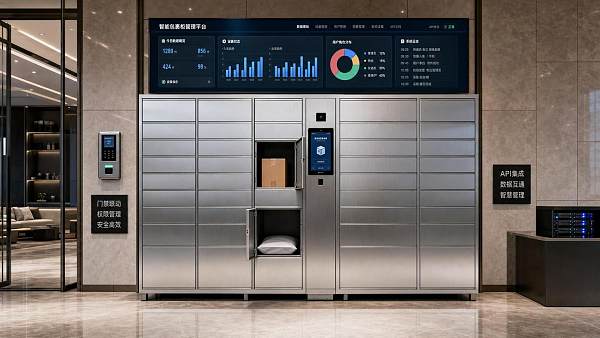
Its importance has grown because parcel lockers are now used in residential towers, campuses, office buildings, retail pick-up points, and mixed-use developments. These environments require more than open-compartment logic. They need system-level coordination.
From an SHPS perspective, this topic also belongs inside the wider smart hardware and physical security conversation. Parcel lockers are not isolated vending boxes. They are controlled access assets, often integrated with electronic locking, IoT monitoring, and building security policy.
What a modern parcel locker network platform should actually handle
At minimum, the platform should coordinate device management, parcel workflows, notifications, credential handling, event logging, and fault reporting. Beyond that, mature deployments expect multi-site administration, role-based security, and API-driven interoperability.
In real projects, the platform often becomes the operational center for several questions at once. Who deposited the parcel. Which door opened. Whether the lock responded. Whether the resident was notified. Whether a failed pickup needs escalation.
That is why platform requirements should be reviewed alongside locker structure, electronic lock reliability, controller architecture, and network resilience. Hardware strength and software visibility need to work together.
Core functions usually expected
- Remote locker provisioning and firmware updates
- Compartment status monitoring and fault alerts
- Parcel intake, pickup, return, and exception workflows
- Resident, courier, and operator identity management
- Audit logging for every open, override, and failed action
- Reporting across individual lockers, buildings, and regions
API requirements shape long-term flexibility
When comparing a parcel locker network platform, API depth matters more than a polished dashboard. The reason is simple. Locker networks rarely operate alone. They exchange data with carrier systems, property management software, tenant apps, and access control platforms.
A limited API can trap the deployment inside manual steps. Staff may need to upload parcel data, reconcile resident lists by hand, or manage exceptions outside the system. That increases delay and weakens chain-of-custody records.
Integration areas worth checking
More detailed review should cover authentication methods, event callbacks, API versioning, sandbox availability, and failure behavior. Good documentation is useful, but stable event logic is more important than attractive documentation alone.
It is also worth checking whether the parcel locker network platform can continue essential locker functions during temporary cloud or network disruption. In security-sensitive environments, offline continuity is a practical requirement, not a bonus feature.
User roles are a security control, not just an admin feature
Permission design often receives less attention than mobile apps or notification speed. That is a mistake. User roles define who can open compartments, assign parcels, trigger overrides, view logs, change settings, and export data.
A parcel locker network platform should support role-based access control with enough granularity to separate routine operations from high-risk actions. This becomes critical where lockers handle regulated goods, valuable items, or high parcel volume.
Role structure should match operational reality
Typical deployments include site administrators, regional operators, maintenance teams, delivery staff, property staff, support personnel, and end users. These groups do not need the same rights, and they should not inherit unrestricted access by convenience.
The stronger platforms allow permission assignment by site, device group, function, and approval level. For example, one role may view diagnostics but not export resident data. Another may reopen a compartment only with dual authorization.
- Require separate roles for parcel handling, technical maintenance, and policy administration
- Log all overrides, manual releases, and deleted records
- Support temporary credentials for contractors or time-limited access
- Use approval workflows for sensitive actions where needed
This is where parcel lockers connect back to broader SHPS themes. Just as smart locks and access control devices rely on credential discipline, locker platforms depend on clearly structured authority and auditability.
Reporting reveals whether the network is truly operating well
Reporting is often treated as a dashboard convenience. In reality, it is how operators measure service quality, verify parcel traceability, and detect weak points before they become repeated failures.
A useful parcel locker network platform should report both operational performance and security-relevant events. One without the other creates blind spots. High pickup rates do not mean much if override events are rising or lock faults are going unreviewed.
Metrics with real decision value
- Compartment occupancy by time, site, and locker size
- Average pickup time and overdue parcel volume
- Failed door openings, lock response delays, and controller faults
- Manual interventions, overrides, and access exceptions
- Notification delivery success and user response rates
- Site comparison for demand planning and maintenance prioritization
The reporting model should also preserve consistent timestamps, user identifiers, and event categories. Without standard event structure, cross-site analysis becomes unreliable, especially when comparing multiple locker generations or regional deployments.
Common deployment scenarios and evaluation differences
The same parcel locker network platform will be judged differently depending on location and operating model. Residential buildings focus on resident identity accuracy and notification flow. Commercial sites may prioritize visitor handling and loading-dock integration.
Campus and mixed-use projects usually need multi-tenant segmentation, broader service hours, and stronger reporting across zones. Open public pickup points may place more weight on device resilience, abuse logging, and remote fault response.
These differences affect API priorities, role complexity, and reporting depth. That is why platform selection should begin with use cases, not brochure features.
Practical checks before comparing vendors
A structured review process can expose weaknesses early. Instead of asking whether a parcel locker network platform supports integrations or reports, ask how those functions behave under real operating pressure.
- Request a sample event log showing deposit, pickup, failed open, override, and recovery events
- Test API behavior with stale user data, duplicate parcel IDs, and partial network loss
- Review whether permission changes take effect immediately across all sites
- Confirm export quality for compliance review and external analytics
- Examine firmware, controller, and cloud dependencies together
It also helps to map the platform against adjacent security systems. In buildings already using smart locks, turnstiles, or integrated access control, locker data should fit into the wider operational and audit environment.
A useful next step for platform evaluation
The best decisions usually come from a short requirement matrix built around APIs, role granularity, reporting depth, offline behavior, and hardware coordination. That creates a clearer basis for comparing parcel locker network platform options across vendors and deployment models.
For teams following SHPS coverage, parcel lockers should be assessed the same way other physical security technologies are assessed: through reliability, traceability, integration discipline, and operational fit. That approach makes the platform easier to judge before rollout, not after avoidable issues appear.
Have questions about this sector analysis, or seeking best practices specific to your niche? Drop us a line below and let the senior consultants at MHLS assist you.
We respect your privacy. Your information is strictly confidential.
Recommended News
 Parcel Locker Network Pricing: Setup Costs, Fees and Contract TermsUnmanned Terminal FellowCompare parcel locker networks pricing, from setup costs and recurring fees to contract terms. Discover hidden charges and choose the right model.
 JR East Plans UWB Walk-Through Gates at 40 Stations in Spring 2028Access Control StrategistJR East plans UWB walk-through gates at 40 stations in spring 2028. Explore the rollout timeline and what suppliers should watch.
 Bank Vault Security Standards: UL and EN Ratings ExplainedVault Structural ArchitectExplore bank vault security standards and learn how UL 608 classes and EN 1143-1 grades differ, what they test, and how to verify certification before you buy.
 Mechanical Lock Hardware Prices: What Buyers Should Budget for Bulk OrdersMr. Gideon CrossMechanical lock hardware price is just the starting point. Discover what drives bulk-order costs and how to compare supplier quotes with confidence.
 IndexBox Forecasts Steady Global Security Keypad Market Growth Through 2035Dr. Valerius ThorneGlobal security keypad market growth is forecast at 3.3% annually through 2035. Explore the smart home and replacement trends shaping demand.
 Choosing an Infrared Safety Sensors Manufacturer: What Buyers Should CheckUnmanned Terminal FellowChoosing an infrared safety sensors manufacturer? Compare safety evidence, integration, environmental performance and lifecycle costs before you buy.
 Choosing a Security Material Testing Service: What to Check for Lock and Safe MaterialsProf. Elara SterlingChoose a security material testing service with confidence. Learn what to check for lock and safe materials, from attack methods and accreditation to reliable reports.
 How Precision Anti-Pick Lock Cylinders Resist ManipulationSecurity Metallurgy ExpertDiscover how precision anti-pick lock technology resists manipulation, and learn what to check when comparing security features, test evidence, and everyday reliability.
 Dermalog Joins NIST FastCAP Program for Contactless Fingerprint TestingProf. Elara SterlingDermalog joins the NIST FastCAP program for contactless fingerprint testing. Discover what this means for biometric identification and digital identity.
 Choosing Security Export Compliance Services: What Providers Should CoverMr. Gideon CrossSecurity export compliance services can help prevent costly delays. Discover what to look for in classification, licensing, screening, and documentation.
 European Security Compliance Standards for Safes: EN 1143-1 vs EN 14450Dr. Valerius ThorneExplore security compliance standards Europe buyers need to know. Compare EN 1143-1 and EN 14450 to choose the right safe with confidence.
 HID Global Acquires inepro ID to Expand RFID and BLE Access SolutionsUnmanned Terminal FellowHID Global acquires inepro ID to expand RFID and BLE access solutions for printers, smart lockers and shared devices. Explore what the deal could mean for your organization.











