Physical Security for Logistics Facilities: Securing Gates, Docks, and Assets
At a busy logistics facility, security failures rarely begin with a dramatic break-in. More often, they start with a gate left open during a shift change, a driver admitted without a verified appointment, a dock door standing unsecured between loads, or a pallet moved without a clear chain of custody. In an environment built around speed, these small gaps can quickly become inventory loss, tampering exposure, safety incidents, and difficult insurance or audit questions.
Physical security for logistics facilities is therefore not simply a matter of putting more cameras around a warehouse. It is a coordinated operating model that protects the perimeter, controls vehicle and pedestrian movement, monitors loading docks, and makes high-value assets traceable while keeping distribution work moving. For quality control and security managers, the central challenge is practical: introduce meaningful control points without turning every delivery, inspection, or dispatch into a bottleneck.
Think in routes, not isolated security devices
A distribution center has multiple pathways into its assets: the outer perimeter, entry gates, employee doors, visitor reception, trailer yards, loading docks, cage areas, returns zones, and internal storage locations. A facility may have strong fencing and high-resolution surveillance, yet remain exposed if a visitor can tailgate through a staff entrance or if an arriving trailer can be positioned at an unassigned dock.
The most effective approach is to map the movement of people, vehicles, goods, and information through the site. This exercise often reveals that the most vulnerable point is not the warehouse wall. It may be the handover between guard staff and warehouse personnel, the unmonitored period before a dock door is closed, or the process used to handle damaged and returned goods.
For each route, security managers should define four simple questions:
- Who is permitted to enter this area or handle this asset?
- What evidence confirms that permission?
- What event should trigger an alert or escalation?
- Who owns the response when an exception occurs?
This creates a physical security plan that supports operational accountability rather than a collection of disconnected hardware. Gate controllers, access credentials, door contacts, electronic locks, dock interlocks, cameras, and inventory systems can then be selected around actual risk points.
Secure the gate without slowing the yard
Vehicle gates are the first meaningful checkpoint for most logistics sites. They must separate scheduled business activity from opportunistic or unauthorized access, especially where there are frequent carrier changes, contract drivers, subcontractors, and visitor traffic.
A secure gate process begins before a truck arrives. Appointment scheduling, carrier identification, license plate details, driver contact information, expected load type, and assigned time windows should be available to gate personnel or integrated into a yard management workflow. When a vehicle appears with no expected record, the default should not be “wave it through and investigate later.” It should be a defined exception process.
Physical controls at the entry point may include sliding or swing gates, rising barriers, anti-climb fencing, bollards, vehicle-rated barriers where threat levels justify them, and protected gatehouses. The right selection depends on traffic volume, vehicle type, road geometry, local safety requirements, and the consequences of forced entry. A barrier arm manages normal traffic flow; it is not necessarily a vehicle-stopping security barrier. Treating these as interchangeable is a common planning mistake.
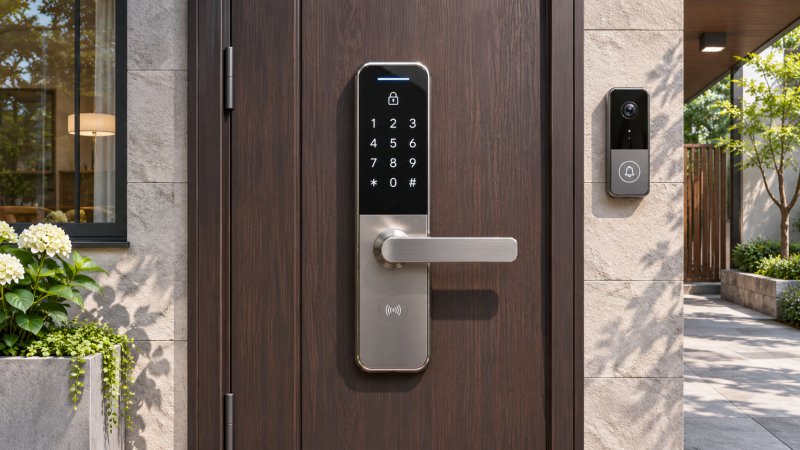
Credentialing also needs to match the user. Employees may use mobile credentials, cards, PINs, or biometric verification where appropriate. Drivers are often better handled through pre-registration, temporary credentials, QR-based check-in, or attended verification. For higher-risk facilities, a gate decision can combine several factors: a valid appointment, a verified vehicle identifier, a driver credential, and a designated destination.
The objective is not to challenge every legitimate arrival with unnecessary friction. It is to make unauthorized entry visible and difficult. Clear lane markings, separate pedestrian access, waiting areas outside the secure perimeter, and instructions displayed before the gate can reduce confusion while improving control.
Loading docks deserve the same attention as the front gate
Loading docks are where inventory is most exposed. Doors open to the outside, trailers arrive and leave continuously, staff are under time pressure, and the boundary between “inside” and “in transit” can become unclear. Theft, substitution, tampering, and documentation errors often emerge in these transition zones.
Dock security should be designed around a controlled sequence: vehicle arrival, identity confirmation, yard placement, dock assignment, trailer restraint, door opening, loading or unloading, verification, sealing, and departure authorization. Not every site requires a fully automated dock system, but every site benefits from knowing which steps are complete and which are not.
Dock-door contacts can indicate whether a door has opened outside an approved operating period. Electronic locks and monitored access doors can limit entry to authorized warehouse staff. Vehicle restraint systems and dock interlocks may help prevent unsafe or unauthorized movement while work is underway. When connected to access control or building management platforms, these events can provide a useful audit trail: which dock was used, when it opened, who accessed it, and whether an alarm condition was acknowledged.
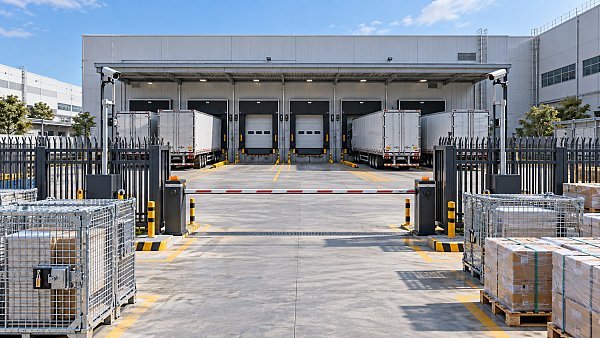
Surveillance coverage should support a real operational question, not merely produce footage after an incident. Cameras positioned at dock approaches, trailer interiors where feasible, dock thresholds, seal application points, and dispatch lanes can help supervisors review disputed movements. Coverage needs suitable lighting, a clear view of faces or identifying markings where required, protected cable routes, and retention policies consistent with the facility’s risk and privacy obligations.
One useful practice is to establish a “no unobserved transfer” rule for sensitive categories such as pharmaceuticals, electronics, bonded goods, controlled products, or high-value returns. This does not necessarily mean a security officer must stand at every dock. It may mean monitored video coverage, dual-person verification, scan confirmation, tamper-evident seals, or a combination of these measures.
Protect high-value assets with layered custody controls
High-value inventory should not rely on the general warehouse perimeter alone. A pallet of consumer goods and a compact shipment of valuable components may occupy the same building, but they do not carry the same loss profile. Security zoning allows managers to apply stronger controls only where they are justified.
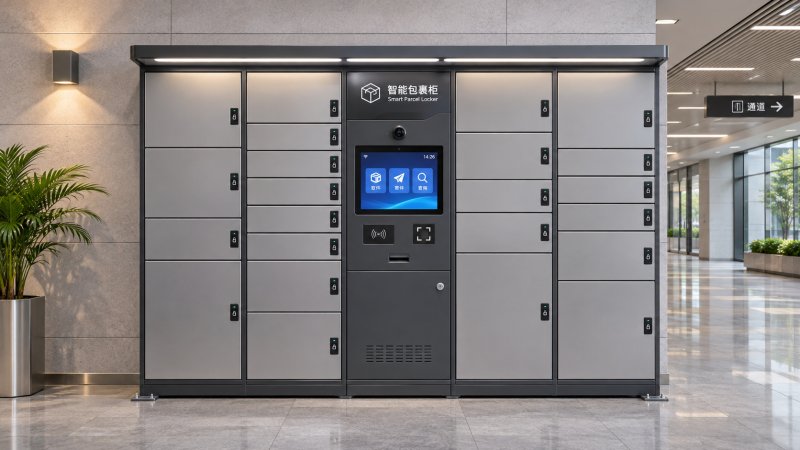
Common measures include locked cages, mesh partitions, restricted-access rooms, controlled key cabinets, electronic locker systems, and designated inspection areas. For small, sensitive, or frequently transferred items, smart parcel lockers or electronically controlled asset lockers can create an accountable handover point. Access logs can show who retrieved an item and when, while compartment status alerts can flag doors left open.
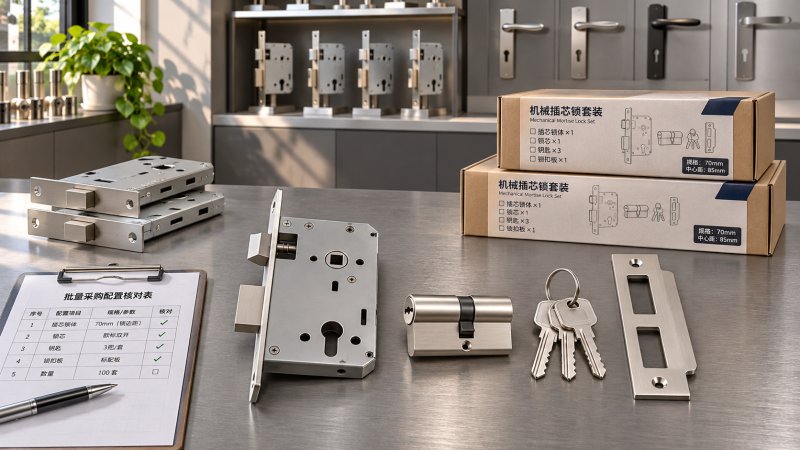
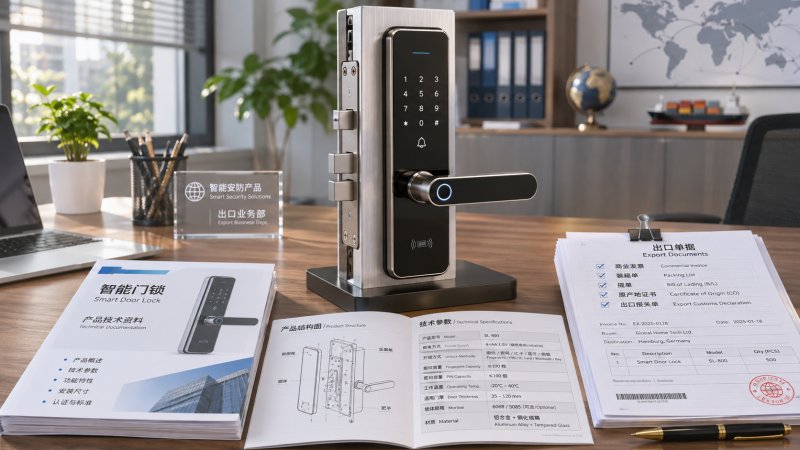
Mechanical resilience still matters. An electronic access control platform is only as strong as the door, frame, lock body, hinges, strike plate, and cylinder supporting it. For restricted rooms, managers should assess resistance to forced entry, drilling, prying, picking, and unauthorized key duplication according to the threat environment. High-security mechanical cylinders, protected escutcheons, reinforced doors, and properly specified locking hardware can provide a dependable physical foundation beneath electronic credentials.
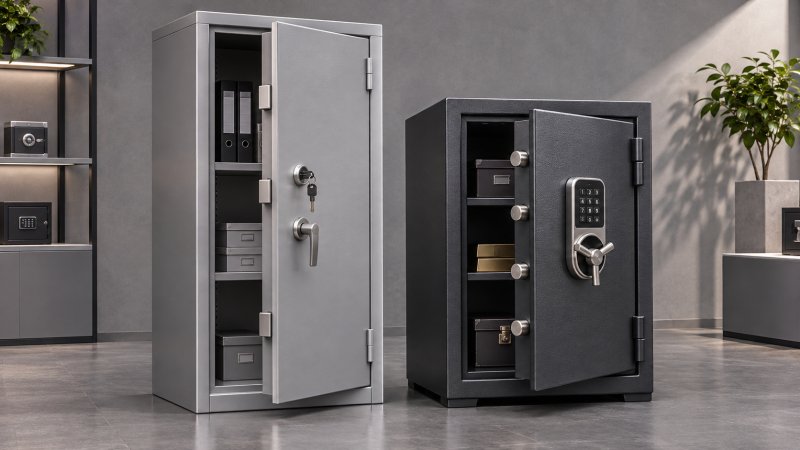
For exceptionally sensitive stock, a secure room may require additional layers: intrusion detection, monitored alarm response, dual authorization, restricted key management, and secure storage cabinets or safes selected for the assets and risk involved. A safe or vault solution should not be chosen by appearance or weight alone; burglary-resistance testing, locking configuration, anchoring conditions, operational access needs, and installation quality all matter.
Access control must reflect real working patterns
Warehouse security can fail when access permissions are too broad or too difficult to use. If every forklift operator can enter every storage zone “because it is easier,” the system loses much of its value. Conversely, if authorized staff must wait repeatedly for manual entry, they will seek workarounds.
Role-based access control offers a balanced model. Receiving teams, picking teams, quality inspectors, maintenance contractors, supervisors, and cleaning personnel receive access based on assigned duties, locations, and shifts. Time-based permissions can prevent a credential valid for a daytime shift from being used overnight. Temporary access should expire automatically rather than remaining active until someone remembers to remove it.
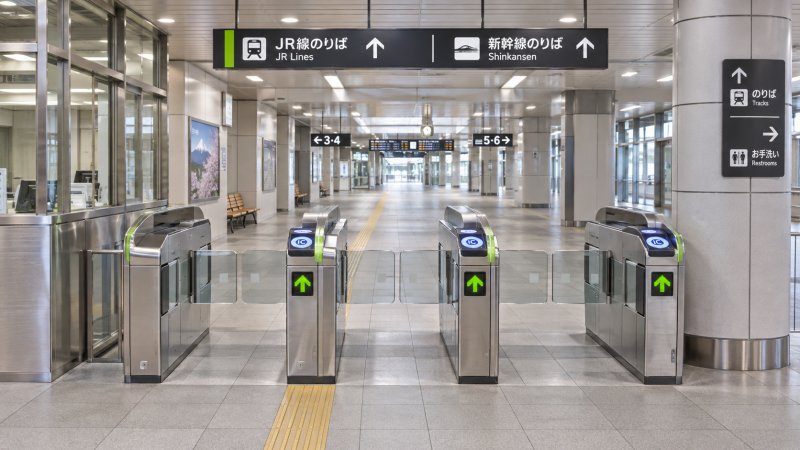
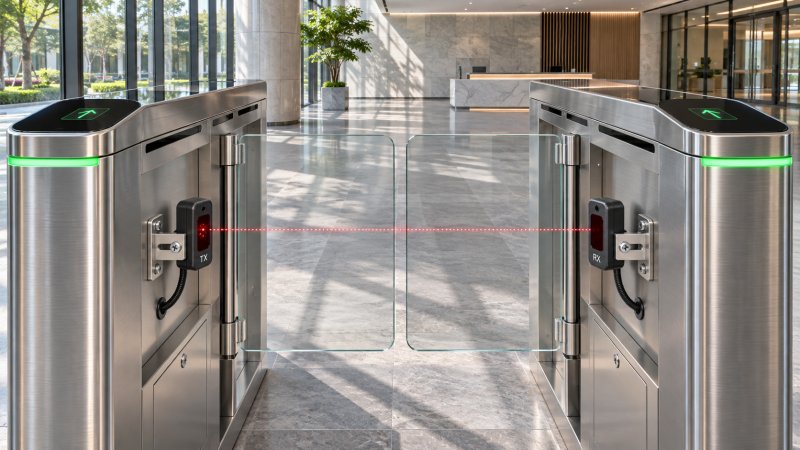
At busy staff entrances, turnstiles or speed gates paired with credential readers can help control flow and reduce tailgating. Infrared detection systems can identify attempted piggybacking, while safety sensors are important to prevent contact with legitimate users. These systems must be selected carefully for the traffic pattern: a personnel entrance with high peak volume has different needs from a controlled entrance to a high-value cage.
Biometric verification may be appropriate in certain sensitive zones, but it should be assessed as part of a broader governance decision. Factors include workforce acceptance, privacy rules, enrollment quality, liveness detection capabilities, fallback procedures, and the risk of shared or lost credentials. Biometrics can strengthen identity assurance; they do not eliminate the need for good door hardware, visitor management, and supervision.
Quality control is part of physical security
For quality managers, physical security and product integrity often overlap. A damaged seal, an unexplained pallet move, an open dock door, or an incorrect trailer can be a quality event as well as a security concern. The handoff between these teams should be designed intentionally.
Consider building security checks into existing quality processes rather than creating a separate paperwork burden. Receiving inspections can verify seal condition and trailer identity. Dispatch checks can confirm load documentation, dock assignment, and seal application. Returns teams can record the condition of goods immediately upon arrival and isolate suspicious or damaged items in a controlled area.
Exception records are particularly valuable. A late-arriving vehicle, failed access attempt, broken lock, lost credential, door-held-open alert, or mismatch between scheduled and actual dock use should have a documented owner and response path. Repeated minor exceptions may reveal a training issue, a poorly designed process, or an emerging theft pattern long before a major loss occurs.
Technology integration should improve decisions, not create more screens
Access control, video surveillance, intrusion alarms, electronic locks, visitor systems, smart lockers, and yard operations may all generate data. The goal is not to make security staff watch several dashboards at once. It is to connect the events that matter.
For example, an alarm generated by a dock door after hours becomes more useful when it is paired with camera footage, the identity of the last badge holder in that area, and the status of the relevant shipment. A locker opening is more meaningful when connected to a work order or asset transfer record. Integration can also support investigation, audit preparation, and continuous improvement without requiring every event to be handled as an emergency.
When evaluating systems, ask practical questions: Can the platform retain reliable event logs? Does it work during network interruptions? Are electronic locks fail-safe or fail-secure in a manner appropriate to the door and life-safety requirements? Can credentials be disabled quickly? Is there a clear method for exporting incident evidence? These operational details are often more important than an impressive feature list.
A realistic implementation path
Many facilities cannot rebuild their perimeter or replace every door at once. A phased plan is often more credible and easier to manage. Start with a site risk assessment that combines loss history, asset value, traffic flow, process observations, and known blind spots. Walk the facility at different times of day, including shift changes and dispatch peaks. The conditions at 2 p.m. may look very different from those at 2 a.m.
Prioritize controls that close clear gaps: unsecured pedestrian access, poor dock visibility, unmanaged visitor entry, weak key control, or unprotected high-value storage. Test revised procedures with the people who operate them. Guards, supervisors, drivers, and warehouse associates will quickly identify whether a process is workable under real conditions.
Strong physical security for logistics facilities is built through consistent, visible control: gates that verify arrivals, docks that document handovers, access points that match job roles, and asset zones that reflect actual risk. When these measures are designed around the flow of work, security becomes less of an obstacle and more of a dependable part of a well-run logistics operation.
Have questions about this sector analysis, or seeking best practices specific to your niche? Drop us a line below and let the senior consultants at MHLS assist you.
We respect your privacy. Your information is strictly confidential.
Recommended News
 Parcel Locker Network Pricing: Setup Costs, Fees and Contract TermsUnmanned Terminal FellowCompare parcel locker networks pricing, from setup costs and recurring fees to contract terms. Discover hidden charges and choose the right model.
 JR East Plans UWB Walk-Through Gates at 40 Stations in Spring 2028Access Control StrategistJR East plans UWB walk-through gates at 40 stations in spring 2028. Explore the rollout timeline and what suppliers should watch.
 Bank Vault Security Standards: UL and EN Ratings ExplainedVault Structural ArchitectExplore bank vault security standards and learn how UL 608 classes and EN 1143-1 grades differ, what they test, and how to verify certification before you buy.
 Mechanical Lock Hardware Prices: What Buyers Should Budget for Bulk OrdersMr. Gideon CrossMechanical lock hardware price is just the starting point. Discover what drives bulk-order costs and how to compare supplier quotes with confidence.
 IndexBox Forecasts Steady Global Security Keypad Market Growth Through 2035Dr. Valerius ThorneGlobal security keypad market growth is forecast at 3.3% annually through 2035. Explore the smart home and replacement trends shaping demand.
 Choosing an Infrared Safety Sensors Manufacturer: What Buyers Should CheckUnmanned Terminal FellowChoosing an infrared safety sensors manufacturer? Compare safety evidence, integration, environmental performance and lifecycle costs before you buy.
 Choosing a Security Material Testing Service: What to Check for Lock and Safe MaterialsProf. Elara SterlingChoose a security material testing service with confidence. Learn what to check for lock and safe materials, from attack methods and accreditation to reliable reports.
 How Precision Anti-Pick Lock Cylinders Resist ManipulationSecurity Metallurgy ExpertDiscover how precision anti-pick lock technology resists manipulation, and learn what to check when comparing security features, test evidence, and everyday reliability.
 Dermalog Joins NIST FastCAP Program for Contactless Fingerprint TestingProf. Elara SterlingDermalog joins the NIST FastCAP program for contactless fingerprint testing. Discover what this means for biometric identification and digital identity.
 Choosing Security Export Compliance Services: What Providers Should CoverMr. Gideon CrossSecurity export compliance services can help prevent costly delays. Discover what to look for in classification, licensing, screening, and documentation.
 European Security Compliance Standards for Safes: EN 1143-1 vs EN 14450Dr. Valerius ThorneExplore security compliance standards Europe buyers need to know. Compare EN 1143-1 and EN 14450 to choose the right safe with confidence.
 HID Global Acquires inepro ID to Expand RFID and BLE Access SolutionsUnmanned Terminal FellowHID Global acquires inepro ID to expand RFID and BLE access solutions for printers, smart lockers and shared devices. Explore what the deal could mean for your organization.