
Remote Monitoring for Parcel Lockers: How to Reduce Downtime and Missed Deliveries
Remote monitoring matters when locker uptime affects delivery promises
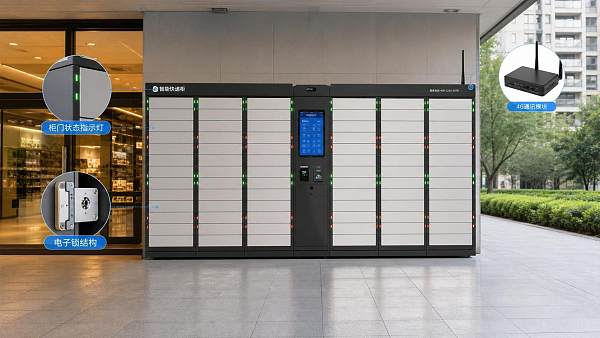
Remote monitoring parcel lockers has moved from a convenience feature to an operational control layer.
When lockers sit across apartment blocks, campuses, retail sites, and transport hubs, small failures spread quickly into missed deliveries and service complaints.
The practical value is not only visibility.
It is the ability to detect door faults, lock errors, battery decline, controller alarms, and connectivity loss before a site becomes unavailable.
In physical security infrastructure, that early warning matters because lockers combine electronics, mechanical locking, user access, and network dependency in one enclosure.
This is why remote monitoring parcel lockers now sits close to access control, smart lock reliability, and building security integration rather than simple parcel storage.
Actual deployment conditions change what should be monitored first
Different sites create different failure patterns.
A residential locker bank usually faces peak activity in the evening, repeated door cycles, and frequent user support issues.
A transit location may face stronger vibration, unstable power quality, and heavier exposure to unauthorized access attempts.
Indoor commercial properties often look easier, yet software integration can be more complex because locker events must align with property systems and service workflows.
The more useful approach is to match monitoring priorities to usage intensity, environmental risk, communication method, and the criticality of parcel turnover.
That approach fits the broader SHPS view of smart hardware.
Mechanical parts, IoT links, electronic locks, and physical access security should be judged together, not in separate checklists.
What often changes by site
Residential locker banks need fast fault isolation, not just alert volume
In apartment and community settings, parcel availability shapes user trust more than almost any dashboard metric.
One failed compartment can block several deliveries during peak hours, especially when parcel size distribution is uneven.
For this reason, remote monitoring parcel lockers should identify which doors are stuck, which locks failed to release, and whether the issue is local or system-wide.
A generic offline warning is usually not enough.
The better setup distinguishes door sensor faults from actuator failures, low-voltage events, and software command errors.
That difference changes the response path.
Some issues need remote reset.
Others need a technician with specific spare parts.
A common misjudgment here is focusing only on occupancy data.
Occupancy helps allocation, but missed deliveries usually come from unresolved hardware events, not from lack of usage visibility.
Retail and campus sites usually expose connectivity weakness first
Retail chains and campuses often deploy lockers across multiple buildings with inconsistent network conditions.
In these environments, remote monitoring parcel lockers must do more than report that a node is online.
It should track packet loss, delayed command execution, failed update attempts, and the time gap between event occurrence and cloud synchronization.
That is where 4G and 5G backup paths, SIM health checks, and local event caching become practical rather than optional.
More importantly, delayed communication can look like a lock problem when the real issue is unstable transport between controller and platform.
Without granular remote monitoring parcel lockers data, teams often dispatch the wrong service resource.
A site with recurring signal degradation needs network remediation, not repeated lock replacement.
Useful checks before scaling a distributed locker network
- Confirm whether alerts are compartment-level, cabinet-level, or network-level.
- Review how long the locker can operate safely during temporary disconnection.
- Check whether remote firmware updates can be rolled back.
- Verify that lock event logs remain time-synced after reconnect.
- Test whether remote diagnostics reduce unnecessary site visits in practice.
Transport hubs and public-access zones shift the focus toward security events
In stations, public forecourts, and other open-access areas, uptime still matters, but the risk model changes.
Here, remote monitoring parcel lockers should correlate mechanical anomalies with security signals such as repeated failed openings, forced-door alarms, unusual overnight access, and cabinet vibration patterns.
This is where parcel lockers begin to overlap with broader physical security systems.
If a locker network already sits near turnstiles, surveillance, or access control, event correlation improves incident interpretation.
A failed lock release after a forced-door event should not be treated like ordinary wear.
The response may require inspection of lock bodies, hinges, sensors, and enclosure deformation.
One overlooked point is audit integrity.
For disputed handovers or suspected tampering, incomplete event trails weaken both operational review and insurance support.
Different environments need different thresholds and service logic
The same alert threshold rarely works across every locker estate.
A battery warning that is acceptable for an indoor backup unit may be too late for an outdoor cabinet in winter.
A lock cycle count that seems normal in one site may indicate accelerated wear in another.
This is why remote monitoring parcel lockers should feed maintenance policy, not just a dashboard.
Practical service logic usually combines condition-based triggers with fixed inspection intervals.
That hybrid approach works better than relying on periodic visits alone.
It also fits hardware categories seen across SHPS coverage, where mechanical durability, electronic reliability, and compliance readiness must be reviewed together.
Where requirements commonly diverge
The biggest mistakes usually happen before the system goes live
One frequent mistake is buying around nominal features instead of diagnostic depth.
A platform may claim remote monitoring parcel lockers capability but still provide shallow alarm categories that do not support real maintenance decisions.
Another mistake is treating all locker failures as software failures.
Field conditions often show the opposite.
Mechanical misalignment, door rebound, worn actuators, and intermittent power issues can create recurring digital symptoms.
It is also easy to underestimate integration constraints.
If event data cannot be shared cleanly with maintenance software, ticketing, or security review tools, remote visibility remains trapped inside one screen.
The final blind spot is lifecycle cost.
Lower initial hardware pricing can disappear quickly when poor diagnostics lead to more downtime, more site visits, and slower root-cause analysis.
A practical next step is to build monitoring rules around real failure paths
The most useful starting point is to map the failures that actually interrupt delivery.
Separate door and lock faults from communication loss, power instability, and suspicious access events.
Then assign thresholds by environment, turnover level, and service distance.
From there, review whether remote monitoring parcel lockers data supports preventive maintenance, evidence retention, and realistic spare-parts planning.
The goal is not more alerts.
The goal is fewer missed deliveries, shorter downtime, and clearer technical judgment when a locker network starts to drift out of normal performance.
When remote visibility is aligned with site conditions, parcel lockers become easier to maintain, easier to secure, and more dependable across the full physical infrastructure lifecycle.
Have questions about this sector analysis, or seeking best practices specific to your niche? Drop us a line below and let the senior consultants at MHLS assist you.
We respect your privacy. Your information is strictly confidential.
Recommended News
 Parcel Locker Network Pricing: Setup Costs, Fees and Contract TermsUnmanned Terminal FellowCompare parcel locker networks pricing, from setup costs and recurring fees to contract terms. Discover hidden charges and choose the right model.
 JR East Plans UWB Walk-Through Gates at 40 Stations in Spring 2028Access Control StrategistJR East plans UWB walk-through gates at 40 stations in spring 2028. Explore the rollout timeline and what suppliers should watch.
 Bank Vault Security Standards: UL and EN Ratings ExplainedVault Structural ArchitectExplore bank vault security standards and learn how UL 608 classes and EN 1143-1 grades differ, what they test, and how to verify certification before you buy.
 Mechanical Lock Hardware Prices: What Buyers Should Budget for Bulk OrdersMr. Gideon CrossMechanical lock hardware price is just the starting point. Discover what drives bulk-order costs and how to compare supplier quotes with confidence.
 IndexBox Forecasts Steady Global Security Keypad Market Growth Through 2035Dr. Valerius ThorneGlobal security keypad market growth is forecast at 3.3% annually through 2035. Explore the smart home and replacement trends shaping demand.
 Choosing an Infrared Safety Sensors Manufacturer: What Buyers Should CheckUnmanned Terminal FellowChoosing an infrared safety sensors manufacturer? Compare safety evidence, integration, environmental performance and lifecycle costs before you buy.
 Choosing a Security Material Testing Service: What to Check for Lock and Safe MaterialsProf. Elara SterlingChoose a security material testing service with confidence. Learn what to check for lock and safe materials, from attack methods and accreditation to reliable reports.
 How Precision Anti-Pick Lock Cylinders Resist ManipulationSecurity Metallurgy ExpertDiscover how precision anti-pick lock technology resists manipulation, and learn what to check when comparing security features, test evidence, and everyday reliability.
 Dermalog Joins NIST FastCAP Program for Contactless Fingerprint TestingProf. Elara SterlingDermalog joins the NIST FastCAP program for contactless fingerprint testing. Discover what this means for biometric identification and digital identity.
 Choosing Security Export Compliance Services: What Providers Should CoverMr. Gideon CrossSecurity export compliance services can help prevent costly delays. Discover what to look for in classification, licensing, screening, and documentation.
 European Security Compliance Standards for Safes: EN 1143-1 vs EN 14450Dr. Valerius ThorneExplore security compliance standards Europe buyers need to know. Compare EN 1143-1 and EN 14450 to choose the right safe with confidence.
 HID Global Acquires inepro ID to Expand RFID and BLE Access SolutionsUnmanned Terminal FellowHID Global acquires inepro ID to expand RFID and BLE access solutions for printers, smart lockers and shared devices. Explore what the deal could mean for your organization.











