
Six ASEAN Markets Create New HS Code for Smart Lockers
On July 4, 2026, a joint notice issued by the ASEAN Secretariat together with Vietnam, Thailand, Malaysia, Indonesia, the Philippines, and Cambodia introduced a dedicated HS code for Outdoor Smart Parcel Lockers and confirmed a five-year zero-tariff transition arrangement under RCEP. For logistics operators, equipment exporters, procurement teams, and supply chain service providers, this is notable because it changes how this product category is classified in trade and directly affects import cost assumptions, procurement timing, and delivery planning for last-mile deployment.
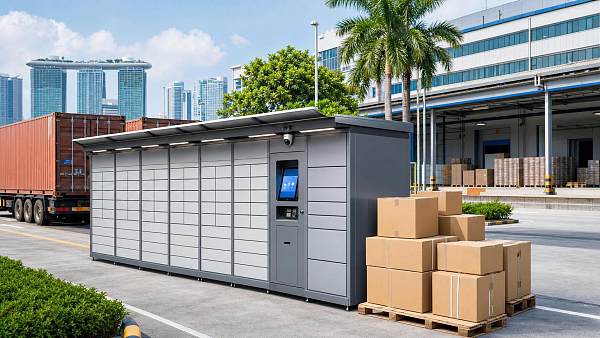
A clearer trade classification now exists for outdoor smart lockers
The confirmed facts are limited but commercially meaningful. According to the information provided, Joint Notice No. 2026/07 established a dedicated HS code, 8535.90.91, for Outdoor Smart Parcel Lockers. The same notice confirmed that the product category is eligible for a five-year zero-tariff transition arrangement under RCEP. The notice was jointly released on July 4, 2026, by the ASEAN Secretariat and six markets: Vietnam, Thailand, Malaysia, Indonesia, the Philippines, and Cambodia. The provided summary also states that this change is expected to reduce equipment import costs for regional logistics operators by about 12-18% and accelerate batch deployment of China-made outdoor smart lockers in last-mile scenarios.
Where the practical effects are likely to appear first
Exporters and manufacturers may face a more defined customs path
From an industry perspective, exporters of outdoor smart lockers and the manufacturers supporting them are likely to feel the effect first because product classification affects customs treatment, pricing structure, and shipment documentation. What deserves closer attention is whether product descriptions, technical files, commercial invoices, packing lists, and customs declarations are aligned with the newly designated HS code and the stated RCEP treatment. Even where the commercial opportunity improves, companies still need to ensure that their declared product scope matches the classification now being used.
Regional buyers may revisit procurement assumptions
For logistics operators and other buyers deploying last-mile infrastructure, the immediate impact is likely to show up in procurement budgets and project rollout sequencing. Analysis shows that a lower import cost expectation can affect tender calculations, equipment sourcing choices, and the timing of volume purchases. Buyers should pay close attention to whether bidding documents, internal procurement specifications, and landed-cost models are updated to reflect the new code and the zero-tariff transition arrangement described in the notice.
Supply chain and delivery service providers may need tighter document control
Freight forwarders, customs handling teams, and broader supply chain service providers may also be affected because classification changes often shift document review priorities at the execution stage. Observably, the operational issue is less about headline policy language and more about whether shipment files consistently identify the product in a way that supports the intended tariff treatment. Delivery schedules, customs clearance preparation, and handover documentation may therefore require closer coordination between exporter, buyer, and service provider.
Execution points companies should monitor now
Check classification alignment before shipment or tender submission
Analysis shows that the first practical step is to verify whether the product being sold or procured is described consistently across customs, commercial, and technical documents. Where the new HS code becomes part of contract or tender language, inconsistencies between product naming and filing materials could create avoidable execution friction.
Follow how the RCEP transition treatment is applied in practice
It is more appropriate to understand this as a rule change with immediate trade relevance, but one that still needs implementation-level observation. Companies should therefore track how the five-year zero-tariff transition arrangement is referenced in customs practice, procurement workflows, and commercial negotiations, rather than assuming that every downstream process has already adjusted in a uniform way.
Prepare technical and compliance files for cross-border review
For exporters and procurement teams, technical specifications, product descriptions, and any supporting compliance materials may become more important once a dedicated classification is in place. The provided information does not include detailed execution requirements, so the prudent approach is to review whether internal files are complete enough to support customs interpretation, buyer due diligence, and delivery acceptance.
Watch for changes in tender wording and after-sales obligations
What deserves closer attention is not only tariff treatment but also how market participants revise purchasing documents after this notice. If lower import cost expectations encourage faster deployment, buyers and sellers may need to revisit delivery commitments, installation coordination, spare-parts planning, and quality traceability arrangements. The current information does not confirm those downstream changes, so they should be treated as points to monitor rather than established outcomes.
Why this reads as an execution signal, not just a headline
Observably, this development is more than a symbolic classification update because it combines two elements that matter in real transactions: a dedicated HS code and a defined RCEP tariff transition arrangement. At the same time, it would be premature to treat the market effect as fully settled. Analysis shows that the main significance at this stage lies in the execution signal it sends to exporters, buyers, and service providers: product classification for outdoor smart parcel lockers is becoming more specific, and tariff treatment is now directly relevant to commercial planning in the six named markets.
How the market should interpret this development
At this stage, the most reasonable reading is that the notice creates a concrete trade and procurement reference point for Outdoor Smart Parcel Lockers in the six participating markets. It does not by itself confirm how every customs office, buyer, or project pipeline will respond, but it does provide a clearer framework for pricing, sourcing, and shipment preparation. In practical terms, this is best understood as a landed rule change with immediate business implications, while the pace and consistency of implementation still deserve continued observation.
Basis of this article and what still needs verification
This article is based on the user-provided news title, event date, and event summary. For events of this type, relevant source categories typically include official notices, releases from regulatory or trade-related authorities, customs or trade administration information, industry association updates, standard-setting documents, and reporting by authoritative media. A specific official source link was not provided in the input, so that part still requires further verification. Continued attention should also be given to later policy detail, implementation language, certification or compliance interpretation, tender document changes, market feedback, and how companies actually apply the new classification and tariff treatment in cross-border transactions.
Have questions about this sector analysis, or seeking best practices specific to your niche? Drop us a line below and let the senior consultants at MHLS assist you.
We respect your privacy. Your information is strictly confidential.
Recommended News
 Financial Facility Security: Choosing Vault Doors for Bank BranchesVault Structural ArchitectStrengthen financial facility security with the right bank vault door. Explore certification, installation, locking controls and maintenance before you buy.
 MACO Acquires Majority Stake in Fingerprint Access Provider ekeyProf. Elara SterlingMACO acquires a majority stake in ekey, bringing fingerprint access and door hardware closer together. Discover what the deal could mean for smart buildings.
 Physical Security System Engineering: From Risk Assessment to System DesignUnmanned Terminal FellowExplore physical security system engineering, from risk assessment to integrated design, procurement and testing. Build a safer, more resilient facility.
 Apple Home Collection Smart Lock and Other Accessories Open for Preorder November 13Biometric Auth ScientistApple Home Collection preorders open November 13, 2026. Explore the LG smart lock’s Matter and Aliro support and what buyers should verify before ordering.
 Choosing Servo-Driven Flap Barriers: Throughput, Safety and Access ControlAccess Control StrategistServo-driven flap barriers can balance throughput, safety and access control. Discover how to compare lanes, test performance and choose with confidence.
 Parcel Locker Network Pricing: Setup Costs, Fees and Contract TermsUnmanned Terminal FellowCompare parcel locker networks pricing, from setup costs and recurring fees to contract terms. Discover hidden charges and choose the right model.
 JR East Plans UWB Walk-Through Gates at 40 Stations in Spring 2028Access Control StrategistJR East plans UWB walk-through gates at 40 stations in spring 2028. Explore the rollout timeline and what suppliers should watch.
 Bank Vault Security Standards: UL and EN Ratings ExplainedVault Structural ArchitectExplore bank vault security standards and learn how UL 608 classes and EN 1143-1 grades differ, what they test, and how to verify certification before you buy.
 Mechanical Lock Hardware Prices: What Buyers Should Budget for Bulk OrdersMr. Gideon CrossMechanical lock hardware price is just the starting point. Discover what drives bulk-order costs and how to compare supplier quotes with confidence.
 IndexBox Forecasts Steady Global Security Keypad Market Growth Through 2035Dr. Valerius ThorneGlobal security keypad market growth is forecast at 3.3% annually through 2035. Explore the smart home and replacement trends shaping demand.
 Choosing an Infrared Safety Sensors Manufacturer: What Buyers Should CheckUnmanned Terminal FellowChoosing an infrared safety sensors manufacturer? Compare safety evidence, integration, environmental performance and lifecycle costs before you buy.
 Choosing a Security Material Testing Service: What to Check for Lock and Safe MaterialsProf. Elara SterlingChoose a security material testing service with confidence. Learn what to check for lock and safe materials, from attack methods and accreditation to reliable reports.











