Smart Last-Mile Parcel Security: Common Delivery Risks and How to Reduce Them
Smart Last-Mile Parcel Security: Common Delivery Risks and How to Reduce Them

As e-commerce volumes rise and unattended deliveries become routine, smart last-mile parcel security has become a critical concern for project managers and site leaders.
From parcel theft and tampering to access control gaps and locker reliability issues, delivery risks can quickly affect operations, customer trust, and asset protection.
This article explains the most common threats and practical ways to reduce them through smarter hardware, secure design, and better deployment planning.
Why Smart Last-Mile Parcel Security Is Now a Core Project Issue
Last-mile delivery used to be treated as a convenience layer.
That is no longer realistic in dense residential, mixed-use, and commercial environments.
Parcels now carry electronics, confidential documents, medical products, and business-critical items.
A weak delivery handoff can expose the entire site to recurring loss events.
More importantly, many risks are structural rather than accidental.
Poor locker placement, uncontrolled entry points, unstable network links, and weak audit trails often create predictable gaps.
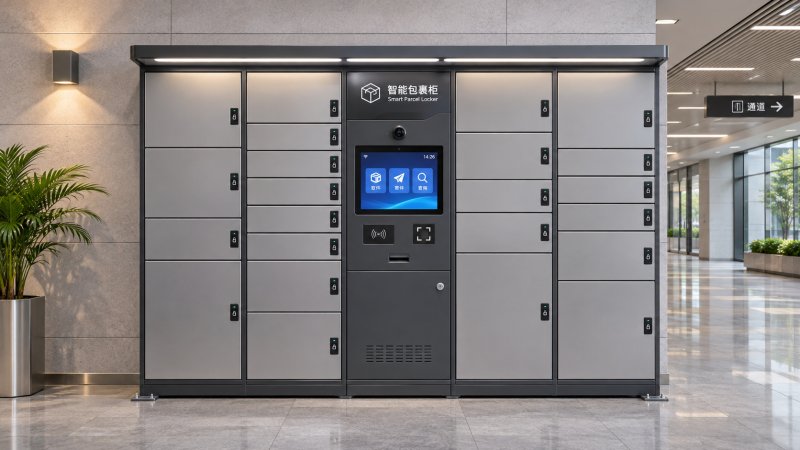
In practice, smart last-mile parcel security is not only about a locker.
It depends on hardware durability, electronic lock reliability, access control logic, user identity, and operating discipline.
The Most Common Delivery Risks in Last-Mile Environments
The first risk is simple theft.
Packages left in lobbies, mailrooms, reception zones, or open corridors are easy targets.
This becomes worse during peak delivery windows when staff cannot monitor every handoff.
The second risk is tampering before pickup.
A parcel may remain on site, but its contents may already be compromised.
For high-value shipments, this is often harder to detect than outright theft.
The third risk is misdelivery.
Incorrect unit assignment, shared access codes, and unclear compartment labeling can redirect parcels to the wrong user.
That creates privacy issues alongside recovery costs.
The fourth risk is unauthorized access to the locker system itself.
Weak credentials, reused PINs, tailgating, and unsecured service panels can undermine smart last-mile parcel security quickly.
The fifth risk is hardware or software failure.
If doors fail to lock, alerts fail to transmit, or cloud sync is delayed, operators lose visibility at the worst moment.
Finally, there is the hidden risk of poor incident evidence.
Without timestamped logs, access records, and event history, disputes become expensive and slow to resolve.
How Weak Deployment Design Creates Security Gaps
Many delivery problems begin before the first parcel arrives.
They start with design assumptions that look efficient on paper but fail in real traffic conditions.
One common issue is placing lockers in low-visibility areas.
Convenient access for couriers should not mean blind spots for cameras, guards, or building staff.
Another issue is separating parcel systems from the wider access control environment.
If the locker network does not align with doors, gates, visitor control, and identity policies, gaps appear between systems.
Capacity planning also matters more than many teams expect.
When compartments are undersized or consistently full, staff begin using temporary storage workarounds.
That usually bypasses the very controls meant to protect deliveries.
A final design weakness is ignoring maintenance access.
Service doors, control boards, and override mechanisms need equal protection, not secondary treatment.
Practical Ways to Improve Smart Last-Mile Parcel Security
A strong response starts with layered control.
No single feature can solve smart last-mile parcel security on its own.
1. Use secure locker hardware with reliable locking performance
Choose electronic locks tested for cycle durability, forced-entry resistance, and stable performance under frequent use.
Door alignment, hinge strength, anti-pry construction, and emergency power behavior should be reviewed carefully.
2. Control who can deposit, collect, and service parcels
Courier access should be time-limited and role-based.
Recipient access should use one-time credentials, app authentication, or stronger identity methods when needed.
Service technicians should have separate permissions with full logging.
3. Integrate lockers with access control and surveillance
Smart last-mile parcel security improves when locker events connect to doors, cameras, alarms, and site management platforms.
This creates a traceable chain from site entry to parcel pickup.
4. Protect connectivity and event records
Locker systems using 4G, 5G, Ethernet, or Wi-Fi should support encrypted communication and failover planning.
Offline event buffering is important because delivery traffic does not pause for network interruptions.
5. Design for visibility, flow, and supervision
Place lockers where users feel safe and where staff can observe activity naturally.
Good lighting, camera coverage, and clear circulation routes reduce hesitation, misuse, and opportunistic theft.
A Simple Risk Review Framework for New or Existing Sites
When evaluating smart last-mile parcel security, a short review framework helps expose weak points early.
- Map the parcel journey from arrival to pickup.
- Identify every point where a person can touch, view, move, or open the parcel.
- Check whether each point has identity control, physical protection, and event logging.
- Review failure scenarios, including power loss, network outage, and full-capacity conditions.
- Confirm who responds when a parcel is stuck, missing, damaged, or disputed.
This process is straightforward, but it often reveals expensive blind spots.
In many sites, the biggest weakness is not theft technology.
It is unclear ownership between property operations, security teams, and logistics service partners.
What to Ask Suppliers Before Deployment
Supplier evaluation should focus on measurable performance, not only interface features.
These questions help separate a smart last-mile parcel security solution from a basic storage cabinet with software attached.
Reducing Risk Over Time, Not Just at Installation
Security performance changes after launch.
User behavior shifts, parcel volumes rise, and temporary workarounds become routine unless someone checks them.
That is why smart last-mile parcel security should be reviewed as an operating system, not a one-time procurement item.
Monthly event reviews, exception reports, pickup delay trends, and recurring failure analysis usually provide enough signal to act early.
Over time, the most effective sites combine strong hardware, controlled identity, visible supervision, and clear accountability.
That combination reduces theft, shortens dispute resolution, and supports a more reliable delivery experience.
For any new project or retrofit, the right next step is to audit current parcel flow, rank the top failure points, and align the locker design with the wider physical security strategy.
Have questions about this sector analysis, or seeking best practices specific to your niche? Drop us a line below and let the senior consultants at MHLS assist you.
We respect your privacy. Your information is strictly confidential.
Recommended News
 Parcel Locker Network Pricing: Setup Costs, Fees and Contract TermsUnmanned Terminal FellowCompare parcel locker networks pricing, from setup costs and recurring fees to contract terms. Discover hidden charges and choose the right model.
 JR East Plans UWB Walk-Through Gates at 40 Stations in Spring 2028Access Control StrategistJR East plans UWB walk-through gates at 40 stations in spring 2028. Explore the rollout timeline and what suppliers should watch.
 Bank Vault Security Standards: UL and EN Ratings ExplainedVault Structural ArchitectExplore bank vault security standards and learn how UL 608 classes and EN 1143-1 grades differ, what they test, and how to verify certification before you buy.
 Mechanical Lock Hardware Prices: What Buyers Should Budget for Bulk OrdersMr. Gideon CrossMechanical lock hardware price is just the starting point. Discover what drives bulk-order costs and how to compare supplier quotes with confidence.
 IndexBox Forecasts Steady Global Security Keypad Market Growth Through 2035Dr. Valerius ThorneGlobal security keypad market growth is forecast at 3.3% annually through 2035. Explore the smart home and replacement trends shaping demand.
 Choosing an Infrared Safety Sensors Manufacturer: What Buyers Should CheckUnmanned Terminal FellowChoosing an infrared safety sensors manufacturer? Compare safety evidence, integration, environmental performance and lifecycle costs before you buy.
 Choosing a Security Material Testing Service: What to Check for Lock and Safe MaterialsProf. Elara SterlingChoose a security material testing service with confidence. Learn what to check for lock and safe materials, from attack methods and accreditation to reliable reports.
 How Precision Anti-Pick Lock Cylinders Resist ManipulationSecurity Metallurgy ExpertDiscover how precision anti-pick lock technology resists manipulation, and learn what to check when comparing security features, test evidence, and everyday reliability.
 Dermalog Joins NIST FastCAP Program for Contactless Fingerprint TestingProf. Elara SterlingDermalog joins the NIST FastCAP program for contactless fingerprint testing. Discover what this means for biometric identification and digital identity.
 Choosing Security Export Compliance Services: What Providers Should CoverMr. Gideon CrossSecurity export compliance services can help prevent costly delays. Discover what to look for in classification, licensing, screening, and documentation.
 European Security Compliance Standards for Safes: EN 1143-1 vs EN 14450Dr. Valerius ThorneExplore security compliance standards Europe buyers need to know. Compare EN 1143-1 and EN 14450 to choose the right safe with confidence.
 HID Global Acquires inepro ID to Expand RFID and BLE Access SolutionsUnmanned Terminal FellowHID Global acquires inepro ID to expand RFID and BLE access solutions for printers, smart lockers and shared devices. Explore what the deal could mean for your organization.