
What Should Happen When an Outdoor Parcel Locker Loses Network Connection?
What Should Happen When an Outdoor Parcel Locker Loses Network Connection?
What should happen when a parcel locker loses network connection? It should enter a controlled offline mode, not become an unlocked cabinet or an unusable customer-service problem.
A reliable outdoor parcel locker must protect parcels, preserve access controls, record local events, and recover transactions accurately after mobile, Wi-Fi, or wired connectivity returns.
For logistics operators, property managers, and procurement teams, network resilience is a business requirement because outdoor connectivity is never completely guaranteed in real deployments.
Rain, power disturbances, carrier outages, damaged cables, overloaded local networks, and poor signal coverage can all interrupt communication without warning during active delivery periods.
The key decision is not whether an outage can happen. It is whether the locker system can continue safely, transparently, and predictably when it does.
Why Offline Behavior Is a Critical Procurement Requirement
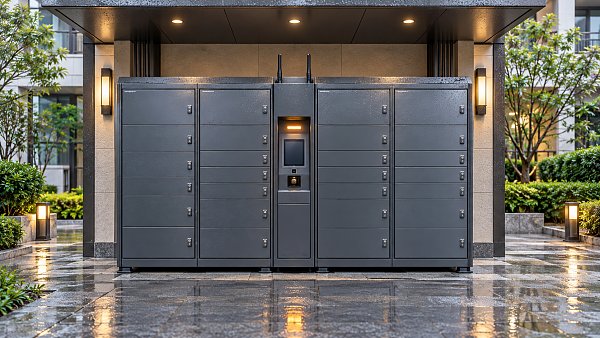
Outdoor parcel lockers sit between delivery operations, customer access, property security, and digital platforms. A network failure can affect every party if system behavior is poorly designed.
A locker that stops operating completely may force couriers to return parcels, create support tickets, block compartments, and undermine promised delivery-service availability for residents or customers.
A locker that unlocks compartments without strong local authorization creates a more serious risk: parcel theft, privacy breaches, false collection claims, and difficult liability investigations.
Therefore, buyers should assess offline performance as part of physical security, operational continuity, and customer-experience planning rather than treating it as a minor software feature.
The best systems use a defined degraded operating mode. They maintain the most important functions locally while preventing actions that require live central verification.
This design recognizes that not every transaction has the same risk level. Collection, delivery, administration, and emergency access require different offline permissions and safeguards.
For example, a recipient with a previously issued valid pickup credential may be permitted to collect a parcel offline, while remote unlock commands should remain unavailable.
The correct offline policy depends on parcel value, site risk, customer population, lock technology, regulatory requirements, and the operator's ability to investigate disputed events.
What the Locker Should Do Immediately After Connectivity Fails
When a connection drops, the locker controller should detect the failure quickly, distinguish it from a short communication delay, and switch into a predefined secure operating state.
The touchscreen or user interface should provide a clear, calm status message. It should not expose technical details that could help an attacker exploit the outage.
Local locking hardware must remain powered and controlled. Every compartment should retain its current state unless an authorized transaction is validated through approved offline rules.
The controller should preserve the latest synchronized configuration, including compartment assignments, valid pickup tokens, access schedules, courier permissions, and relevant account restrictions.
Offline mode should also activate local event logging. The system needs a tamper-resistant record of door openings, failed credential attempts, delivery actions, and maintenance access.
Where supported, the locker should notify the central platform through alternative paths, such as cellular backup, dual-SIM connectivity, Ethernet failover, or delayed alarm transmission.
A local audible alert is usually inappropriate for a simple network outage. However, separate alarms may be necessary when forced-door events, cabinet tampering, or power loss occur.
Operators should define timeout thresholds carefully. Frequent switching between online and offline modes can create duplicate transactions, confusing messages, and avoidable service interruptions.
Which Functions Can Safely Continue in Offline Mode?
The safest offline capability is recipient collection using a credential already stored locally. This can include a one-time PIN, encrypted QR code, RFID card, or mobile Bluetooth credential.
Offline validation should use credentials with expiration rules, usage limits, and cryptographic protection. A simple static code stored indefinitely creates unnecessary security exposure.
Once a valid recipient credential is accepted, the locker should open only the assigned compartment, record the event locally, and mark that parcel as collected.
Delivery can continue offline only when the system has securely cached courier authorization and reliable parcel-compartment assignment data. Otherwise, delivery should be restricted or supervised.
For high-volume logistics networks, a courier may authenticate through a locally validated employee credential, route manifest, device certificate, or time-limited delivery authorization token.
Compartment selection must still follow operational rules. The locker should reject unsuitable doors, occupied compartments, damaged compartments, and doors assigned to restricted parcel categories.
Returns may require stricter controls because the central platform often generates labels, confirms eligibility, and assigns return destinations. Many operators should disable unsynchronized returns offline.
Remote customer-service unlocks should generally be blocked during an outage. Without live verification, support personnel cannot reliably confirm identity, entitlement, or current compartment status.
How Should Access Control Remain Secure Without the Cloud?
Offline operation does not mean removing security controls. It means moving limited decision-making to the edge controller while maintaining strict boundaries around local authority.
A modern outdoor parcel locker should store encrypted credential data and use hardware-backed keys where possible. Sensitive secrets should not be readable from ordinary controller storage.
Each access event should require verification by the local controller, not merely by the touchscreen interface. The lock command must come from trusted firmware and authenticated logic.
Administrators should use separate offline permissions from recipients and couriers. High-privilege maintenance actions require stronger authentication, narrower time windows, and detailed audit records.
Mechanical override access remains necessary for emergencies and service work, but it should be controlled through restricted key management, sealed procedures, and documented incident handling.
A physical override key should not silently bypass accountability. The cabinet should detect door opening where possible and record that intervention for later reconciliation and review.
Anti-tamper sensors can add another layer of protection. Door pry detection, cabinet tilt sensing, controller enclosure monitoring, and abnormal lock-current monitoring can trigger local evidence capture.
For sites handling valuable goods, the locker should retain camera integration references, local timestamps, and incident identifiers so operators can correlate physical and digital evidence later.
Why Local Transaction Logging Determines Recovery Quality
When connectivity returns, the platform needs an accurate answer to a simple question: what happened while the locker was offline? Local event records provide that answer.
Every offline record should include a unique transaction identifier, local timestamp, compartment number, credential result, door sensor status, and a cryptographic integrity check.
The controller should record successful events and failed attempts. Repeated incorrect PIN entries, rejected courier access, and abnormal door states may reveal fraud or operational problems.
Local storage must tolerate sudden power loss. Write-ahead logging, nonvolatile memory, transaction journaling, and protected shutdown design can reduce lost-event or corrupted-record risks.
Time synchronization is especially important. If the controller clock drifts during a long outage, event ordering and credential-expiration decisions may become unreliable after reconciliation.
Systems should retain enough offline history for realistic outage scenarios. Capacity planning must account for delivery peaks, holiday traffic, repeated access attempts, and delayed maintenance response.
Data should be encrypted at rest and cleared according to retention rules after verified upload. Storing unnecessary recipient information locally increases privacy and cybersecurity exposure.
Procurement teams should ask vendors for documented offline log capacity, integrity controls, recovery behavior, and evidence that data survives both network loss and unexpected reboot events.
What Should Happen When the Network Connection Returns?
Recovery should be automatic, orderly, and idempotent. The locker must synchronize local events without creating duplicate collection notices, duplicate parcel records, or conflicting compartment assignments.
The controller should first establish an authenticated connection to the management platform. It should verify certificates, firmware status, and platform identity before sending stored transactions.
Offline events should upload in sequence with unique identifiers. The cloud platform should recognize previously received records, making retries safe when connections remain unstable during recovery.
After synchronization, the platform should reconcile parcel status, recipient notifications, courier manifests, compartment occupancy, and exception cases created while the locker was disconnected.
A parcel collected offline should trigger the normal collection confirmation once the event reaches the platform. Messaging should reflect the actual collection time whenever possible.
If a door opened but its sensor status is unclear, the system should create an exception rather than assume successful delivery or collection. Human review is preferable to false certainty.
Any conflicts should be visible in an operator dashboard. Staff need clear queues for unconfirmed deliveries, access disputes, sensor mismatches, and compartments requiring physical inspection.
The locker should return to full online operation only after critical synchronization completes. This prevents new cloud-driven actions from being based on incomplete local transaction history.
How Operators Should Design an Outage Response Process
Technology alone cannot guarantee continuity. Operators need written procedures covering outage detection, customer communication, courier guidance, field-service escalation, and post-incident review responsibilities.
Network monitoring should identify whether the issue affects one locker, one site, a telecommunications provider, or the central management platform. Different causes require different responses.
For brief outages, the system may continue with cached credentials and delayed synchronization. For extended outages, operators may need to pause new deliveries or dispatch technicians.
Customer communication should be proportionate. A recipient who can still collect with a valid code needs no alarming message, while blocked users require accurate next-step information.
Courier workflows should specify when deliveries may continue, when parcels must be retained, and when an exception label or alternate delivery process becomes necessary.
Property managers should know who owns the response. Shared sites often involve a locker operator, building management company, internet provider, security contractor, and logistics partners.
Incident reports should measure duration, affected transactions, recovery success, parcel discrepancies, customer contacts, and root cause. These records support vendor accountability and investment decisions.
Regular outage drills are valuable. Testing a planned network interruption reveals weak credential caching, unclear user messaging, synchronization conflicts, and gaps in operational responsibility before a real incident.
Questions Buyers Should Ask Before Selecting an Outdoor Parcel Locker
Buyers should request a precise offline-mode specification rather than accepting a broad claim that the locker works during internet outages. Functional limits need to be explicit.
Ask which recipient credentials work offline, how long they remain valid, whether expired codes are rejected, and how the system prevents the same credential from opening multiple compartments.
Ask whether couriers can deliver offline, what authorization is cached, and how the system prevents a courier from placing parcels into incorrect or unauthorized compartments.
Ask how event logs are protected, how many transactions can be retained, whether the controller has battery-backed power, and what occurs during a simultaneous power outage.
Ask whether the locker supports cellular backup, dual-network connectivity, remote health monitoring, and alerts for prolonged offline status. Connectivity architecture directly affects service availability.
Ask for evidence from field deployments, including outage test results, recovery time, synchronization accuracy, and examples of disputed transactions resolved through local audit records.
Also assess physical resilience. Outdoor lockers need weather protection, secure electronic lock mechanisms, vandal resistance, protected cable routing, and serviceable controller components alongside network resilience.
The lowest equipment price may not represent the lowest operational cost. Failed deliveries, support workload, theft claims, technician visits, and reputational damage can exceed initial savings quickly.
Conclusion: Offline Resilience Is Part of Parcel Security
When an outdoor parcel locker loses network connection, it should continue only the transactions it can authorize safely, while preserving parcels, access records, and operational accountability.
A strong system keeps compartments secure, validates cached credentials locally, logs every action, restricts high-risk functions, and synchronizes accurately when network communication is restored.
For operators and property stakeholders, this capability protects more than uptime. It protects delivery continuity, customer confidence, auditability, and the financial value of the locker deployment.
The practical standard is clear: select outdoor parcel lockers with documented offline policies, secure edge controls, reliable local storage, tested recovery processes, and accountable operational support.
Have questions about this sector analysis, or seeking best practices specific to your niche? Drop us a line below and let the senior consultants at MHLS assist you.
We respect your privacy. Your information is strictly confidential.
Recommended News
 Physical Security Infrastructure Cost: Budgeting for Installation and MaintenanceUnmanned Terminal FellowUnderstand physical security infrastructure cost and build a smarter budget for installation, maintenance, and long-term ownership.
 Financial Facility Security: Choosing Vault Doors for Bank BranchesVault Structural ArchitectStrengthen financial facility security with the right bank vault door. Explore certification, installation, locking controls and maintenance before you buy.
 MACO Acquires Majority Stake in Fingerprint Access Provider ekeyProf. Elara SterlingMACO acquires a majority stake in ekey, bringing fingerprint access and door hardware closer together. Discover what the deal could mean for smart buildings.
 Physical Security System Engineering: From Risk Assessment to System DesignUnmanned Terminal FellowExplore physical security system engineering, from risk assessment to integrated design, procurement and testing. Build a safer, more resilient facility.
 Apple Home Collection Smart Lock and Other Accessories Open for Preorder November 13Biometric Auth ScientistApple Home Collection preorders open November 13, 2026. Explore the LG smart lock’s Matter and Aliro support and what buyers should verify before ordering.
 Choosing Servo-Driven Flap Barriers: Throughput, Safety and Access ControlAccess Control StrategistServo-driven flap barriers can balance throughput, safety and access control. Discover how to compare lanes, test performance and choose with confidence.
 Parcel Locker Network Pricing: Setup Costs, Fees and Contract TermsUnmanned Terminal FellowCompare parcel locker networks pricing, from setup costs and recurring fees to contract terms. Discover hidden charges and choose the right model.
 JR East Plans UWB Walk-Through Gates at 40 Stations in Spring 2028Access Control StrategistJR East plans UWB walk-through gates at 40 stations in spring 2028. Explore the rollout timeline and what suppliers should watch.
 Bank Vault Security Standards: UL and EN Ratings ExplainedVault Structural ArchitectExplore bank vault security standards and learn how UL 608 classes and EN 1143-1 grades differ, what they test, and how to verify certification before you buy.
 Mechanical Lock Hardware Prices: What Buyers Should Budget for Bulk OrdersMr. Gideon CrossMechanical lock hardware price is just the starting point. Discover what drives bulk-order costs and how to compare supplier quotes with confidence.
 IndexBox Forecasts Steady Global Security Keypad Market Growth Through 2035Dr. Valerius ThorneGlobal security keypad market growth is forecast at 3.3% annually through 2035. Explore the smart home and replacement trends shaping demand.
 Choosing an Infrared Safety Sensors Manufacturer: What Buyers Should CheckUnmanned Terminal FellowChoosing an infrared safety sensors manufacturer? Compare safety evidence, integration, environmental performance and lifecycle costs before you buy.











