
Can One Platform Manage Parcel Lockers From Different Brands?
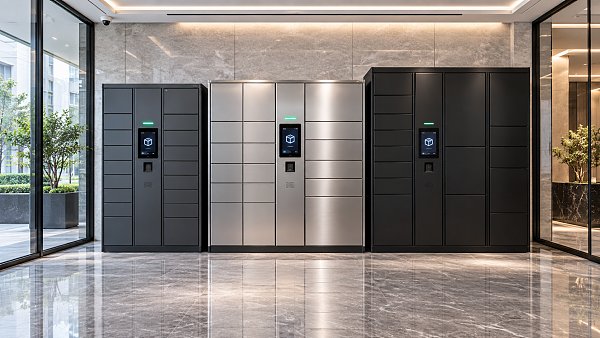
A mixed locker estate often becomes difficult to manage long before it becomes impossible to operate. A property group may have one parcel locker brand at newer residential sites, another inherited through an acquisition, and a third installed by a logistics partner. Each cabinet may work locally, yet staff must switch between dashboards to check door alarms, retrieve failed-delivery records, create courier permissions, or investigate a resident complaint.
Yes, one platform can manage parcel lockers from different brands, but only when the lockers expose usable integration interfaces and the central platform can translate their differing functions into a common operational model. The practical issue is not whether every locker has an internet connection. It is whether the system can reliably identify each compartment, control access, receive events, maintain audit records, and preserve safety functions without weakening the original hardware’s security boundaries.
The difference between one screen and real unified management
It is easy to mistake a consolidated display for multi-brand management. A dashboard that shows the online status of several locker brands may be useful, but it does not necessarily let an operator open a compartment remotely, revoke a courier credential, reconcile a parcel handover, or diagnose an electronic lock fault. Those actions require deeper integration.
A genuinely unified platform normally needs to handle at least the following functions across participating locker systems:
- locker, bank, compartment, and controller identification;
- live device status, including connectivity, door state, power condition, and fault messages;
- user identity and access rules for residents, couriers, site staff, and maintenance personnel;
- parcel lifecycle events, from deposit through notification, pickup, expiry, return, or exception handling;
- remote commands, subject to approval controls and hardware capability;
- audit trails showing who initiated, authorized, and completed an action;
- firmware, configuration, and maintenance visibility where the manufacturer permits it.
Not every deployment needs every capability. A retail operator may only require shared reporting and local delivery workflows. A large residential portfolio may need centrally managed user permissions, incident escalation, and integration with property access control. The required depth should be defined before selecting either a management platform or an integration approach.
Why lockers from different brands do not behave the same way
Parcel lockers can look similar from the outside while operating very differently behind the kiosk screen. One manufacturer may use a cloud API that exposes compartment status and transaction events. Another may use a proprietary controller protocol intended only for its own management software. A third may allow basic reporting but reserve remote door release, credential management, or firmware updates for its native system.
The mismatch is usually found in four areas. The first is data structure. One system may label a location as a locker unit and a compartment as a box, while another identifies a cabinet, module, door, and lock separately. The second is event meaning. “Door open” may mean a command was issued, a door sensor changed state, or a door was opened and then closed successfully. Treating these as equivalent can create misleading incident records.
The third area is identity handling. Pickup may depend on a one-time code, mobile credential, QR code, RFID card, phone number, building access credential, or a combination of these. The fourth is command authority. A central application might technically be able to send an unlock request, but the locker controller may reject it when the cabinet is offline, a door alarm is active, a delivery transaction is in progress, or a local safety rule prevents the action.
These differences explain why “API available” is not enough to answer the procurement question. The relevant question is: Which data, commands, and security controls are actually available through that API, under what conditions, and with what failure behavior?
Start with the operating problem, not the integration method
Before discussing middleware, cloud connectors, or replacement controllers, map the workflows that are causing friction. A platform designed around the wrong problem can add another layer of administration without removing the old one.
For example, a facility team may say it needs a single platform because it has too many dashboards. After review, the real issue may be that contractors cannot tell which doors are repeatedly failing to close. That requirement calls for normalized alarm data, device health monitoring, and a maintenance workflow. It does not necessarily require the platform to control every delivery transaction.
Another operation may be struggling with duplicated user records. Residents move between buildings, couriers serve multiple sites, and permissions remain active after access should have ended. In that case, the priority is identity synchronization, lifecycle rules, and a clear source of truth for user records. A separate concern arises when parcels must be tracked from courier deposit to recipient pickup: then transaction timestamps, proof-of-action data, expiry logic, and exception states matter more than a broad device inventory.
Write the desired workflow in plain operational terms before turning it into technical requirements. Useful prompts include:
- Which team needs to act, and what decision must it make?
- What information is unavailable or inconsistent today?
- Which action must be centralized, and which can remain in the native locker application?
- What must still work when the internet connection is interrupted?
- Which records must be retained to investigate disputes, damage, or unauthorized access?
Three workable models for a mixed-brand estate
There is no single architecture that fits every group of lockers. The most appropriate model depends on hardware age, vendor openness, security requirements, and the cost of changing an established delivery workflow.
Native systems with a shared reporting layer
This is the least disruptive option. Each brand continues to manage its own locker operations, while a separate layer collects selected device status, usage events, and service alerts. It is suitable when the immediate goal is central visibility rather than centralized control.
The limitation is clear: staff may still need to enter the native system to manage a failed pickup, create a special access code, or configure a cabinet. Data can also arrive at different intervals, making a central dashboard less useful for time-sensitive decisions. This model should not be presented as full operational unification.
A central platform connected through documented APIs
Where manufacturers provide stable, sufficiently complete APIs, a central platform can use connectors to manage common functions across brands. This can provide shared identity management, event monitoring, reporting, automated notifications, and controlled remote actions. It is often the strongest approach for operators adding new locker sites over time.
Its success depends on version control and clear responsibility. APIs change, cloud services can have maintenance windows, and new locker firmware may introduce event fields that the central platform does not yet understand. Integration ownership must be defined: who monitors failed message delivery, who updates connectors, and who confirms that a software change has not altered door-control behavior?
Controller retrofit or hardware standardization
Some legacy lockers have no practical integration interface. In that situation, operators may consider replacing the controller or electronic lock control layer while retaining the cabinet structure. This can create a more consistent fleet, but it is not a simple software project. The retrofit must account for door sensors, lock voltage and current requirements, emergency release arrangements, user interface behavior, fire or building interfaces where applicable, and maintenance access.
Replacing entire locker banks may be more appropriate where the old equipment has unreliable locks, unsupported communications hardware, poor compartment identification, or limited spare-part availability. Standardization reduces integration complexity, but it should be justified by lifecycle and operational risk rather than assumed to be the default answer.
What to verify before promising unified control
Ask for a test environment or a controlled pilot whenever possible. The pilot should use real workflow variations rather than only a successful door-open demonstration. Test a completed delivery, an uncollected parcel, a failed door-close sensor, a power restart, a communications outage, a repeated invalid pickup attempt, and an attempted action by a user whose access has expired. The point is to observe how the central system and locker system reconcile state after an exception.
Security should not be sacrificed for convenience
Central control introduces an important security question: who is allowed to cause a physical door to unlock? A unified platform should not turn a broad group of administrative users into remote-release users by default. Roles need to separate reporting access, user administration, delivery support, maintenance, and high-risk override actions.
Remote opening should be tied to a defined reason and recorded with the operator identity, relevant compartment, time, and resulting door state. For sensitive sites, an override may require additional approval or an on-site verification process. The exact rule depends on the application, but the principle is consistent: a command logged as “unlock sent” is not an adequate substitute for a full, traceable access event.
Network design also matters. Locker controllers should not be broadly exposed to the public internet merely to make integration easier. Segmentation, encrypted communications, credential rotation, and controlled service access reduce the chance that a maintenance interface becomes an uncontrolled entry point. The central platform must handle personal data carefully as well, particularly phone numbers, pickup codes, access logs, and notification records.
A practical sequence for deployment
Begin by creating an accurate inventory. Record locker brand, controller model, software version, connectivity method, installed location, number of compartments, lock type where available, ownership, and support status. Do not assume cabinets from the same manufacturer have identical capabilities; equipment installed at different times can use different controllers or service arrangements.
Next, classify each locker system by integration readiness: fully connectable, connectable with limitations, reporting-only, or not reasonably connectable. This prevents the project plan from being built around the most capable hardware while ignoring the difficult portion of the estate.
Then define a minimum common data model. It should identify the site, locker unit, compartment, user or courier role, parcel transaction, event time, event source, and event outcome. Keep the model practical. Trying to force every vendor-specific diagnostic field into a universal structure can make integrations fragile. Preserve specialized data separately when it has maintenance value.
Configure the central platform initially for visibility and alerting before enabling high-impact commands. Compare event records between the locker’s native system and the unified view. Investigate missing, delayed, duplicated, or differently interpreted events. Once the records are dependable, introduce centralized user synchronization and selected remote actions in phases.
Finally, document fallback procedures. Site staff need to know what to do when the central platform is unavailable, when a locker is offline, when a resident disputes a pickup record, or when a physical key or emergency-release process is required. A multi-brand system is more resilient when local locker functions remain understandable rather than hidden behind a central interface.
When one platform is not the right answer
Central management may not be worthwhile for a small number of lockers with low transaction volume and no shared users or reporting needs. It can also be a poor fit when a vendor offers only unsupported access methods, when integration would bypass important safety controls, or when a legacy cabinet is close to replacement.
The better decision may be partial integration: consolidate alerts and reporting, retain native operational tools, and standardize future purchases around documented interoperability requirements. That approach avoids locking an operator into an expensive retrofit merely to achieve visual uniformity.
The useful answer to “Can one platform manage parcel lockers from different brands?” is therefore conditional but practical. It can, provided the project is built around verified interfaces, a carefully defined common workflow, disciplined identity and access control, and tested exception handling. The number of dashboards is not the real measure of success; reliable, secure control of the actions that matter is.
Have questions about this sector analysis, or seeking best practices specific to your niche? Drop us a line below and let the senior consultants at MHLS assist you.
We respect your privacy. Your information is strictly confidential.
Recommended News
 Physical Security System Engineering: From Risk Assessment to System DesignUnmanned Terminal FellowExplore physical security system engineering, from risk assessment to integrated design, procurement and testing. Build a safer, more resilient facility.
 Apple Home Collection Smart Lock and Other Accessories Open for Preorder November 13Biometric Auth ScientistApple Home Collection preorders open November 13, 2026. Explore the LG smart lock’s Matter and Aliro support and what buyers should verify before ordering.
 Choosing Servo-Driven Flap Barriers: Throughput, Safety and Access ControlAccess Control StrategistServo-driven flap barriers can balance throughput, safety and access control. Discover how to compare lanes, test performance and choose with confidence.
 Parcel Locker Network Pricing: Setup Costs, Fees and Contract TermsUnmanned Terminal FellowCompare parcel locker networks pricing, from setup costs and recurring fees to contract terms. Discover hidden charges and choose the right model.
 JR East Plans UWB Walk-Through Gates at 40 Stations in Spring 2028Access Control StrategistJR East plans UWB walk-through gates at 40 stations in spring 2028. Explore the rollout timeline and what suppliers should watch.
 Bank Vault Security Standards: UL and EN Ratings ExplainedVault Structural ArchitectExplore bank vault security standards and learn how UL 608 classes and EN 1143-1 grades differ, what they test, and how to verify certification before you buy.
 Mechanical Lock Hardware Prices: What Buyers Should Budget for Bulk OrdersMr. Gideon CrossMechanical lock hardware price is just the starting point. Discover what drives bulk-order costs and how to compare supplier quotes with confidence.
 IndexBox Forecasts Steady Global Security Keypad Market Growth Through 2035Dr. Valerius ThorneGlobal security keypad market growth is forecast at 3.3% annually through 2035. Explore the smart home and replacement trends shaping demand.
 Choosing an Infrared Safety Sensors Manufacturer: What Buyers Should CheckUnmanned Terminal FellowChoosing an infrared safety sensors manufacturer? Compare safety evidence, integration, environmental performance and lifecycle costs before you buy.
 Choosing a Security Material Testing Service: What to Check for Lock and Safe MaterialsProf. Elara SterlingChoose a security material testing service with confidence. Learn what to check for lock and safe materials, from attack methods and accreditation to reliable reports.
 How Precision Anti-Pick Lock Cylinders Resist ManipulationSecurity Metallurgy ExpertDiscover how precision anti-pick lock technology resists manipulation, and learn what to check when comparing security features, test evidence, and everyday reliability.
 Dermalog Joins NIST FastCAP Program for Contactless Fingerprint TestingProf. Elara SterlingDermalog joins the NIST FastCAP program for contactless fingerprint testing. Discover what this means for biometric identification and digital identity.











