
Cloud Access Control Pricing: License Models, Hidden Fees, and 3-Year Cost Comparison
Cloud access control pricing often looks straightforward in vendor quotes, yet the real cost picture is rarely that simple. In security deployments tied to doors, turnstiles, parcel lockers, and building platforms, pricing decisions affect not only software budgets, but also integration risk, operating flexibility, and long-term control of physical access data.
That matters across the wider physical security market covered by SHPS, where smart hardware, access control platforms, biometric devices, and connected infrastructure increasingly work as one system. A low first-year subscription can appear attractive, but hidden fees and rigid license terms may raise the three-year total well beyond the original approval range.
Why Pricing Has Become a Strategic Security Issue
Cloud access control has moved beyond small office badge systems. It now supports mixed estates that include commercial entrances, logistics sites, residential towers, restricted zones, and high-security facilities.
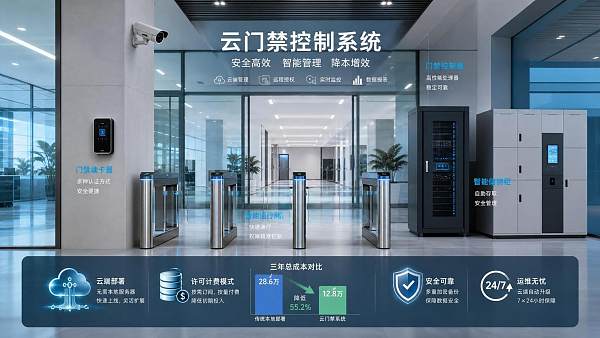
In those environments, the software is not isolated. It connects with readers, controllers, mobile credentials, visitor workflows, cameras, turnstiles, locker banks, and sometimes biometric authentication.
As a result, cloud access control pricing influences several business questions at once:
- How predictable annual operating expense will be
- Whether a site can scale without a pricing shock
- How much freedom remains for hardware selection
- What migration cost appears if the vendor changes terms later
For physical security programs, cost control is closely tied to resilience. A platform that is cheap to start but expensive to expand can weaken planning discipline and delay needed coverage.
The Main License Models Behind Cloud Access Control Pricing
Most cloud access control pricing falls into a few recurring structures. The label may change by vendor, but the commercial logic is usually familiar.
Per door or entry point
This is one of the most common models. Charges are tied to each managed opening, including doors, gates, speed lanes, or controlled locker compartments.
It is easy to understand, but expansion costs rise quickly in multi-site estates or buildings with layered access zones.
Per user or credential holder
Some vendors price by active identity count. This can work for smaller deployments, but it becomes volatile where contractors, visitors, temporary staff, or residents change frequently.
Per site or controller bundle
A bundled rate may include a fixed number of doors, controllers, or users. It can simplify budgeting, though overage rules need close review.
Tiered platform subscription
Basic, professional, and enterprise tiers often separate features such as video linkage, analytics, API access, or advanced reporting. The license may look affordable until required functions sit in a higher tier.
In practice, cloud access control pricing is rarely based on one metric alone. A proposal may combine a door fee, mobile credential cost, support plan, and integration charges.
Where Hidden Fees Usually Appear
The most expensive line items are often not in the headline subscription rate. They emerge around deployment, data movement, or operational exceptions.
Onboarding and commissioning
Initial setup can include controller enrollment, rule configuration, credential import, remote site mapping, and administrator training. Some vendors package these services, while others bill separately.
Integration fees
Connections to video systems, visitor management, parcel locker networks, building management, or HR identity platforms may require paid connectors or API licenses.
Mobile and biometric add-ons
A base plan may exclude mobile credentials, facial recognition workflows, liveness checks, or advanced reader support. Those extras can materially change cloud access control pricing.
Storage, logs, and compliance retention
Longer event retention, audit exports, and compliance reporting may trigger extra charges. This is common where insurers, regulators, or incident review policies require extended records.
Support response levels
Standard support might cover business hours only. Faster response, named technical contacts, and firmware advisory support can sit in premium contracts.
For any quote, the useful question is not only “what is included?” but also “what routine operational need has been excluded?”
A Practical 3-Year Cost Comparison
Three-year analysis usually offers a better approval basis than a one-year subscription view. It captures implementation, renewal patterns, and the effect of feature growth.
The example below uses a mid-scale deployment with 20 doors, 500 users, mobile credentials, one visitor integration, and standard support.
The point is not that one vendor is universally cheaper. It is that cloud access control pricing should be reviewed as total ownership cost, not as subscription price alone.
How Pricing Changes by Security Scenario
Cost logic varies with the physical environment. Different use cases place pressure on different parts of the commercial model.
Commercial offices and mixed-use buildings
These projects often prioritize visitor flow, mobile credentials, elevator control, and lease turnover. Licensing tied to active users may fluctuate more than expected.
Industrial and logistics sites
Cloud access control pricing here may be shaped by gate control, yard access, locker integration, and remote administration across multiple locations.
Residential and managed property estates
Resident turnover, delivery access, and common-area credentials can make support and credential lifecycle costs more important than the base platform fee.
High-security facilities
Financial sites, restricted rooms, and sensitive storage areas may require biometrics, stronger audit trails, and dual-authentication rules. Those functions often move deployments into higher software tiers.
This is where SHPS context matters. In a market that spans safes, vault systems, biometric locks, anti-tailgating turnstiles, and connected lockers, platform cost must be read against the entire physical protection architecture.
What Deserves Closer Review Before Approval
A sound review process focuses less on headline discounts and more on cost behavior over time.
- Check the exact billing unit: door, site, controller, user, or credential
- Confirm what features are standard and what requires tier upgrades
- Test expansion pricing for new doors, sites, and temporary identities
- Review data export rights and migration support at contract end
- Compare support commitments against operational risk tolerance
- Model a three-year and five-year budget, not only year one
It is also worth checking whether hardware choice remains open. Some low entry quotes depend on proprietary readers or controllers that narrow future options.
Reading Vendor Value Beyond the Price Sheet
Cloud access control pricing should ultimately be judged against operational fit. A higher subscription can be justified if it reduces manual administration, avoids custom integration work, or supports stronger audit control.
The opposite is also true. A feature-rich platform may still be poor value if the deployment only needs reliable door control, remote management, and straightforward reporting.
The most useful next step is to build a simple comparison sheet with four columns: included licenses, hidden fees, expansion assumptions, and three-year total cost. That structure makes cloud access control pricing easier to compare across technical proposals and helps separate real value from attractive opening numbers.
From there, approval decisions become more defensible. The conversation shifts from software price alone to budget predictability, security continuity, and fit with the wider physical security estate.
Have questions about this sector analysis, or seeking best practices specific to your niche? Drop us a line below and let the senior consultants at MHLS assist you.
We respect your privacy. Your information is strictly confidential.
Recommended News
 Parcel Locker Network Pricing: Setup Costs, Fees and Contract TermsUnmanned Terminal FellowCompare parcel locker networks pricing, from setup costs and recurring fees to contract terms. Discover hidden charges and choose the right model.
 JR East Plans UWB Walk-Through Gates at 40 Stations in Spring 2028Access Control StrategistJR East plans UWB walk-through gates at 40 stations in spring 2028. Explore the rollout timeline and what suppliers should watch.
 Bank Vault Security Standards: UL and EN Ratings ExplainedVault Structural ArchitectExplore bank vault security standards and learn how UL 608 classes and EN 1143-1 grades differ, what they test, and how to verify certification before you buy.
 Mechanical Lock Hardware Prices: What Buyers Should Budget for Bulk OrdersMr. Gideon CrossMechanical lock hardware price is just the starting point. Discover what drives bulk-order costs and how to compare supplier quotes with confidence.
 IndexBox Forecasts Steady Global Security Keypad Market Growth Through 2035Dr. Valerius ThorneGlobal security keypad market growth is forecast at 3.3% annually through 2035. Explore the smart home and replacement trends shaping demand.
 Choosing an Infrared Safety Sensors Manufacturer: What Buyers Should CheckUnmanned Terminal FellowChoosing an infrared safety sensors manufacturer? Compare safety evidence, integration, environmental performance and lifecycle costs before you buy.
 Choosing a Security Material Testing Service: What to Check for Lock and Safe MaterialsProf. Elara SterlingChoose a security material testing service with confidence. Learn what to check for lock and safe materials, from attack methods and accreditation to reliable reports.
 How Precision Anti-Pick Lock Cylinders Resist ManipulationSecurity Metallurgy ExpertDiscover how precision anti-pick lock technology resists manipulation, and learn what to check when comparing security features, test evidence, and everyday reliability.
 Dermalog Joins NIST FastCAP Program for Contactless Fingerprint TestingProf. Elara SterlingDermalog joins the NIST FastCAP program for contactless fingerprint testing. Discover what this means for biometric identification and digital identity.
 Choosing Security Export Compliance Services: What Providers Should CoverMr. Gideon CrossSecurity export compliance services can help prevent costly delays. Discover what to look for in classification, licensing, screening, and documentation.
 European Security Compliance Standards for Safes: EN 1143-1 vs EN 14450Dr. Valerius ThorneExplore security compliance standards Europe buyers need to know. Compare EN 1143-1 and EN 14450 to choose the right safe with confidence.
 HID Global Acquires inepro ID to Expand RFID and BLE Access SolutionsUnmanned Terminal FellowHID Global acquires inepro ID to expand RFID and BLE access solutions for printers, smart lockers and shared devices. Explore what the deal could mean for your organization.











