
Greater Bay Area Smart Customs Lock Cuts Transit Time 50%
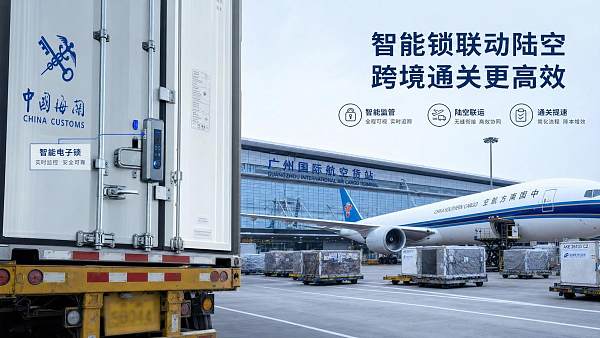
On February 24, 2026, a new road-air customs transit model using a security smart lock drew industry attention in the Guangdong-Hong Kong-Macao Greater Bay Area. Since February 2026, Huangpu Customs and Guangzhou Customs have jointly replaced traditional physical locks with an electronic locking system for export vehicles carrying Dongguan-made goods to air cargo channels via Guangzhou Baiyun Airport, enabling automated supervision across the full transit process. For traders, manufacturers, freight operators, and smart lock suppliers, the significance is not only the reported efficiency gain, but also the fact that customs supervision technology, compliance standards, and cross-border system interoperability are beginning to converge in a more operational form.
What Has Been Confirmed So Far
According to the provided event information, the joint model was launched by Huangpu Customs and Guangzhou Customs from February 2026. It uses a “security smart lock” in place of a conventional physical customs lock for export vehicles moving goods manufactured in Dongguan and shipped by air through Baiyun Airport.
As of June 1, 2026, more than 50,000 cargo items had been cleared under this model, and the average customs transit process for a single trip had been shortened by three hours, described as a 50% reduction in transfer time.
The electronic locking system is stated to comply with EN 14846 anti-coercion certification requirements. Its encrypted protocol, remote locking and unlocking mechanism, and cross-customs-zone key transmission capability are also under discussion for inclusion in a technical white paper on customs mutual recognition among RCEP member countries.
Where the Impact May Be Felt First
Export manufacturers using road-to-air channels
From an industry perspective, manufacturers shipping goods from production bases in Dongguan through airport export routes may be among the first to feel the practical impact. The reason is straightforward: a shorter transfer leg can affect handover timing, shipment planning, and the predictability of outbound air cargo arrangements. What deserves closer attention is whether this model remains limited to specific supervision scenarios or gradually becomes a reference route for broader export operations.
Freight and customs service providers
For logistics companies, customs brokers, and transit service providers, the change is likely to appear in supervision procedures rather than only in transport speed. Analysis shows that automated oversight, remote seal handling, and key transmission across customs jurisdictions point to a more digitally managed workflow. The business implication is that service providers may need to pay closer attention to process compatibility, documentation coordination, and execution discipline around customs-controlled movements.
Smart lock and customs-technology suppliers
For companies involved in electronic lock systems and related customs-technology integration, this case matters because it links product capability with an operational customs use case. The stated features—encryption protocol, remote release functions, and cross-zone key transmission—suggest that hardware compliance alone may not be enough; interoperability and supervision-oriented system design may become equally important in future procurement or cross-border cooperation discussions.
What Companies Should Watch Now
Separate confirmed implementation from broader policy expectations
Observably, the confirmed fact is the launch and early use of one specific model in the Greater Bay Area route described in the input. Companies should avoid assuming that every port, airport, or customs route will immediately adopt the same mechanism. The practical focus should remain on official wording, route scope, and any later procedural clarification tied to similar supervision models.
Review time-sensitive export planning
For businesses whose cargo depends on tight airport cut-off times, the reported three-hour average reduction is commercially relevant. Analysis shows that the key issue is not only faster transfer, but whether companies can safely adjust booking windows, warehouse scheduling, and internal handoff timing without over-relying on a single operating assumption.
Check supplier and service readiness
What deserves closer attention is whether logistics partners, customs service providers, and technical vendors can support electronic supervision requirements in practice. For companies evaluating service partners, the focus may shift toward execution capability around digital lock handling, cross-jurisdiction coordination, and the consistency of supporting records in a customs-controlled process.
Track the RCEP discussion angle carefully
The reference to inclusion in a technical white paper agenda for customs mutual recognition among RCEP member countries is a notable signal, but it should not be treated as a completed international rollout. For smart lock companies and related integrators, this is better read as an early validation case that may strengthen future overseas discussions, not as proof that cross-border market access conditions have already been settled.
Why This Looks Larger Than a Local Efficiency Update
Analysis shows that this development carries two layers of meaning. The first is immediate and operational: customs transit in a road-air export chain has become faster through automated supervision. The second is structural: the lock itself is being positioned not only as a security device, but as part of a compliance and data-transfer architecture that can travel across customs jurisdictions.
It is more appropriate to understand this as a medium-term industry signal rather than a fully mature endpoint. The efficiency result is already visible in the provided figures, but the broader commercial implications—especially for standards alignment, customs mutual recognition, and overseas smart customs integration opportunities—still require continued observation.
How to Read This Development at the Current Stage
At this stage, the news is best understood as a concrete operational case with wider signaling value. It shows that smart lock technology can move from product-level security functions into actual customs supervision workflows, while also indicating that standards, encryption, and remote control capabilities may become more central in trade-facilitation discussions. The development is meaningful, but the industry should read it with discipline: confirmed local implementation and early technical-policy recognition are not the same as universal adoption.
Basis of This Article
This article is based on the user-provided news title, event date, and event summary. The specific official source link was not provided in the input, so further verification remains necessary.
For this type of industry update, commonly relevant source categories may include official customs notices, company announcements, industry association updates, authoritative media coverage, and documents from standards organizations. For ongoing observation, readers should continue to watch for any later official clarification on route scope, procedural rules, and progress related to the RCEP customs mutual recognition technical white paper discussion.
Have questions about this sector analysis, or seeking best practices specific to your niche? Drop us a line below and let the senior consultants at MHLS assist you.
We respect your privacy. Your information is strictly confidential.
Recommended News
 Physical Security System Engineering: From Risk Assessment to System DesignUnmanned Terminal FellowExplore physical security system engineering, from risk assessment to integrated design, procurement and testing. Build a safer, more resilient facility.
 Apple Home Collection Smart Lock and Other Accessories Open for Preorder November 13Biometric Auth ScientistApple Home Collection preorders open November 13, 2026. Explore the LG smart lock’s Matter and Aliro support and what buyers should verify before ordering.
 Choosing Servo-Driven Flap Barriers: Throughput, Safety and Access ControlAccess Control StrategistServo-driven flap barriers can balance throughput, safety and access control. Discover how to compare lanes, test performance and choose with confidence.
 Parcel Locker Network Pricing: Setup Costs, Fees and Contract TermsUnmanned Terminal FellowCompare parcel locker networks pricing, from setup costs and recurring fees to contract terms. Discover hidden charges and choose the right model.
 JR East Plans UWB Walk-Through Gates at 40 Stations in Spring 2028Access Control StrategistJR East plans UWB walk-through gates at 40 stations in spring 2028. Explore the rollout timeline and what suppliers should watch.
 Bank Vault Security Standards: UL and EN Ratings ExplainedVault Structural ArchitectExplore bank vault security standards and learn how UL 608 classes and EN 1143-1 grades differ, what they test, and how to verify certification before you buy.
 Mechanical Lock Hardware Prices: What Buyers Should Budget for Bulk OrdersMr. Gideon CrossMechanical lock hardware price is just the starting point. Discover what drives bulk-order costs and how to compare supplier quotes with confidence.
 IndexBox Forecasts Steady Global Security Keypad Market Growth Through 2035Dr. Valerius ThorneGlobal security keypad market growth is forecast at 3.3% annually through 2035. Explore the smart home and replacement trends shaping demand.
 Choosing an Infrared Safety Sensors Manufacturer: What Buyers Should CheckUnmanned Terminal FellowChoosing an infrared safety sensors manufacturer? Compare safety evidence, integration, environmental performance and lifecycle costs before you buy.
 Choosing a Security Material Testing Service: What to Check for Lock and Safe MaterialsProf. Elara SterlingChoose a security material testing service with confidence. Learn what to check for lock and safe materials, from attack methods and accreditation to reliable reports.
 How Precision Anti-Pick Lock Cylinders Resist ManipulationSecurity Metallurgy ExpertDiscover how precision anti-pick lock technology resists manipulation, and learn what to check when comparing security features, test evidence, and everyday reliability.
 Dermalog Joins NIST FastCAP Program for Contactless Fingerprint TestingProf. Elara SterlingDermalog joins the NIST FastCAP program for contactless fingerprint testing. Discover what this means for biometric identification and digital identity.











