
How to Choose RFID Smart Lockers for Workplace Asset Tracking and Secure Access
How to Choose RFID Smart Lockers for Workplace Asset Tracking and Secure Access
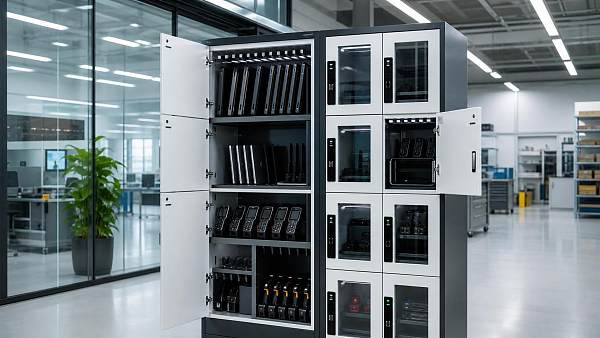
Choosing RFID smart lockers for workplace asset tracking and secure access is no longer a simple hardware purchase.
In most workplaces, lockers now sit inside a wider access control and accountability system.
That changes the evaluation process.
A strong shortlist should look beyond door count, cabinet finish, or basic RFID reader claims.
It should test how RFID smart lockers perform under real operational pressure.
That includes user authentication, tag reading stability, audit logging, software integration, and serviceability over time.
In practice, poor locker selection usually creates hidden issues first.
You may see unassigned asset movement, unclear access history, failed badge reads, or expensive manual overrides.
A better decision starts with matching locker design to risk, workflow, and integration requirements.
Start with the workplace use case
Not every RFID smart locker deployment solves the same problem.
Some sites need shared device management.
Others need employee storage with secure access, shift-based assignment, or chain-of-custody control for sensitive tools.
This matters because the locker architecture should follow the asset and access model.
A laptop return station, for example, needs different logic from a PPE locker or a cleanroom tablet cabinet.
Before comparing vendors, define a few core points:
- What assets will be stored and tracked.
- Whether lockers are personal, shared, or dynamic.
- How users authenticate today.
- What level of event logging is required.
- How often the system must operate offline.
This early mapping prevents feature mismatch later.
It also helps separate cosmetic smart locker features from real operational value.
Evaluate RFID reading performance, not just RFID presence
Many RFID smart lockers advertise tracking capability, but reading performance varies widely.
The critical question is whether the locker can detect the right tag, at the right moment, with repeatable accuracy.
That means checking more than frequency band support.
You need to understand read zone design, antenna placement, shielding, tag orientation sensitivity, and interference behavior.
Metal tools, dense electronics, batteries, and stacked items can all reduce read reliability.
Ask suppliers to show test data for your asset category, not generic demos.
A useful validation checklist includes:
- Read accuracy when the locker is full.
- Detection speed during door open and close events.
- Ability to distinguish neighboring lockers.
- Performance with tagged metal or liquid-adjacent items.
- Tolerance for mixed asset sizes and placements.
If RFID smart lockers cannot produce dependable read events, asset tracking becomes a confidence problem.
And once trust in the audit trail drops, manual checking usually returns.
Check secure access methods and exception handling
Secure access is the second major decision layer.
Most RFID smart lockers support badge-based access, but access policy depth matters more than badge reading alone.
You should confirm whether the system supports role-based permissions, time windows, dual authorization, and temporary access issuance.
That is especially important for high-value assets, regulated equipment, or shared engineering tools.
Exception handling is often where weak designs show up.
Consider what happens if a user badge fails, the network drops, the locker door is forced, or an item is removed without authorization.
A capable system should document these events clearly and trigger actionable alerts.
Review these access control points during evaluation:
- Credential types supported, including RFID card standards and mobile credentials.
- Local versus central authentication behavior.
- Door state monitoring and tamper alarms.
- Override procedures and approval logging.
- Retention of event records during outages.
A secure locker should stay usable during exceptions without losing accountability.
Look closely at software integration and audit visibility
In many projects, the software layer determines whether RFID smart lockers create lasting value.
A locker that works as a standalone cabinet may still fail as part of enterprise operations.
The main issue is integration.
RFID smart lockers often need to connect with HR systems, identity management platforms, access control software, CMMS tools, or asset databases.
Without clean integration, administrators end up maintaining duplicate user records and inconsistent asset status.
Ask detailed questions about APIs, event export formats, user provisioning, and dashboard depth.
A useful platform should show who accessed which locker, when the door opened, what asset tags changed, and whether the transaction matched policy.
Good audit visibility also shortens investigations.
That matters when a charger disappears, a scanner is misplaced, or a restricted device moves unexpectedly.
Assess reliability, maintenance burden, and scaling risk
From a long-term cost perspective, this is usually the most underestimated part of RFID smart locker selection.
A low upfront price can disappear quickly if locks fail, controllers drift offline, or replacement parts are hard to source.
Look for evidence on component life, lock cycle ratings, power backup options, firmware update process, and remote diagnostics.
The same applies to cabinet construction.
If lockers will sit in industrial, healthcare, education, or mixed-shift environments, door alignment and hinge durability matter.
Scaling risk deserves separate attention.
A pilot with twenty doors may work well, while a network of five hundred doors across sites may expose software limits.
Ask whether the vendor has proven deployments at your expected scale.
It is also sensible to review:
- Spare parts lead times.
- Onsite versus remote support coverage.
- Firmware change control and rollback options.
- Battery, PSU, or network dependency points.
- Locker replacement without losing audit continuity.
These points help estimate total operating risk, not just purchase price.
Use a practical decision framework before purchase
The strongest procurement decisions usually come from a structured trial.
Instead of relying on presentations, run a short proof of concept using real badges, real assets, and real user exceptions.
That trial should test the full chain.
Include asset tagging, locker assignment, user authentication, event reporting, failed reads, forced access simulation, and administrator recovery steps.
A simple decision framework can keep the process grounded:
- Define the asset control objective and risk level.
- Map required workflows and exception cases.
- Score RFID smart lockers on read accuracy and secure access controls.
- Validate software integration with existing systems.
- Estimate maintenance effort and expansion readiness.
- Compare total lifecycle value, not just cabinet cost.
When RFID smart lockers are selected this way, they support more than secure storage.
They become a reliable control point for workplace asset tracking, secure access, and clearer operational accountability.
The final choice should favor systems that stay accurate, visible, and manageable long after deployment day.
Have questions about this sector analysis, or seeking best practices specific to your niche? Drop us a line below and let the senior consultants at MHLS assist you.
We respect your privacy. Your information is strictly confidential.
Recommended News
 Financial Facility Security: Choosing Vault Doors for Bank BranchesVault Structural ArchitectStrengthen financial facility security with the right bank vault door. Explore certification, installation, locking controls and maintenance before you buy.
 MACO Acquires Majority Stake in Fingerprint Access Provider ekeyProf. Elara SterlingMACO acquires a majority stake in ekey, bringing fingerprint access and door hardware closer together. Discover what the deal could mean for smart buildings.
 Physical Security System Engineering: From Risk Assessment to System DesignUnmanned Terminal FellowExplore physical security system engineering, from risk assessment to integrated design, procurement and testing. Build a safer, more resilient facility.
 Apple Home Collection Smart Lock and Other Accessories Open for Preorder November 13Biometric Auth ScientistApple Home Collection preorders open November 13, 2026. Explore the LG smart lock’s Matter and Aliro support and what buyers should verify before ordering.
 Choosing Servo-Driven Flap Barriers: Throughput, Safety and Access ControlAccess Control StrategistServo-driven flap barriers can balance throughput, safety and access control. Discover how to compare lanes, test performance and choose with confidence.
 Parcel Locker Network Pricing: Setup Costs, Fees and Contract TermsUnmanned Terminal FellowCompare parcel locker networks pricing, from setup costs and recurring fees to contract terms. Discover hidden charges and choose the right model.
 JR East Plans UWB Walk-Through Gates at 40 Stations in Spring 2028Access Control StrategistJR East plans UWB walk-through gates at 40 stations in spring 2028. Explore the rollout timeline and what suppliers should watch.
 Bank Vault Security Standards: UL and EN Ratings ExplainedVault Structural ArchitectExplore bank vault security standards and learn how UL 608 classes and EN 1143-1 grades differ, what they test, and how to verify certification before you buy.
 Mechanical Lock Hardware Prices: What Buyers Should Budget for Bulk OrdersMr. Gideon CrossMechanical lock hardware price is just the starting point. Discover what drives bulk-order costs and how to compare supplier quotes with confidence.
 IndexBox Forecasts Steady Global Security Keypad Market Growth Through 2035Dr. Valerius ThorneGlobal security keypad market growth is forecast at 3.3% annually through 2035. Explore the smart home and replacement trends shaping demand.
 Choosing an Infrared Safety Sensors Manufacturer: What Buyers Should CheckUnmanned Terminal FellowChoosing an infrared safety sensors manufacturer? Compare safety evidence, integration, environmental performance and lifecycle costs before you buy.
 Choosing a Security Material Testing Service: What to Check for Lock and Safe MaterialsProf. Elara SterlingChoose a security material testing service with confidence. Learn what to check for lock and safe materials, from attack methods and accreditation to reliable reports.











