RAIN Raises 2026 UHF RFID Forecast to $19B
The timing of the underlying market shift is not clearly specified in the input, but RAIN RFID Alliance’s latest report, released on June 10, 2026, points to a notable change in the UHF RFID market: higher 2026 revenue expectations for tag chips and a shorter delivery cycle from China’s supply chain. For companies involved in RFID components, packaging, procurement, logistics infrastructure, retail asset tracking, and industrial access systems, this matters because it connects demand growth in overseas applications with a more responsive manufacturing base.
What the latest report confirmed
RAIN RFID Alliance raised its 2026 global UHF RFID tag chip revenue forecast to $19.0 billion from the $17.8 billion projected earlier in the year, an increase of 6.7%.
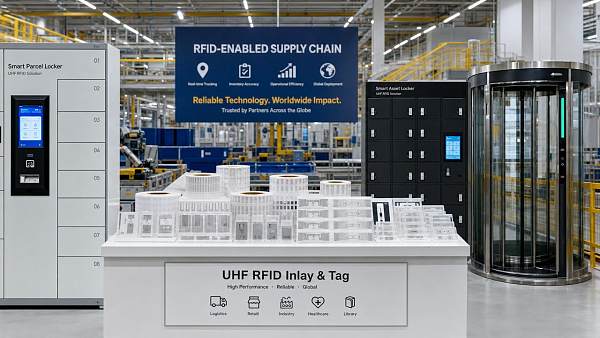
According to the report, the revision was driven by stronger demand in Europe and the United States from three application areas: outdoor smart parcel lockers, retail RFID asset lockers, and anti-tailgating revolving doors used in industrial settings.
The report also stated that leading Chinese packaging manufacturers, including Huatian Technology and JCET, have localized the full UHF RFID inlay process. As a result, the average order delivery cycle has been reduced from 12 weeks in the fourth quarter of 2025 to 8 weeks at present, supporting greater flexibility for overseas customers preparing for peak-season inventory.
Why different parts of the chain may feel the impact
Component and inlay supply becomes more time-sensitive
From an industry perspective, companies supplying RFID-related components may be affected because the updated forecast signals stronger near-term pull from specific end-use scenarios rather than a broad, undefined market increase. The main impact is likely to appear in order scheduling, capacity coordination, and delivery commitments tied to UHF RFID inlay production.
What deserves closer attention is whether shorter lead times translate into different purchasing behavior from overseas buyers, especially when they are preparing for seasonal demand peaks.
Overseas buyers gain more room in inventory planning
For procurement teams and direct trade participants serving customers in Europe and the United States, the reduction in China’s delivery cycle may affect stocking strategy, replenishment timing, and communication with downstream clients. A shorter cycle does not automatically remove supply risk, but it can improve flexibility in booking orders closer to demand windows.
Observably, these buyers should pay attention to how forecast revisions and delivery improvements interact in actual purchasing calendars rather than treating either factor in isolation.
Application-side integrators may face faster project rhythms
Service providers and end-use integrators linked to smart parcel lockers, retail RFID asset lockers, and industrial anti-tailgating systems may be affected because stronger demand in these segments can tighten expectations around product availability and project execution. The most relevant business links are sourcing coordination, installation planning, and delivery assurance to end customers.
What deserves closer attention is whether customers in these segments begin to expect shorter replenishment cycles as a new baseline.
What companies should watch now
Separate confirmed facts from market interpretation
Analysis shows that companies should distinguish between what has been confirmed and what remains interpretive. The confirmed facts are the forecast revision, the named demand drivers, and the shorter delivery cycle in China’s UHF RFID inlay supply chain. Broader conclusions about sustained long-term growth still require continued verification.
Track the three demand-linked application areas closely
Businesses connected to RFID planning should pay particular attention to outdoor smart parcel lockers, retail RFID asset lockers, and anti-tailgating revolving doors, because these are the application areas explicitly cited in the report. In practice, this means aligning sales discussions, supply preparation, and internal demand reviews with these named segments rather than relying on general RFID growth assumptions.
Reassess lead-time commitments and customer communication
For manufacturers, traders, and supply chain service providers, the move from 12 weeks to 8 weeks has practical implications for quotation validity, delivery promises, and client communication. Analysis shows that the key issue is not only faster fulfillment, but also whether internal planning systems and external commitments have been updated to reflect the new cycle.
Prepare for peak-season ordering behavior, not just annual totals
The report specifically links shorter lead times to better flexibility for overseas customers during peak-season inventory preparation. From an operational perspective, companies should therefore focus on order timing, buffer planning, and documentation readiness around seasonal demand windows, rather than reading the revised annual forecast only as a headline number.
How this signal is best interpreted
Observably, this update is more meaningful as a combined demand-and-supply signal than as a standalone market statistic. On one side, the higher forecast suggests that demand in several practical deployment scenarios is strengthening. On the other, the shorter Chinese delivery cycle suggests that part of the supply chain is becoming more capable of responding quickly.
It is more appropriate to understand this as a directional industry signal rather than a fully settled long-term conclusion. The report points to stronger momentum in defined application areas, but it does not by itself confirm that all UHF RFID segments will move at the same pace.
A measured takeaway for the market
For the RFID industry, the most important takeaway is not only that the 2026 forecast has been raised, but that this revision is tied to clearly identified application demand and accompanied by a meaningful change in supply responsiveness. That combination is relevant for suppliers, buyers, and solution providers making short-cycle business decisions.
At this stage, it is more appropriate to read the development as a concrete near-term market signal with possible longer-term implications, while continuing to watch whether demand in the named application segments and delivery performance in the supply chain remain consistent.
Basis of this article
This article is based on the user-provided news title, event timing information, and event summary. The specific official source link was not provided in the input, so further verification is still needed.
For this type of industry update, source categories that are typically relevant include official announcements, company statements, industry association releases, authoritative media coverage, and standards-related documents. Areas that still warrant follow-up include any subsequent official wording, updates to forecast assumptions, and whether the reported delivery-cycle improvement continues to hold in actual market execution.
Have questions about this sector analysis, or seeking best practices specific to your niche? Drop us a line below and let the senior consultants at MHLS assist you.
We respect your privacy. Your information is strictly confidential.
Recommended News
 JR East Plans UWB Walk-Through Gates at 40 Stations in Spring 2028Access Control StrategistJR East plans UWB walk-through gates at 40 stations in spring 2028. Explore the rollout timeline and what suppliers should watch.
 Bank Vault Security Standards: UL and EN Ratings ExplainedVault Structural ArchitectExplore bank vault security standards and learn how UL 608 classes and EN 1143-1 grades differ, what they test, and how to verify certification before you buy.
 Mechanical Lock Hardware Prices: What Buyers Should Budget for Bulk OrdersMr. Gideon CrossMechanical lock hardware price is just the starting point. Discover what drives bulk-order costs and how to compare supplier quotes with confidence.
 IndexBox Forecasts Steady Global Security Keypad Market Growth Through 2035Dr. Valerius ThorneGlobal security keypad market growth is forecast at 3.3% annually through 2035. Explore the smart home and replacement trends shaping demand.
 Choosing an Infrared Safety Sensors Manufacturer: What Buyers Should CheckUnmanned Terminal FellowChoosing an infrared safety sensors manufacturer? Compare safety evidence, integration, environmental performance and lifecycle costs before you buy.
 Choosing a Security Material Testing Service: What to Check for Lock and Safe MaterialsProf. Elara SterlingChoose a security material testing service with confidence. Learn what to check for lock and safe materials, from attack methods and accreditation to reliable reports.
 How Precision Anti-Pick Lock Cylinders Resist ManipulationSecurity Metallurgy ExpertDiscover how precision anti-pick lock technology resists manipulation, and learn what to check when comparing security features, test evidence, and everyday reliability.
 Dermalog Joins NIST FastCAP Program for Contactless Fingerprint TestingProf. Elara SterlingDermalog joins the NIST FastCAP program for contactless fingerprint testing. Discover what this means for biometric identification and digital identity.
 Choosing Security Export Compliance Services: What Providers Should CoverMr. Gideon CrossSecurity export compliance services can help prevent costly delays. Discover what to look for in classification, licensing, screening, and documentation.
 European Security Compliance Standards for Safes: EN 1143-1 vs EN 14450Dr. Valerius ThorneExplore security compliance standards Europe buyers need to know. Compare EN 1143-1 and EN 14450 to choose the right safe with confidence.
 HID Global Acquires inepro ID to Expand RFID and BLE Access SolutionsUnmanned Terminal FellowHID Global acquires inepro ID to expand RFID and BLE access solutions for printers, smart lockers and shared devices. Explore what the deal could mean for your organization.
 Choosing Networked Hotel Lock Systems: Connectivity, Integration and SecurityBiometric Auth ScientistCompare networked hotel lock systems by connectivity, PMS integration and security. Learn what to test before choosing a system for your property.