
Secure Storage Solutions Suppliers: 7 Questions to Ask Before Requesting Quotes
Why do secure storage solutions suppliers need deeper review before quotes?
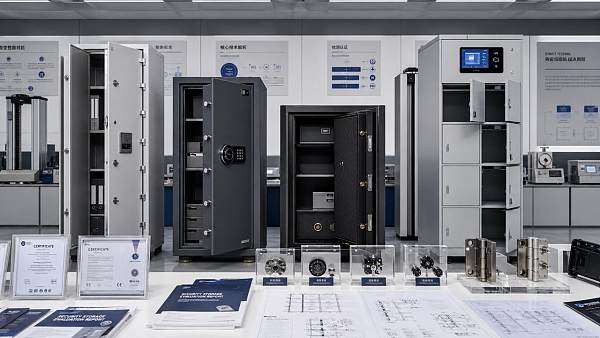
Price is usually the first number people compare, but it is rarely the first risk.
When reviewing secure storage solutions suppliers, the bigger issue is fit.
A cabinet, safe, vault room, parcel locker, or controlled storage unit may look similar on paper.
Its real value appears in burglary resistance, lock reliability, installation quality, and service response.
In practical buying cycles, weak supplier evaluation creates hidden costs.
Those costs show up as project delays, failed compliance reviews, damaged assets, or expensive retrofits.
That is why experienced teams ask better questions before sending out RFQs.
The most useful questions connect product claims with testing evidence, application conditions, and operating demands.
This matters even more in sectors covered by SHPS, where safes, smart locks, protective doors, and IoT lockers overlap.
The supplier is not only selling equipment.
The supplier is shaping long-term physical security performance.
1. What exactly are you trying to protect, and from which risks?
This is the first question because not every secure storage requirement is the same.
Some sites need protection against casual theft.
Others need resistance to drilling, cutting, prying, internal misuse, or unauthorized digital access.
A supplier that is strong in retail lockers may not be the right fit for cash handling rooms.
Likewise, a vendor focused on standard safes may struggle with networked parcel systems.
A useful internal brief should define four things before you compare secure storage solutions suppliers.
- What assets are stored: cash, records, devices, keys, parcels, medicines, or controlled materials.
- What threat level matters most: smash-and-grab, organized attack, tampering, or access misuse.
- What environment applies: residential, logistics, commercial, financial, or restricted infrastructure.
- What daily workflow matters: frequency of access, user volume, audit trail, and service uptime.
Without that clarity, quote comparisons become misleading.
You may end up comparing dimensions and finish, while ignoring resistance grade or lock architecture.
2. Which certifications are real, current, and relevant to your application?
This question often separates credible secure storage solutions suppliers from polished marketers.
Certification should never be treated as a decorative line in a brochure.
It must match the exact product category, configuration, and security claim.
For high-security safes and vault systems, references such as EN 1143-1 or UL testing carry real decision weight.
For smart locks and access-linked storage, evidence may include electronic reliability, biometric performance, and anti-spoofing controls.
It helps to ask for documents that show the tested model, issuing body, and expiry status.
In many reviews, the weak point is not the presence of a certificate.
The weak point is whether the quoted product still matches the tested design.
A careful review here prevents later disputes about compliance, insurance acceptance, or performance claims.
3. Are the materials and locking systems built for real attack methods?
This is where technical evaluation becomes practical.
Strong secure storage solutions suppliers should explain not just what they sell, but how it resists attack.
For example, composite safe bodies, anti-drill plates, corundum layers, reinforced hinges, and relocking devices serve different purposes.
The same applies to locking options.
A mechanical lock cylinder with anti-picking features answers a different risk than a biometric lock with liveness detection.
In actual procurement reviews, three checks are especially useful.
- Ask what attack methods the design is intended to resist.
- Confirm whether resistance depends on optional upgrades.
- Request lifecycle data for locks, hinges, sensors, and control boards.
If a supplier cannot explain these points clearly, the quote is incomplete.
In sectors discussed across SHPS, technical transparency is often a stronger signal than catalog size.
4. Can the supplier handle site-specific customization without creating new risks?
Customization sounds attractive, but it needs discipline.
Many secure storage projects involve non-standard dimensions, access rights, anchoring conditions, finish requirements, or software integration.
That is common with smart parcel lockers, vault doors, key cabinets, and mixed-use building systems.
The real question is whether the supplier controls design changes properly.
A custom cutout, thinner wall section, or different lock mount can weaken a tested assembly.
Integration can also create blind spots.
For connected lockers or access-controlled storage, check how the equipment works with credentials, logs, alerts, and remote diagnostics.
A capable supplier should define which elements are configurable and which must remain fixed.
That answer tells you whether flexibility is engineered, or improvised.
5. What should you expect on lead time, installation, and total cost?
This is where many quote comparisons become more realistic.
The lowest equipment price may hide freight complexity, installation constraints, commissioning gaps, or software fees.
That is especially true for heavy safes, modular vaults, and networked locker systems.
Before requesting final offers from secure storage solutions suppliers, ask for a cost picture that includes more than unit price.
- Production lead time and any dependency on imported components.
- Site preparation requirements, floor loading, power, and network readiness.
- Installation scope, commissioning method, and operator training.
- Warranty terms, spare parts availability, and service response commitment.
- Subscription, software, or connectivity charges for smart systems.
In many cases, delivery risk matters as much as price.
A supplier with stable lead time and predictable field support may reduce total exposure more effectively than a cheaper alternative.
6. How do you compare suppliers when every brochure sounds similar?
A simple scoring structure helps.
It keeps the review grounded in evidence rather than presentation quality.
This is particularly useful when comparing secure storage solutions suppliers across mechanical, electronic, and hybrid systems.
This kind of comparison turns a broad market search into a manageable shortlist.
It also makes internal approvals easier because the selection logic is visible.
7. What are the most common mistakes before sending quote requests?
One common mistake is sending the same RFQ to every supplier without defining the threat profile.
Another is focusing on body size and ignoring lock class, anchoring, or access audit needs.
Some teams also treat smart features as a bonus rather than a security variable.
In reality, connectivity, authentication, and remote management can strengthen or weaken the system.
A further mistake is skipping reference checks for similar deployments.
A supplier may be excellent in one category and unproven in another.
That is why platforms such as SHPS are valuable during early evaluation.
They help connect compliance language, technology claims, and market context before formal bidding starts.
The best next step is simple.
Build a short requirement sheet around risk level, certifications, lock technology, customization limits, service coverage, and full project cost.
Then ask secure storage solutions suppliers to answer against that same structure.
Better inputs lead to better quotes, and usually to better security decisions.
Have questions about this sector analysis, or seeking best practices specific to your niche? Drop us a line below and let the senior consultants at MHLS assist you.
We respect your privacy. Your information is strictly confidential.
Recommended News
 Parcel Locker Network Pricing: Setup Costs, Fees and Contract TermsUnmanned Terminal FellowCompare parcel locker networks pricing, from setup costs and recurring fees to contract terms. Discover hidden charges and choose the right model.
 JR East Plans UWB Walk-Through Gates at 40 Stations in Spring 2028Access Control StrategistJR East plans UWB walk-through gates at 40 stations in spring 2028. Explore the rollout timeline and what suppliers should watch.
 Bank Vault Security Standards: UL and EN Ratings ExplainedVault Structural ArchitectExplore bank vault security standards and learn how UL 608 classes and EN 1143-1 grades differ, what they test, and how to verify certification before you buy.
 Mechanical Lock Hardware Prices: What Buyers Should Budget for Bulk OrdersMr. Gideon CrossMechanical lock hardware price is just the starting point. Discover what drives bulk-order costs and how to compare supplier quotes with confidence.
 IndexBox Forecasts Steady Global Security Keypad Market Growth Through 2035Dr. Valerius ThorneGlobal security keypad market growth is forecast at 3.3% annually through 2035. Explore the smart home and replacement trends shaping demand.
 Choosing an Infrared Safety Sensors Manufacturer: What Buyers Should CheckUnmanned Terminal FellowChoosing an infrared safety sensors manufacturer? Compare safety evidence, integration, environmental performance and lifecycle costs before you buy.
 Choosing a Security Material Testing Service: What to Check for Lock and Safe MaterialsProf. Elara SterlingChoose a security material testing service with confidence. Learn what to check for lock and safe materials, from attack methods and accreditation to reliable reports.
 How Precision Anti-Pick Lock Cylinders Resist ManipulationSecurity Metallurgy ExpertDiscover how precision anti-pick lock technology resists manipulation, and learn what to check when comparing security features, test evidence, and everyday reliability.
 Dermalog Joins NIST FastCAP Program for Contactless Fingerprint TestingProf. Elara SterlingDermalog joins the NIST FastCAP program for contactless fingerprint testing. Discover what this means for biometric identification and digital identity.
 Choosing Security Export Compliance Services: What Providers Should CoverMr. Gideon CrossSecurity export compliance services can help prevent costly delays. Discover what to look for in classification, licensing, screening, and documentation.
 European Security Compliance Standards for Safes: EN 1143-1 vs EN 14450Dr. Valerius ThorneExplore security compliance standards Europe buyers need to know. Compare EN 1143-1 and EN 14450 to choose the right safe with confidence.
 HID Global Acquires inepro ID to Expand RFID and BLE Access SolutionsUnmanned Terminal FellowHID Global acquires inepro ID to expand RFID and BLE access solutions for printers, smart lockers and shared devices. Explore what the deal could mean for your organization.











