What Is Physical Security Infrastructure? Core Systems for Commercial Buildings
Physical security infrastructure is the combination of barriers, doors, locks, access control, surveillance, alarms, and supporting services that protects a building’s people, spaces, and assets. Its effectiveness depends on how those elements work together. A strong lock offers limited protection if its frame is weak, and an access alarm has little value if nobody receives or investigates it.
In a commercial building, the practical goal is to control entry, detect suspicious activity, delay unauthorized movement, and support a safe response. Understanding that sequence makes it easier to assess an existing property, identify gaps, and decide which improvements deserve priority.
What belongs in physical security infrastructure?
The term covers both physical hardware and the systems that operate, connect, and monitor it. It includes obvious equipment such as entrance gates and cameras, but also door frames, power supplies, communication cabling, local controllers, and secure equipment enclosures.
Operating procedures sit alongside this infrastructure. Visitor checks, credential cancellation, alarm handling, and maintenance determine whether installed equipment performs its intended role. A building can have capable hardware and still have poor protection if former employees retain access or delivery doors are routinely left open.
These layers do not need equal investment everywhere. A public reception area, a stockroom, and a cash storage room have different risks. The design should reflect what each space contains, who needs access, and what would happen if protection failed.
Start with the route an unauthorized person could take
A useful assessment follows a route from the street to a valuable asset or restricted room. Consider the parking entrance, reception desk, staff door, service corridor, lift lobby, and final locked enclosure. At each point, identify what prevents entry, what detects an attempt, and who can respond.
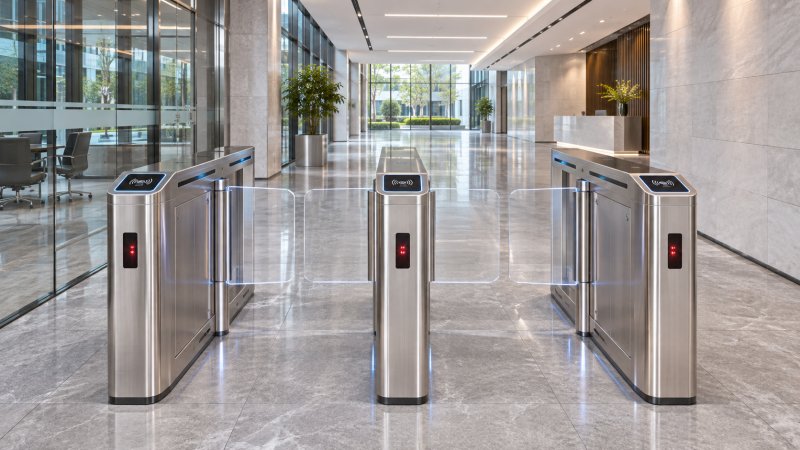
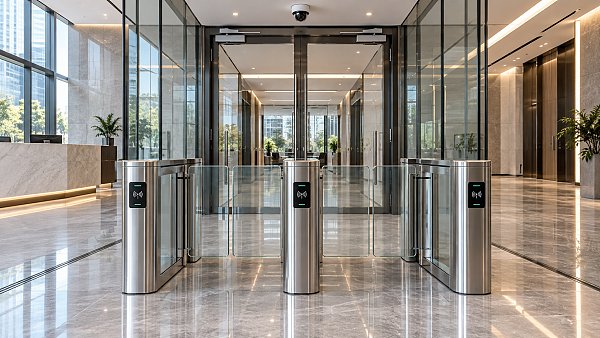
For example, an office lobby may use a staffed reception desk and speed gates to manage normal arrivals. A delivery entrance needs a different arrangement because people may carry bulky items and require temporary access. Applying the same entrance design to both locations can create congestion or encourage staff to bypass controls.
Layering provides additional opportunities to interrupt an incident. Passing through the main entrance should not automatically provide access to server rooms, inventory, or sensitive records. Internal boundaries limit how far a person can move after one control is defeated.
Detection should also connect to a realistic response. An alarm at a remote service door may provide useful warning, but the physical barrier must offer enough resistance for the planned response to matter. The appropriate balance depends on the threat, site layout, staffing, and availability of assistance.
Doors and locks form the physical foundation
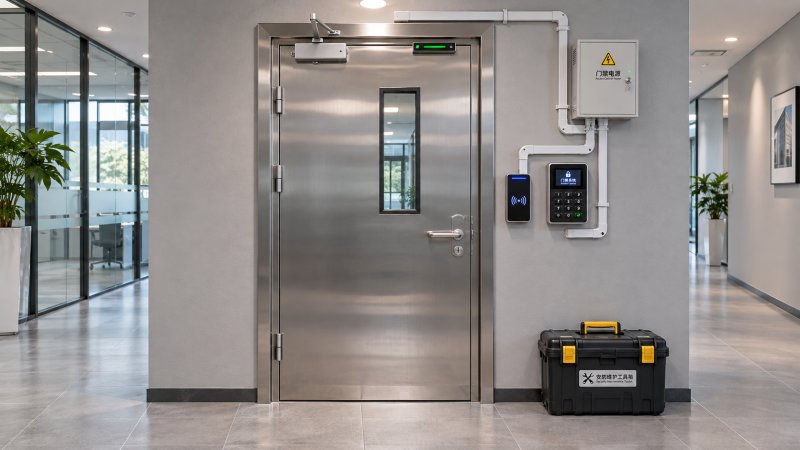
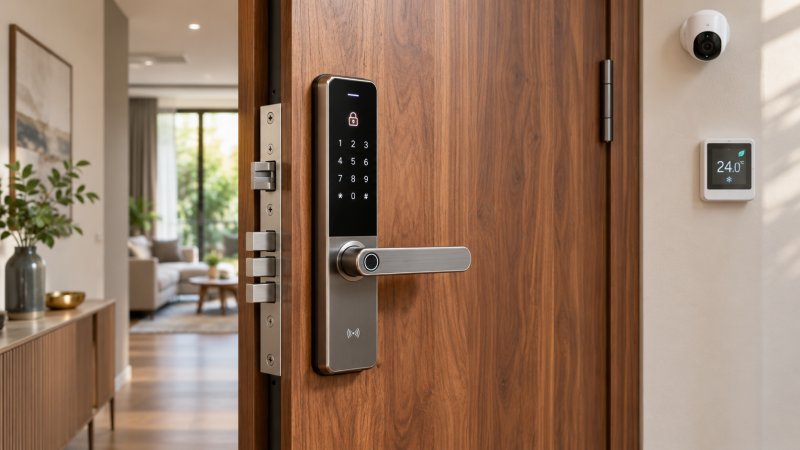
A secure opening is an assembly: door leaf, frame, wall connection, hinges, lock, strike, closer, and associated hardware. Evaluating the lock alone misses common weaknesses. A poorly fixed strike or misaligned latch can undermine otherwise capable equipment.
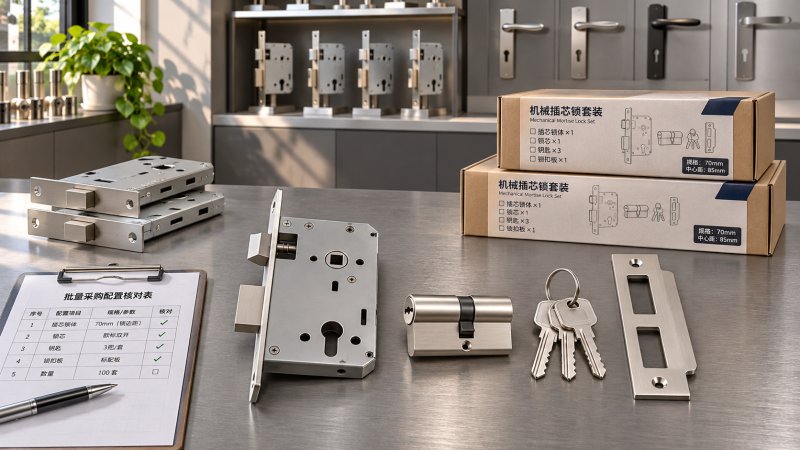
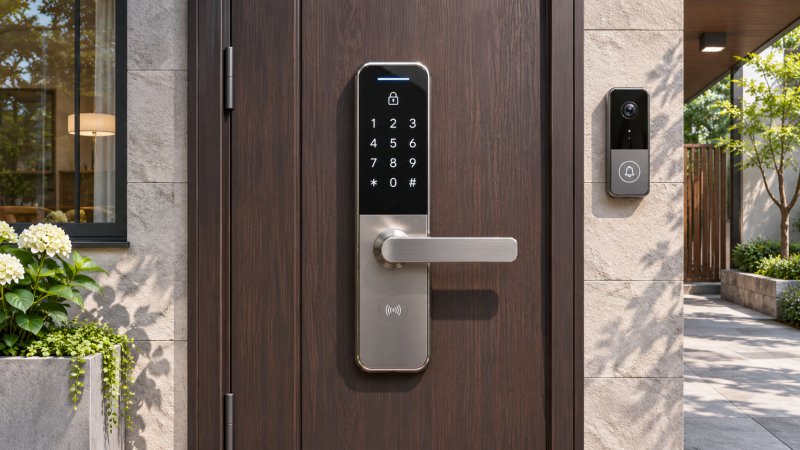
Mechanical cylinders control access through keys and provide resistance to particular forms of manipulation or attack, depending on their design. Electronic locks add credential management and may support event reporting. Those capabilities do not automatically establish the strength of the complete door assembly.
Installation checks should establish that the door closes and latches consistently without someone pushing it shut. Test it under normal operating conditions, including relevant air pressure differences and frequent traffic. A door that works when the building is empty may behave differently when ventilation systems are running.
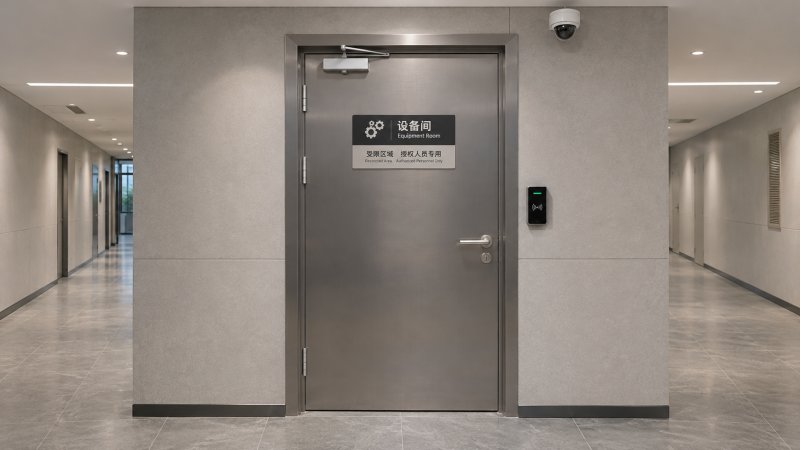
Protective doors and specialized locking assemblies can suit higher-risk rooms, but security must remain compatible with required escape and fire protection functions. Hardware selection, release arrangements, and installation should follow the applicable building requirements and approved door configuration.
Access control manages permissions and movement
An access control system connects identity or credentials to permission rules. A reader captures a card, mobile credential, PIN, or biometric input; a controller evaluates authorization; and a locking device permits or denies entry. Depending on the configuration, the system also records events and monitors door status.
The useful questions concern everyday behavior. Can access be limited by area and schedule? How quickly can a lost credential be disabled? Can temporary permissions expire automatically? What happens when a door remains open after an authorized entry?
Credential choice depends on the operating environment
Cards are convenient for many workplaces but can be shared or lost. PINs avoid issuing a physical token, although users may disclose them or enter them where others can observe. Mobile credentials depend on compatible devices and a workable process for issuing and removing access.
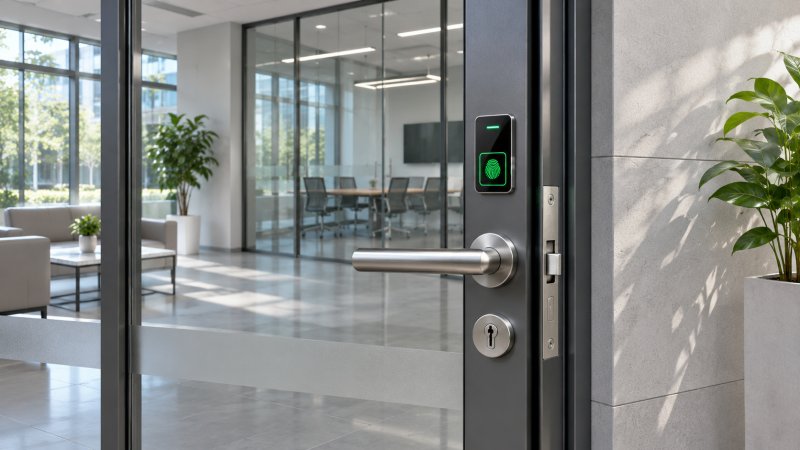
Biometric readers can reduce dependence on transferable credentials, but suitability depends on capture conditions, user needs, spoof resistance, and the handling of biometric data. Fingerprint, facial, and vein recognition have different installation and usability considerations. A fallback method is necessary when a person cannot successfully use the primary reader.
Turnstiles control passage, with practical limits
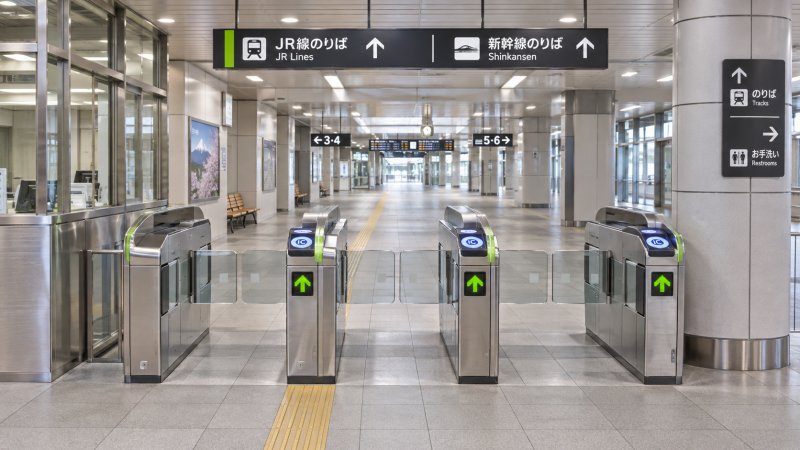
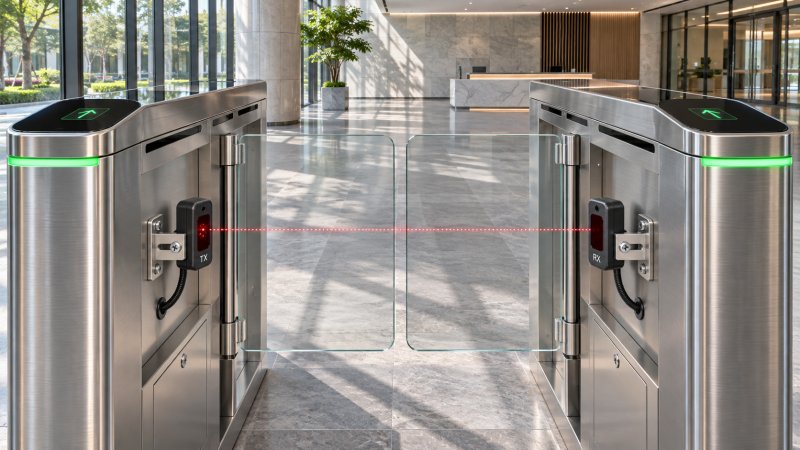
Turnstiles and speed gates help channel pedestrian traffic and discourage unauthorized passage behind an authorized user. Their value depends on lane geometry, sensing, operating settings, and staff response. They should not be treated as a guarantee that every person passing through has been independently authorized.
Entrance planning must accommodate wheelchairs, visitors, luggage, deliveries, and emergency movement. Assess normal passage, unusual movement, and safe operation together. Controls that repeatedly obstruct legitimate users often lead to gates being held open or bypassed.
Cameras and alarms need clear jobs
Video surveillance supports observation, incident assessment, and investigation. Before selecting a camera, define the task: seeing activity across a yard requires a different view from examining a face at an entrance or reviewing a parcel collection.
Image quality depends on the scene as well as the camera. Lighting, glare, mounting position, distance, movement, and obstructions affect whether recorded footage answers the intended question. Check images under actual daytime and nighttime conditions instead of relying only on resolution specifications.
Intrusion detection serves a related purpose. Door contacts can report opening status, while motion detectors and other sensors can identify activity in protected areas. Neither automatically explains what caused an event. Camera views, access records, and an established response procedure help turn an alert into a useful decision.
Alarm configuration needs particular care. A forced-door event, an authorized opening, and a door held open beyond its allowed time should produce appropriate responses. Repeated nuisance alerts can train people to ignore the system, so commissioning should include realistic activity and adjustment of avoidable alarm causes.
Protecting assets after someone enters the building
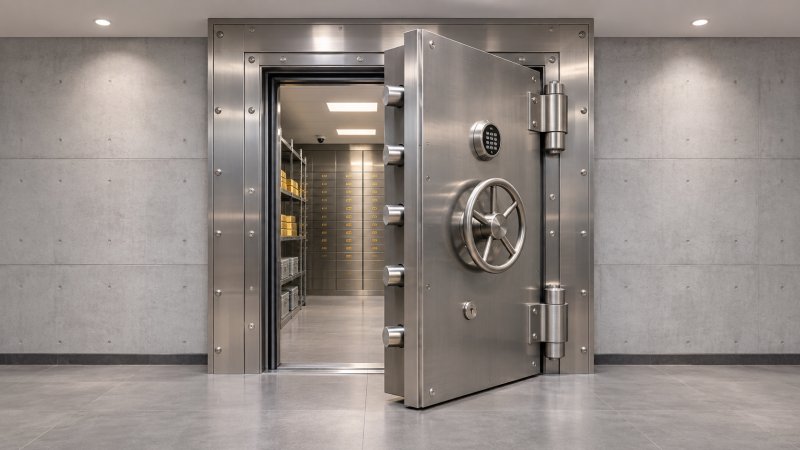
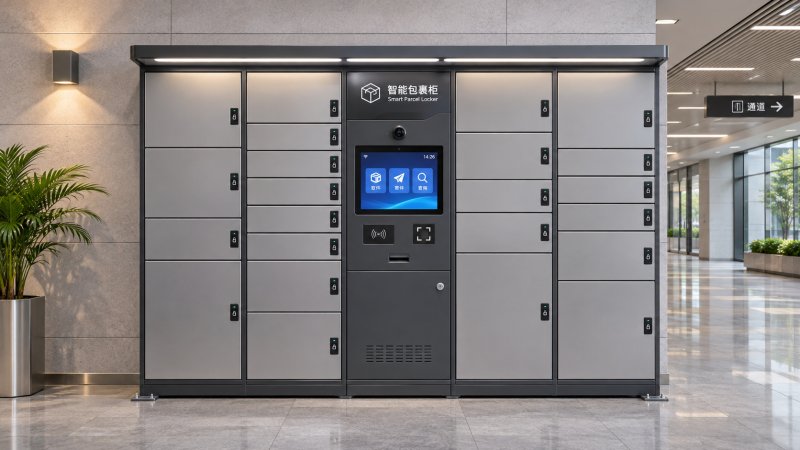
Safes, vaults, secure cabinets, and parcel lockers protect particular contents within the wider building. They add a boundary where general room access is insufficient. A visitor permitted into reception, for instance, should not gain access to stored keys or collected deliveries.
The protection must match the hazard. Burglary resistance and fire protection address different threats; neither should be inferred from the other. Recognized testing, such as EN 1143-1 for burglary-resistant secure storage, can help evaluate relevant products, provided the documented classification covers the proposed model and configuration.
Installation remains part of the assessment. Anchoring where specified, the supporting structure, key custody, opening permissions, and servicing arrangements affect practical protection. For smart parcel lockers, also consider collection authorization, compartment closure, failed pickup handling, and the process used during a connectivity outage.
Integration matters most when something goes wrong
Integrated systems can connect an access event to nearby video, display an alarm with its location, or help an operator investigate unusual activity. These benefits depend on the details exchanged between products. A claim that systems are “compatible” does not establish which events, commands, or status signals they support.
Specify the required behavior in plain language. For example: when a particular door is forced open, the monitoring interface should identify that door, display the relevant camera view, and record the event. This gives suppliers and installers an observable requirement to demonstrate.
Power and communication failures need equally clear definitions. Some controllers can continue applying stored access rules when disconnected from a central server; others depend more heavily on network services. Establish which functions continue, which stop, and how events are handled after reconnection.
Fail-safe and fail-secure describe lock behavior when power is lost, not the complete safety of an opening. A fail-safe lock releases on power loss; a fail-secure lock remains secured on its controlled side. Free egress may be provided separately through mechanical hardware. The correct arrangement depends on the door’s role, escape requirements, fire strategy, and approved design.
Connected equipment also needs protection against digital misuse. Controlled administrator access, maintained software, protected network connections, and prompt removal of unused accounts help prevent someone from changing permissions or disabling monitoring through the system itself.
What to check before accepting or upgrading a system
A practical acceptance review should demonstrate behavior at the installed location. Product documentation establishes intended capability; on-site checks show whether the assembled system delivers it.
- Check physical operation: doors latch, gates move safely, locks engage, and accessible fixings are secure.
- Test permission rules: valid, expired, revoked, and unauthorized credentials produce the expected outcomes.
- Trigger meaningful events: forced openings, prolonged openings, and relevant sensor activations reach the correct destination.
- Exercise failure conditions: controlled power and network interruptions demonstrate the agreed operation and recovery.
- Review the handover: drawings, device records, configuration backups, maintenance instructions, and administrative access are usable and complete.
For an existing building, begin with openings that do not reliably secure, permissions that are poorly controlled, and alarms that lack a response owner. These gaps often deserve attention before additional devices. Then plan maintenance around actual use and deterioration: inspect door alignment, test backup power, review camera views, and remove obsolete permissions. Each check should end with a recorded result, an assigned corrective action where needed, and confirmation that the affected function works again.
Have questions about this sector analysis, or seeking best practices specific to your niche? Drop us a line below and let the senior consultants at MHLS assist you.
We respect your privacy. Your information is strictly confidential.
Recommended News
 Physical Security Infrastructure Cost: Budgeting for Installation and MaintenanceUnmanned Terminal FellowUnderstand physical security infrastructure cost and build a smarter budget for installation, maintenance, and long-term ownership.
 Financial Facility Security: Choosing Vault Doors for Bank BranchesVault Structural ArchitectStrengthen financial facility security with the right bank vault door. Explore certification, installation, locking controls and maintenance before you buy.
 MACO Acquires Majority Stake in Fingerprint Access Provider ekeyProf. Elara SterlingMACO acquires a majority stake in ekey, bringing fingerprint access and door hardware closer together. Discover what the deal could mean for smart buildings.
 Physical Security System Engineering: From Risk Assessment to System DesignUnmanned Terminal FellowExplore physical security system engineering, from risk assessment to integrated design, procurement and testing. Build a safer, more resilient facility.
 Apple Home Collection Smart Lock and Other Accessories Open for Preorder November 13Biometric Auth ScientistApple Home Collection preorders open November 13, 2026. Explore the LG smart lock’s Matter and Aliro support and what buyers should verify before ordering.
 Choosing Servo-Driven Flap Barriers: Throughput, Safety and Access ControlAccess Control StrategistServo-driven flap barriers can balance throughput, safety and access control. Discover how to compare lanes, test performance and choose with confidence.
 Parcel Locker Network Pricing: Setup Costs, Fees and Contract TermsUnmanned Terminal FellowCompare parcel locker networks pricing, from setup costs and recurring fees to contract terms. Discover hidden charges and choose the right model.
 JR East Plans UWB Walk-Through Gates at 40 Stations in Spring 2028Access Control StrategistJR East plans UWB walk-through gates at 40 stations in spring 2028. Explore the rollout timeline and what suppliers should watch.
 Bank Vault Security Standards: UL and EN Ratings ExplainedVault Structural ArchitectExplore bank vault security standards and learn how UL 608 classes and EN 1143-1 grades differ, what they test, and how to verify certification before you buy.
 Mechanical Lock Hardware Prices: What Buyers Should Budget for Bulk OrdersMr. Gideon CrossMechanical lock hardware price is just the starting point. Discover what drives bulk-order costs and how to compare supplier quotes with confidence.
 IndexBox Forecasts Steady Global Security Keypad Market Growth Through 2035Dr. Valerius ThorneGlobal security keypad market growth is forecast at 3.3% annually through 2035. Explore the smart home and replacement trends shaping demand.
 Choosing an Infrared Safety Sensors Manufacturer: What Buyers Should CheckUnmanned Terminal FellowChoosing an infrared safety sensors manufacturer? Compare safety evidence, integration, environmental performance and lifecycle costs before you buy.