
Dubai Tightens Cybersecurity Clearance for Smart Lockers
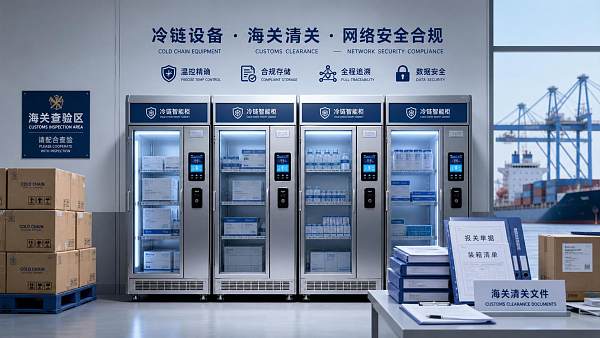
On June 23, 2026, Dubai Customs updated its import guidance for smart terminal equipment, adding a new customs clearance requirement for connected Refrigerated Smart Lockers. The change matters not only because it links cybersecurity documentation directly to bill of lading filing, but also because it can affect import timing, cost exposure, compliance preparation, and delivery planning for manufacturers, exporters, importers, certification-related service providers, and supply chain operators working with connected cold-chain locker products.
What the new filing requirement now includes
According to the update, importers of Refrigerated Smart Lockers with connectivity functions must submit, at the bill of lading declaration stage, a UL 2900-2-1:2025 cybersecurity declaration issued by UL or an equivalent certification body.
The required declaration must cover three core items: firmware signature verification, remote upgrade protection, and a weak password policy.
Dubai Customs also states that if the required declaration is not submitted, customs clearance will be suspended and a daily port storage charge of AED 1,200 will apply.
The update has also drawn watchful attention from customs authorities in multiple Middle Eastern markets, according to the event summary provided.
Where the rule change is likely to be felt first
Import filing and customs handling move to the front of compliance
From an industry perspective, importers and direct trading companies are the first group likely to feel the impact because the documentation must be available at the bill of lading declaration stage rather than later in the process. This means customs filing readiness, document completeness, and timing coordination become more sensitive points in the shipment workflow.
What deserves closer attention is that the consequence of missing documentation is not limited to a technical nonconformity. A suspended clearance process and daily port charges can quickly turn a documentation gap into a landed-cost and delivery issue.
Manufacturers and exporters face earlier technical document pressure
For manufacturers and exporters of connected Refrigerated Smart Lockers, the practical effect is likely to appear upstream. Analysis shows that product teams, compliance teams, and export documentation teams may need to align earlier on whether the product’s cybersecurity controls can be reflected in a declaration covering the three named items.
This does not by itself confirm broader product redesign requirements, but it does indicate that technical readiness and customs documentation readiness are becoming more tightly linked for this product category.
Certification and testing-related services may become part of shipment planning
Certification-related companies and testing service providers may also see a more immediate role in transaction execution, because the rule specifically refers to a declaration issued by UL or an equivalent certification body. Observably, this shifts part of cybersecurity assurance from a background technical matter into a visible customs document requirement.
For procurement teams and project buyers, this may also affect supplier screening, especially where delivery schedules depend on smooth import clearance in Dubai.
What companies should review now
Check whether the product falls within the declared scope
Companies handling Refrigerated Smart Lockers should first confirm whether the product has the connectivity features that place it within the scope described in the update. This is a basic but important step because the new requirement is tied to connected products rather than the broader equipment category in general.
Review document readiness before shipment filing
Analysis shows that the main operational change is the timing of submission. Businesses should focus on whether the cybersecurity declaration can be prepared and synchronized with bill of lading declaration, rather than treating it as a document that can be added later in the customs process.
Match technical evidence to the three named control points
What deserves closer attention is the explicit reference to firmware signature verification, remote upgrade protection, and weak password policy. Companies may need to review whether their technical files, supplier declarations, and compliance records are consistent with these three items before shipment and customs filing begin.
Watch for follow-on adoption in nearby markets
The event summary notes that customs authorities in multiple Middle Eastern markets are watching the clause. It is more appropriate to understand this as an execution signal worth monitoring, rather than as confirmation that the same requirement has already been adopted elsewhere. Even so, exporters and regional distributors may want to pay closer attention to tender documents, buyer specifications, and destination-market customs communications.
Why this looks like more than a document update
Observably, this is not just a wording adjustment in import guidance. It ties a named cybersecurity declaration to customs release conditions and attaches a direct financial consequence to missing paperwork. That makes the development more relevant to trade execution and supply chain management than a purely technical compliance notice would be.
At the same time, analysis shows that the current information is still limited to the announced requirement itself. The market will need to keep watching for how equivalence is interpreted for certification bodies, how consistently the filing rule is applied in practice, and whether related commercial documents begin to reflect the same cybersecurity expectation.
How this update is best understood at this stage
At this stage, the development is best understood as a landed rule change in Dubai customs handling for connected Refrigerated Smart Lockers, and also as a broader execution signal for companies shipping connected equipment into the region. The immediate issue is not abstract cybersecurity policy, but the practical link between technical declarations, customs clearance timing, and avoidable port costs.
A rational reading is that companies should neither overstate the regional spillover nor dismiss the change as a narrow procedural detail. The more useful approach is to treat it as an active compliance checkpoint in Dubai and a policy movement that still warrants continued observation in surrounding markets.
Basis of this article and what still needs verification
This article is based on the user-provided news title, event date, and event summary. For developments of this kind, commonly relevant source types may include official customs notices, regulator releases, trade authority updates, industry association communications, standard-setting documents, and reporting by established industry media.
No specific official source link was provided in the input, so the exact official publication path still needs to be verified on an ongoing basis. Continued attention should also be paid to any further rule details, interpretations of certification equivalence, changes in tender or procurement documents, market feedback, and how companies implement the requirement in actual shipment and clearance workflows.
Have questions about this sector analysis, or seeking best practices specific to your niche? Drop us a line below and let the senior consultants at MHLS assist you.
We respect your privacy. Your information is strictly confidential.
Recommended News
 Parcel Locker Network Pricing: Setup Costs, Fees and Contract TermsUnmanned Terminal FellowCompare parcel locker networks pricing, from setup costs and recurring fees to contract terms. Discover hidden charges and choose the right model.
 JR East Plans UWB Walk-Through Gates at 40 Stations in Spring 2028Access Control StrategistJR East plans UWB walk-through gates at 40 stations in spring 2028. Explore the rollout timeline and what suppliers should watch.
 Bank Vault Security Standards: UL and EN Ratings ExplainedVault Structural ArchitectExplore bank vault security standards and learn how UL 608 classes and EN 1143-1 grades differ, what they test, and how to verify certification before you buy.
 Mechanical Lock Hardware Prices: What Buyers Should Budget for Bulk OrdersMr. Gideon CrossMechanical lock hardware price is just the starting point. Discover what drives bulk-order costs and how to compare supplier quotes with confidence.
 IndexBox Forecasts Steady Global Security Keypad Market Growth Through 2035Dr. Valerius ThorneGlobal security keypad market growth is forecast at 3.3% annually through 2035. Explore the smart home and replacement trends shaping demand.
 Choosing an Infrared Safety Sensors Manufacturer: What Buyers Should CheckUnmanned Terminal FellowChoosing an infrared safety sensors manufacturer? Compare safety evidence, integration, environmental performance and lifecycle costs before you buy.
 Choosing a Security Material Testing Service: What to Check for Lock and Safe MaterialsProf. Elara SterlingChoose a security material testing service with confidence. Learn what to check for lock and safe materials, from attack methods and accreditation to reliable reports.
 How Precision Anti-Pick Lock Cylinders Resist ManipulationSecurity Metallurgy ExpertDiscover how precision anti-pick lock technology resists manipulation, and learn what to check when comparing security features, test evidence, and everyday reliability.
 Dermalog Joins NIST FastCAP Program for Contactless Fingerprint TestingProf. Elara SterlingDermalog joins the NIST FastCAP program for contactless fingerprint testing. Discover what this means for biometric identification and digital identity.
 Choosing Security Export Compliance Services: What Providers Should CoverMr. Gideon CrossSecurity export compliance services can help prevent costly delays. Discover what to look for in classification, licensing, screening, and documentation.
 European Security Compliance Standards for Safes: EN 1143-1 vs EN 14450Dr. Valerius ThorneExplore security compliance standards Europe buyers need to know. Compare EN 1143-1 and EN 14450 to choose the right safe with confidence.
 HID Global Acquires inepro ID to Expand RFID and BLE Access SolutionsUnmanned Terminal FellowHID Global acquires inepro ID to expand RFID and BLE access solutions for printers, smart lockers and shared devices. Explore what the deal could mean for your organization.











