
Grocery Pickup Smart Lockers: How to Choose the Right Temperature Zones and Capacity
Why Temperature Zones Matter in Grocery Pickup Smart Lockers
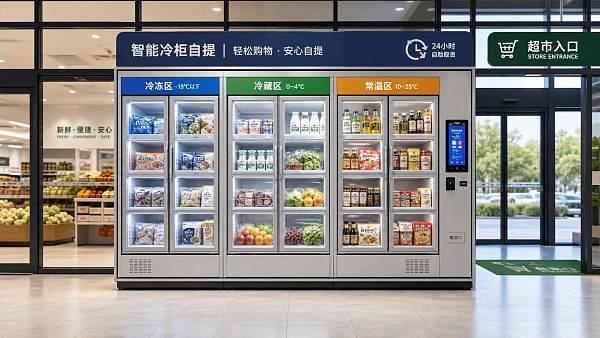
Choosing grocery pickup smart lockers starts with one basic fact.
Temperature control is not a feature upgrade.
It is the core of food safety, order quality, and operating cost.
For procurement planning, bad zone design creates expensive problems fast.
Frozen goods thaw.
Fresh produce dries out.
Prepared meals lose quality.
Customers notice every one of those failures.
That is why grocery pickup smart lockers should be sized around order mix, not just locker count.
A site with many frozen meals needs a different layout from a store selling mostly ambient staples.
The same applies to suburban stores, urban convenience sites, and mixed-use properties.
In practical terms, grocery pickup smart lockers must support three conditions.
- Food-safe holding temperatures across frozen, chilled, and ambient products.
- Enough compartment volume for peak pickup periods.
- Reliable throughput without overpaying for idle capacity.
When those three are aligned, locker investment becomes easier to defend.
When they are not, the system becomes a cost center.
Start with the Real Order Profile
Before comparing vendors, map the order profile first.
This is where many grocery pickup smart lockers are mis-specified.
The common mistake is using average daily orders only.
Average volume hides the real pressure point.
Peak-hour batch demand matters far more.
Look at order data across at least four dimensions.
- Average items per order.
- Share of frozen, refrigerated, and ambient items.
- Peak pickup windows by day and season.
- Average dwell time before customer collection.
From recent market shifts, order patterns are becoming less predictable.
Short-notice pickup and evening demand are growing.
That also means capacity planning needs more buffer than before.
If dwell time averages 90 minutes, one chilled compartment can turn several times daily.
If dwell time stretches to six hours, the same compartment becomes a bottleneck.
This is why grocery pickup smart lockers should be evaluated using turnover, not static capacity alone.
How to Choose the Right Temperature Zones
Most grocery pickup smart lockers need three temperature bands.
Frozen, chilled, and ambient are the standard structure.
The question is not whether to offer them.
The question is how much of each zone your site actually needs.
Frozen Zone
Use frozen compartments for ice cream, frozen meals, meat, and temperature-sensitive packaged goods.
Frozen space is expensive to build and operate.
So oversizing this zone can hurt total ownership cost quickly.
Chilled Zone
This is usually the most heavily used section in grocery pickup smart lockers.
Milk, eggs, prepared food, salad kits, fresh meat, and dairy often dominate pickup baskets.
In many sites, chilled demand drives the entire configuration.
Ambient Zone
Ambient compartments handle dry groceries, household items, and low-risk packaged products.
These lockers cost less per compartment and usually offer the most flexible sizing.
A simple starting ratio can help early planning.
Still, no ratio should be approved without site data.
Vendor defaults are useful for budgeting, not final procurement.
Capacity Planning: Count Compartments the Right Way
Capacity is more than the number of doors.
Grocery pickup smart lockers need usable volume that fits actual basket shapes.
That means compartment size mix matters as much as total count.
Small compartments work for a few bags or meal kits.
Larger compartments are needed for family baskets, beverage packs, and mixed grocery orders.
A locker bank with only one compartment size often wastes space.
In real operations, modular sizing usually performs better.
Use this checklist during evaluation.
- Measure average bags per order, not just item count.
- Check how often large basket orders appear during peak windows.
- Confirm whether one order may span multiple compartments.
- Ask how the software assigns temperature zones across split orders.
- Review reserve capacity for late pickups and failed collection attempts.
More importantly, test peak scenario math.
If a site expects 40 pickups between 5 p.m. and 7 p.m., plan around that spike.
Do not plan around a quiet Tuesday morning average.
This is often the turning point between smooth service and overflow handling.
Cost Drivers Beyond the Purchase Price
Procurement decisions should compare lifecycle cost, not only unit price.
For grocery pickup smart lockers, several hidden costs matter early.
- Energy use by zone, especially frozen and chilled sections.
- Service access and replacement time for cooling components.
- Software license fees, alerts, and remote monitoring charges.
- Installation work, drainage, ventilation, and power upgrades.
- Downtime risk if one thermal section fails.
A cheaper locker can become more expensive within the first year.
That happens when energy demand is high or field maintenance is frequent.
The better signal is cost per fulfilled pickup over time.
This approach makes vendor comparison more realistic.
It also helps explain why right-sized grocery pickup smart lockers often outperform oversized systems.
Questions to Ask Suppliers Before You Buy
Strong vendor discussions usually reveal fit problems early.
Ask direct questions tied to operating reality.
- What temperature recovery time is expected after repeated door openings?
- How is temperature logged, alerted, and exported for compliance review?
- Can the locker layout be expanded by zone later?
- What is the service model for compressor or electronic lock failure?
- How does the system manage no-show pickups and expired holding times?
- What uptime data exists from comparable grocery sites?
For security-focused environments, access control also deserves attention.
Electronic lock reliability, audit trails, and remote status visibility should be standard.
That matters even more when grocery pickup smart lockers are placed outdoors or in mixed-use properties.
A missed security detail can create shrinkage, customer disputes, and service headaches.
A Practical Buying Framework
The best grocery pickup smart lockers are not the biggest or the most complex.
They are the ones matched to product mix, pickup rhythm, and site economics.
A practical buying sequence usually looks like this.
- Map order composition by temperature requirement.
- Measure peak-hour demand and dwell time.
- Define the needed mix of compartment sizes.
- Model lifecycle cost, not purchase price alone.
- Validate service support, uptime history, and expansion options.
That process keeps the decision grounded.
It also reduces the risk of buying grocery pickup smart lockers that look adequate on paper but fail in daily use.
In the end, the right temperature zones and capacity are about fit.
Fit with food safety rules, customer expectations, and operating margins.
When those factors are evaluated together, locker investment decisions become clearer and more defensible.
Have questions about this sector analysis, or seeking best practices specific to your niche? Drop us a line below and let the senior consultants at MHLS assist you.
We respect your privacy. Your information is strictly confidential.
Recommended News
 Parcel Locker Network Pricing: Setup Costs, Fees and Contract TermsUnmanned Terminal FellowCompare parcel locker networks pricing, from setup costs and recurring fees to contract terms. Discover hidden charges and choose the right model.
 JR East Plans UWB Walk-Through Gates at 40 Stations in Spring 2028Access Control StrategistJR East plans UWB walk-through gates at 40 stations in spring 2028. Explore the rollout timeline and what suppliers should watch.
 Bank Vault Security Standards: UL and EN Ratings ExplainedVault Structural ArchitectExplore bank vault security standards and learn how UL 608 classes and EN 1143-1 grades differ, what they test, and how to verify certification before you buy.
 Mechanical Lock Hardware Prices: What Buyers Should Budget for Bulk OrdersMr. Gideon CrossMechanical lock hardware price is just the starting point. Discover what drives bulk-order costs and how to compare supplier quotes with confidence.
 IndexBox Forecasts Steady Global Security Keypad Market Growth Through 2035Dr. Valerius ThorneGlobal security keypad market growth is forecast at 3.3% annually through 2035. Explore the smart home and replacement trends shaping demand.
 Choosing an Infrared Safety Sensors Manufacturer: What Buyers Should CheckUnmanned Terminal FellowChoosing an infrared safety sensors manufacturer? Compare safety evidence, integration, environmental performance and lifecycle costs before you buy.
 Choosing a Security Material Testing Service: What to Check for Lock and Safe MaterialsProf. Elara SterlingChoose a security material testing service with confidence. Learn what to check for lock and safe materials, from attack methods and accreditation to reliable reports.
 How Precision Anti-Pick Lock Cylinders Resist ManipulationSecurity Metallurgy ExpertDiscover how precision anti-pick lock technology resists manipulation, and learn what to check when comparing security features, test evidence, and everyday reliability.
 Dermalog Joins NIST FastCAP Program for Contactless Fingerprint TestingProf. Elara SterlingDermalog joins the NIST FastCAP program for contactless fingerprint testing. Discover what this means for biometric identification and digital identity.
 Choosing Security Export Compliance Services: What Providers Should CoverMr. Gideon CrossSecurity export compliance services can help prevent costly delays. Discover what to look for in classification, licensing, screening, and documentation.
 European Security Compliance Standards for Safes: EN 1143-1 vs EN 14450Dr. Valerius ThorneExplore security compliance standards Europe buyers need to know. Compare EN 1143-1 and EN 14450 to choose the right safe with confidence.
 HID Global Acquires inepro ID to Expand RFID and BLE Access SolutionsUnmanned Terminal FellowHID Global acquires inepro ID to expand RFID and BLE access solutions for printers, smart lockers and shared devices. Explore what the deal could mean for your organization.











