
Refrigerated Locker Report Signals New Audit Benchmarks
The timing of this development is not specified in the source input, but by May 26, 2026, the technical report The Science Behind Refrigerated Lockers: Properties, Production, and Applications had already become relevant beyond product design and into compliance review. The report’s treatment of 2°C–8°C temperature control, material properties, multi-zone design, and FDA, CDC, and WHO cold-chain requirements matters because it is now being used as a reference in supplier audits by UL in the United States and TÜV Rheinland in Germany, with direct implications for certification preparation, export documentation, procurement review, and delivery assurance for medical and fresh-distribution refrigerated locker suppliers, including Chinese manufacturers of pharmaceutical lockers and vaccine dispensing cabinets.
How the technical report is being used in compliance review
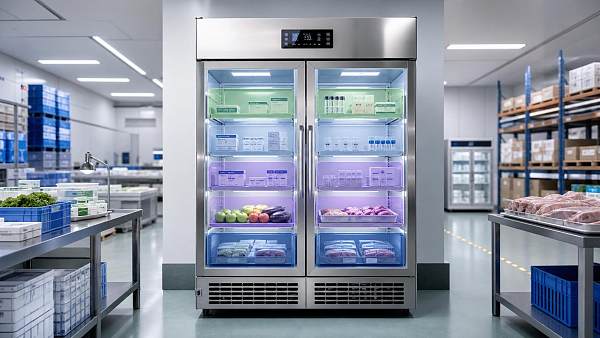
According to the provided information, the report The Science Behind Refrigerated Lockers: Properties, Production, and Applications systematically explains refrigerated locker material properties, temperature-control accuracy within 2°C–8°C, FDA, CDC, and WHO cold-chain compliance requirements, and the design logic of multi-temperature-zone systems.
The same input states that, as of May 26, 2026, UL in the United States and TÜV Rheinland in Germany had incorporated this report into reference documentation for refrigerated smart-locker supplier audits.
The confirmed mandatory verification items identified in the input are “real-time temperature audit trails” and “72-hour insulation capability during power loss” for medical and fresh-delivery scenarios in North America and the European Union.
The input also confirms that the report has direct certification guidance value for Chinese manufacturers exporting pharmaceutical lockers and vaccine distribution cabinets.
Where the new verification focus may be felt first
Specification review is likely to tighten before purchase approval
From an industry perspective, buyers, import-facing suppliers, and tender-response teams may feel the impact early because audit reference documents often influence how technical specifications are checked before supplier qualification or project award. What deserves closer attention is whether temperature logging capability, insulation performance during outages, and multi-zone design descriptions are reflected consistently across product literature, technical files, and bid documents.
Certification preparation may move closer to evidence-based review
Analysis shows that manufacturers and certification-related service providers may need to place more weight on demonstrable records rather than broad compliance claims. If “real-time temperature audit trails” and “72-hour insulation capability during power loss” are treated as mandatory verification items in relevant scenarios, the affected business steps are likely to include test preparation, technical dossier assembly, product validation, and communication with certification bodies or audit teams.
Export delivery and after-sales traceability could face closer scrutiny
Observably, export-oriented suppliers and downstream service teams may need to pay more attention to how compliance can be evidenced after installation and during operation. The practical concern is not only whether a cabinet can hold the required range, but whether temperature history and outage-related performance can be documented in a way that supports customer audits, acceptance checks, or later quality tracing in medical and fresh-delivery use cases.
What companies should examine in current workflows
Check whether technical files match audit expectations
Analysis shows that exporters and manufacturers should review whether existing technical documents clearly cover material properties, 2°C–8°C control performance, multi-temperature-zone design logic, and the cold-chain compliance references cited in the report. Where documents are fragmented, the risk may appear first in audit preparation and customer-facing qualification review.
Prepare evidence for temperature records and outage performance
What deserves closer attention is the documentary basis for the two verification points explicitly highlighted in the input. Companies may need to examine whether their current testing records, operating logs, or validation materials are sufficient to explain real-time temperature auditability and 72-hour insulation capability during power loss, especially when serving medical or fresh-distribution projects tied to overseas certification review.
Watch tender language and supplier qualification criteria
Observably, procurement and sales teams should monitor whether future tender documents, supplier onboarding forms, or technical bid requirements begin to mirror the audit-reference language described in the input. The source material does not confirm specific implementation wording across projects, so this is better treated as a compliance watchpoint rather than an already uniform market rule.
Coordinate certification, delivery, and service teams earlier
From an industry perspective, the operational issue is not limited to product design. Certification staff, export documentation teams, delivery coordinators, and after-sales service teams may need earlier alignment on what evidence must travel with the product, what performance claims can be supported, and how traceability can be maintained once equipment enters regulated or quality-sensitive cold-chain use.
Why this looks more like an execution signal than a general technical note
Analysis shows that the most important change here is not simply that a technical report exists, but that it is being used in supplier-audit reference work by recognized certification organizations. That shifts the report from background reading toward an execution-facing document for market access preparation.
It is more appropriate to understand this as a concrete compliance signal with practical audit implications, while still leaving room for continued observation on how different certification reviews, project tenders, and buyer requirements will apply the referenced verification points in practice. The input does not provide a full enforcement framework, so any conclusion beyond that would go beyond confirmed facts.
How to read the current significance of this update
At this stage, a neutral reading is that refrigerated lockers for medical and fresh-distribution use are facing more explicit attention to traceable temperature control and outage-resilience evidence in audit-related contexts. For Chinese exporters of pharmaceutical lockers and vaccine dispensing cabinets, the development is best understood as a practical certification and market-entry reference point rather than a fully mapped regulatory regime. The immediate implication is to review readiness, documentation quality, and verification logic, while continuing to watch how certification practice and customer requirements develop.
Basis of this article and points that still need verification
This article is generated from the user-provided title, event timing, and event summary. The specific official source link was not provided in the input, so continued verification is still needed. For developments of this type, relevant source categories commonly include official announcements, regulatory agency publications, trade or customs authority information, industry association updates, standards organization documents, certification body materials, and reporting by authoritative industry media.
Further observation is still needed on detailed certification interpretation, tender-document wording, supplier-audit practice, market feedback, and how companies implement the referenced verification items in actual export, procurement, and delivery workflows.
Have questions about this sector analysis, or seeking best practices specific to your niche? Drop us a line below and let the senior consultants at MHLS assist you.
We respect your privacy. Your information is strictly confidential.
Recommended News
 Parcel Locker Network Pricing: Setup Costs, Fees and Contract TermsUnmanned Terminal FellowCompare parcel locker networks pricing, from setup costs and recurring fees to contract terms. Discover hidden charges and choose the right model.
 JR East Plans UWB Walk-Through Gates at 40 Stations in Spring 2028Access Control StrategistJR East plans UWB walk-through gates at 40 stations in spring 2028. Explore the rollout timeline and what suppliers should watch.
 Bank Vault Security Standards: UL and EN Ratings ExplainedVault Structural ArchitectExplore bank vault security standards and learn how UL 608 classes and EN 1143-1 grades differ, what they test, and how to verify certification before you buy.
 Mechanical Lock Hardware Prices: What Buyers Should Budget for Bulk OrdersMr. Gideon CrossMechanical lock hardware price is just the starting point. Discover what drives bulk-order costs and how to compare supplier quotes with confidence.
 IndexBox Forecasts Steady Global Security Keypad Market Growth Through 2035Dr. Valerius ThorneGlobal security keypad market growth is forecast at 3.3% annually through 2035. Explore the smart home and replacement trends shaping demand.
 Choosing an Infrared Safety Sensors Manufacturer: What Buyers Should CheckUnmanned Terminal FellowChoosing an infrared safety sensors manufacturer? Compare safety evidence, integration, environmental performance and lifecycle costs before you buy.
 Choosing a Security Material Testing Service: What to Check for Lock and Safe MaterialsProf. Elara SterlingChoose a security material testing service with confidence. Learn what to check for lock and safe materials, from attack methods and accreditation to reliable reports.
 How Precision Anti-Pick Lock Cylinders Resist ManipulationSecurity Metallurgy ExpertDiscover how precision anti-pick lock technology resists manipulation, and learn what to check when comparing security features, test evidence, and everyday reliability.
 Dermalog Joins NIST FastCAP Program for Contactless Fingerprint TestingProf. Elara SterlingDermalog joins the NIST FastCAP program for contactless fingerprint testing. Discover what this means for biometric identification and digital identity.
 Choosing Security Export Compliance Services: What Providers Should CoverMr. Gideon CrossSecurity export compliance services can help prevent costly delays. Discover what to look for in classification, licensing, screening, and documentation.
 European Security Compliance Standards for Safes: EN 1143-1 vs EN 14450Dr. Valerius ThorneExplore security compliance standards Europe buyers need to know. Compare EN 1143-1 and EN 14450 to choose the right safe with confidence.
 HID Global Acquires inepro ID to Expand RFID and BLE Access SolutionsUnmanned Terminal FellowHID Global acquires inepro ID to expand RFID and BLE access solutions for printers, smart lockers and shared devices. Explore what the deal could mean for your organization.











