CPSC Tightens Smart Lock Testing Over 3D Mask Spoofing
On July 24, 2026, the U.S. Consumer Product Safety Commission (CPSC) released new guidance for biometric smart locks sold into the U.S. market, adding a mandatory anti-spoofing test focused on static and dynamic 3D mask attacks. With the guidance set to take effect on August 15, 2026, the change is relevant not only to product developers and exporters, but also to certification, customs clearance, platform compliance, and delivery planning. For suppliers serving U.S.-bound orders, the issue is no longer only product functionality, but whether existing compliance pathways and technical documentation still match the updated testing expectation.
What the new CPSC guidance clearly requires
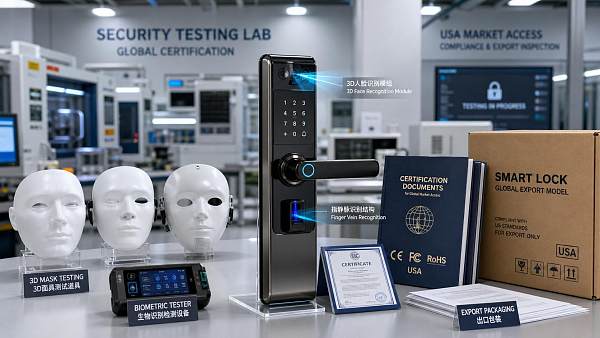
According to the information provided, CPSC issued the Smart Lock Biometric Vulnerability Assessment Guidance on July 24, 2026. The guidance applies to biometric smart locks for the U.S. market, including 3D Facial Smart Locks and Finger Vein Locks.
The confirmed change is the addition of a required static & dynamic 3D mask spoofing test. The guidance will formally take effect on August 15, 2026. The information provided also indicates that this update directly affects the certification path for Chinese exporters and their UL/ANSI/BHMA compliance strategy. Products that do not meet the new requirement may face customs clearance delays and removal from Amazon listings.
Where the commercial pressure is likely to appear first
Export programs tied to U.S. market access
From an industry perspective, exporters shipping biometric smart locks to the United States are the most directly exposed. The reason is straightforward: the rule change is connected to market entry conditions rather than only internal product design. The main impact is likely to appear in shipment readiness, certification sequencing, and document preparation for U.S.-bound products. What deserves closer attention is whether current product files, test arrangements, and compliance claims still align with the added spoofing-test requirement before goods move into customs or platform review processes.
Certification and testing workflows around UL/ANSI/BHMA alignment
Certification-related businesses and testing service providers are also likely to feel the change quickly because the guidance affects how compliance strategies are structured. Analysis shows that the immediate issue is not simply adding one more technical item, but reassessing whether existing UL/ANSI/BHMA planning for relevant smart lock models remains sufficient under the new CPSC expectation. This may affect test scheduling, report completeness, technical evidence packages, and the timing of product approvals tied to U.S. sales.
Channel and platform-facing product management
For channel operators and sellers using marketplace distribution, the rule change may affect listing continuity and delivery commitments. Based on the information provided, non-compliant products face Amazon delisting risk. Observably, this means sales teams, channel managers, and platform compliance staff need to pay closer attention to whether product claims, listing materials, and supporting compliance files can withstand a higher level of scrutiny once the guidance is in force.
Supply chain coordination before shipment and delivery
Supply chain service providers, buyers, and delivery planners may also be affected because compliance timing can influence handover schedules and shipment release. Analysis shows that even without further published execution details in the input, the stated customs delay risk is enough to make lead-time planning, supplier qualification checks, and document readiness more sensitive than before for affected product categories.
What companies should review now
Recheck whether current certification paths still fit the new test item
Analysis shows that companies selling affected biometric smart locks into the U.S. market should first review whether their existing certification route still properly reflects the newly required static and dynamic 3D mask spoofing assessment. The key point is not to assume that a previously acceptable path automatically remains complete after the guidance takes effect.
Compare technical files and test reports against the updated requirement
What deserves closer attention is the consistency between product specifications, test reports, technical descriptions, and compliance statements. For exporters, certification teams, and sourcing parties, this means checking whether current files explicitly support the new anti-spoofing requirement or whether additional testing documentation may be needed for U.S.-bound transactions and platform reviews.
Watch for changes in execution wording and review practice
Because the input does not provide further operational detail beyond the effective date and the new test requirement, it is more appropriate to understand near-term implementation as an area requiring continued monitoring. Companies should watch for how the guidance is referenced in certification practice, customs review, marketplace compliance checks, and buyer-side specification language.
Build more caution into delivery and procurement planning
Observably, businesses dealing with affected product lines should factor compliance verification into shipment scheduling, purchasing decisions, and supplier communication. This is especially relevant where order commitments depend on U.S. market entry timing, because the stated risks involve both customs delay and platform removal rather than only internal technical adjustment.
How this change should be read at this stage
Analysis shows that this is better understood as a concrete execution signal rather than a distant policy discussion. A regulator has issued guidance, the new test requirement has been identified, and an effective date has been set. At the same time, it would be premature to treat every downstream implementation detail as settled, because the input does not include more specific enforcement practice, review procedures, or market response. For that reason, the most practical reading is that the rule direction is already clear, while some execution details still need to be followed through in real transactions and certification handling.
Why the market is likely to focus on compliance timing, not only product design
From an industry perspective, the importance of this update lies in its effect on the commercial route into the U.S. market. The guidance links product security testing more directly to certification strategy, customs exposure, and platform continuity for certain biometric smart locks. It is more appropriate to understand this development as an already landed compliance change with immediate operational implications, while continuing to observe how certification bodies, buyers, platforms, and supply-chain participants translate the requirement into day-to-day execution.
Basis of this article and what still needs verification
This article is based on the user-provided news title, event date, and event summary. For developments of this kind, the source types usually relevant to verification include official regulatory releases, notices from supervisory authorities, customs or trade administration updates, industry association communications, standards organization documents, and reporting by established trade media.
No specific official source link was provided in the input, so the exact source document path still needs to be verified on an ongoing basis. Further observation is also needed on implementation wording, certification execution practice, bidding and specification changes, industry feedback, and how affected companies adjust their compliance and delivery arrangements after the guidance takes effect.
Recommended News
 Macao Consumer Council Publishes Smart Lock Test Report, Urges Data ProtectionBiometric Auth ScientistMacao Consumer Council’s smart lock test report helps buyers make informed choices. Explore the findings and practical data protection tips for safer smart home use.
 Anti-Drill Lock Cylinders: How Hardened Inserts Resist Drilling AttacksSecurity Metallurgy ExpertExplore anti-drill lock technology for cylinders: discover how hardened inserts, secure placement, and verified testing help you choose reliable protection. Read the guide.
 What Is Physical Security Infrastructure? Core Systems for Commercial BuildingsUnmanned Terminal FellowExplore physical security infrastructure for commercial buildings, from locks and access control to cameras and alarms. Learn how to spot gaps and prioritize smarter upgrades.
 What Is Physical Security Infrastructure? Core Systems for Commercial BuildingsUnmanned Terminal FellowExplore physical security infrastructure for commercial buildings, from locks and access control to cameras and alarms. Learn how to spot gaps and prioritize smarter upgrades.
 What Is Physical Security Infrastructure? Core Systems for Commercial BuildingsUnmanned Terminal FellowExplore physical security infrastructure for commercial buildings, from locks and access control to cameras and alarms. Learn how to spot gaps and prioritize smarter upgrades.
 September Smart Lock Sales Fall; Xiaomi Leads Volume, Desman Revenue Under PressureBiometric Auth ScientistChina smart lock sales fell in September 2026, with Xiaomi leading volume and Desman revenue under pressure. Explore key market figures and insights for smarter pricing and procurement.
 EN 1143-1 Burglary Resistance Grades: What the Ratings Mean for SafesDr. Valerius ThorneEN 1143-1 burglary resistance grades explained: compare safe ratings, verify certification, and understand installation requirements to choose the right protection. Read before you buy.
 Sourcing Security Hardware from China: Supplier Checks to Reduce Supply Chain RiskMr. Gideon CrossNavigate the security hardware supply chain China offers with practical supplier checks. Learn to verify compliance, control substitutions, and reduce costly sourcing risks before you buy.
 Biometric Lock Reliability Testing: False Rejects, Wear, and WeatherProf. Elara SterlingExplore biometric lock reliability testing for false rejects, wear, and weather. Learn which metrics and test evidence help you compare suppliers and choose dependable, secure access.
 Certification Suspended for Six Zhenyuan Fire Door ProductsDr. Valerius ThorneSix Zhenyuan fire door products face certification suspension. Discover what buyers should verify and why certification status matters before making procurement decisions.
 How Should Parcel Lockers Handle Offline Access and Post-Outage Data Sync?Unmanned Terminal FellowWhat should happen when a parcel locker loses network connection? Discover secure offline access, reliable event logging, and post-outage sync strategies to protect parcels and prevent conflicts.
 SnapSafe Launches Premium Vault Door With 12-Gauge Steel and UL-Certified LockVault Structural ArchitectExplore the SnapSafe Premium vault door with 12-gauge steel, nine locking bolts and a UL-certified electronic lock. See how its inward-opening design fits your safe room.