UL 2050 Fifth Edition Raises Safe Certification Bar
On June 19, 2026, UL released the fifth edition of UL 2050 for high-security safes, introducing new mandatory certification requirements for certain safes and modular vault products. For manufacturers, exporters, certification-related service providers, buyers, and supply chain teams involved in shipments to the U.S. market, this is not merely a product upgrade issue; it is a rule change that can affect specification design, certification preparation, component sourcing, and delivery planning.
What the new edition now requires
According to the provided event summary, the fifth edition of UL 2050 was issued by UL on June 19, 2026.
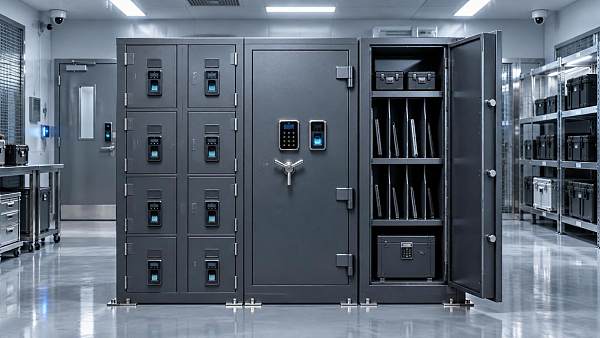
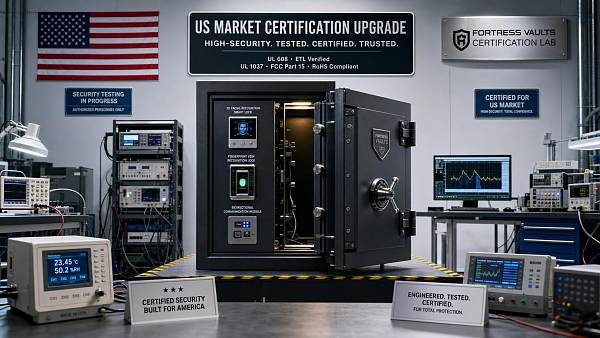
The confirmed change is that all Jewelry/Gun Safes and Modular Vaults & Doors applying for UL 2050 certification must include a built-in two-way communication module that supports remote duress alarm functions.
The same summary also states that these products must use UL-validated 3D Facial Smart Locks or Finger Vein Locks, and that the Liveness Rejection Rate for those biometric modules must not exceed 0.1%.
The provided information further indicates that this revision will materially increase the technology and certification costs for high-security products exported to the U.S. market.
Where the pressure is likely to appear first
Product developers and manufacturers face a tighter specification baseline
From an industry perspective, the immediate impact is likely to fall on companies designing and manufacturing Jewelry/Gun Safes and Modular Vaults & Doors for UL 2050 certification. The rule change shifts compliance from a traditional physical-security focus toward an integrated requirement that combines enclosure protection, communication capability, and biometric access performance. What deserves closer attention is whether existing product platforms, lock architectures, and internal electronic layouts can still align with certification needs without redesign.
Export and trade teams may need to reassess certification readiness before shipment planning
For exporters and trading companies serving the U.S. market, the change may affect product qualification at the quotation, contracting, and pre-shipment stages. Analysis shows that any product previously positioned as a high-security offering may now require closer review of whether its communication module and biometric lock configuration are compatible with the revised UL 2050 pathway. This is especially relevant where certification status, technical files, or buyer-facing product claims are part of tender, procurement, or customs-related documentation.
Component sourcing and supply chain coordination become more compliance-sensitive
Suppliers and procurement teams may also feel the impact because the new edition ties certification more closely to specific technical components. Observably, sourcing is no longer only about lock availability or electronics integration; it also touches the use of UL-validated biometric solutions and the ability to support remote duress alarm capability within the finished product. That can affect supplier screening, qualification records, and the sequencing of procurement and assembly decisions.
Certification and testing service providers may see more front-loaded review work
Certification-related companies and testing service institutions are likely to encounter stronger demand for early-stage document review and technical alignment. Analysis shows that applicants may need more attention on product configuration, supporting technical materials, and the relationship between biometric performance claims and certification expectations. Even without further execution details in the provided information, the revision points to a more documentation-intensive compliance process.
What companies should watch now
Check whether current certified or planned models still fit the revised route
Companies with products intended for UL 2050 certification should review whether their current or pipeline models fall within the listed product categories and whether their existing technical solutions match the newly stated requirements. It is more appropriate to understand this as an immediate compliance screening task rather than a routine model refresh.
Revisit technical files and certification support documents
Where product dossiers, bid specifications, test materials, or buyer submissions reference UL 2050, companies should verify whether those materials need updating to reflect the new communication and biometric requirements. Analysis shows that incomplete or outdated technical descriptions could create friction in certification preparation, customer review, or delivery confirmation.
Reassess supplier qualification for biometric and communication modules
Because the summary specifically refers to UL-validated 3D Facial Smart Locks or Finger Vein Locks, procurement and engineering teams should pay close attention to component qualification status, technical compatibility, and documentation support. What deserves closer attention is whether suppliers can support certification-facing evidence consistently through the project cycle.
Build more margin into delivery and export planning
The provided information confirms that technology and certification costs will rise for high-security products exported to the U.S. Analysis shows that companies may also need to watch for possible knock-on effects in lead-time planning, model approval sequencing, and after-sales support preparation, even though detailed execution timelines were not included in the input.
Why this looks like more than a routine standards update
Observably, this development is better understood as a concrete compliance signal rather than a purely theoretical standards discussion. The reason is that the revision introduces explicit technical conditions tied to certification eligibility for named product categories. At the same time, analysis shows that the market still needs to watch how the new edition is reflected in certification practice, buyer specifications, and project-level acceptance language, because those execution details were not provided in the input.
From an industry perspective, the most important point is not only that new security functions are being emphasized, but that the certification threshold now appears to be moving toward verifiable integration of communication and biometric performance. That can influence how companies define product readiness for the U.S. market.
How this update is best understood at this stage
At this stage, the release of UL 2050 Fifth Edition is best read as a confirmed rule change with practical implications for certification preparation, component sourcing, export planning, and technical documentation in the high-security safe segment. It would be premature to treat every downstream market effect as settled, but it is reasonable to regard the revision as an actionable compliance development that affected companies should begin assessing immediately.
Basis of this article and items still requiring verification
This article is generated from the user-provided news title, event date, and event summary. For developments of this kind, relevant source types commonly include official announcements, regulator releases, trade authority information, industry association updates, standards organization documents, and reporting by authoritative media. A specific official source link was not provided in the input, so continued verification remains necessary.
What still requires follow-up includes any later clarification on implementation details, certification interpretation, changes in tender or procurement documents, market feedback, and how affected companies ultimately execute compliance and delivery under the revised standard.
Recommended News
 How to Specify Smart Building Entry Gates for Secure, High-Traffic LobbiesAccess Control StrategistSmart building entry gates: learn how to specify secure, high-traffic lobby access with optimized flow, anti-tailgating, safety, and seamless integration.
 How to Evaluate Access Control Integration Software for Multi-Site Security SystemsAccess Control StrategistAccess control integration software evaluation guide for multi-site security: assess interoperability, identity management, cybersecurity, resilience, and scalability.
 How to Specify Infrared Security Sensors for Turnstiles to Prevent TailgatingAccess Control StrategistSpecify infrared security sensors for turnstiles with proven anti-tailgating detection, safe barrier logic, access-control integration, and measurable acceptance tests.
 Access Control Solutions Pricing: How to Budget for Hardware, Software, and InstallationAccess Control StrategistAccess control solutions pricing explained: budget confidently for hardware, software, installation, integrations, and lifecycle support while avoiding hidden costs.
 How to Evaluate Finger Vein Recognition Suppliers for Secure Access ProjectsBiometric Auth ScientistFinger vein recognition suppliers: learn how to compare biometric accuracy, security, integration, lifecycle cost, and support for secure access projects.
 Wireless IoT Access Control: How to Choose a Secure System for Multi-Site FacilitiesBiometric Auth ScientistWireless IoT access control for multi-site facilities: learn how to assess security, offline resilience, credentials, integrations, and lifecycle management before deployment.
 Outdoor Parcel Locker Installation Cost: Budgeting for Site, Power, and Network WorkUnmanned Terminal FellowOutdoor parcel locker installation cost explained: budget smarter for site preparation, power, network, delivery, and commissioning to avoid costly surprises.
 How to Evaluate Secure Storage Solutions for High-Value Assets and Controlled AccessVault Structural ArchitectSecure storage solutions: learn how to assess physical protection, controlled access, audit trails, reliability, and supplier evidence for high-value assets.
 Security System Integration Services: What Multi-Site Facility Projects Need to SpecifyUnmanned Terminal FellowSecurity system integration services for multi-site facilities: specify workflows, data ownership, resilience, cybersecurity, and testing for reliable operations.
 How to Specify Smart Mortise Lock Bodies for High-Traffic Access DoorsSecurity Metallurgy ExpertSmart mortise lock bodies for high-traffic doors: learn how to specify durable, secure, code-aware solutions for reliable access, egress, and long-term performance.
 Industrial Explosion-Proof Safe Testing: Standards, Methods, and Acceptance CriteriaVault Structural ArchitectIndustrial explosion proof safe testing guide covering standards, ignition-risk methods, certification checks, and acceptance criteria for compliant hazardous-area installations.
 How to Evaluate Near-Infrared Vein Recognition Scanners for Secure Access ControlBiometric Auth ScientistNear-infrared vein recognition scanner evaluation guide: compare accuracy, liveness detection, secure integration, and real-world reliability for access control.