Door Security Hardware Standards Explained: What Commercial Projects Must Check
Door security hardware standards are often treated as a late-stage detail, yet they shape safety, compliance, durability, and even project handover speed.
In commercial work, the bigger risk is not choosing the wrong hinge or lockset alone.
It is specifying hardware that does not match fire ratings, egress rules, traffic volume, or access control requirements.
That is why door security hardware standards matter early, before procurement starts and before installation locks in expensive mistakes.
Across the physical security field, platforms such as SHPS often connect code compliance with mechanical locking performance, smart access integration, and real deployment constraints.
The practical question is simple: what should be checked, and in what order?
What do door security hardware standards actually cover?
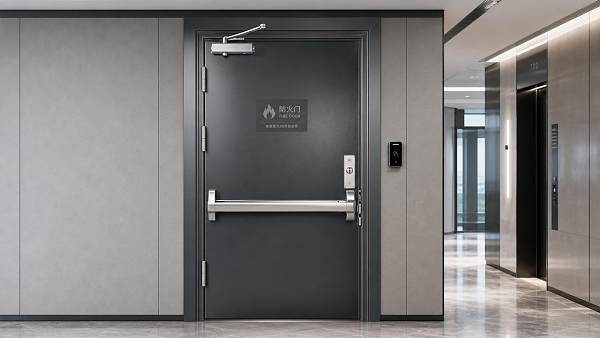
Most people think only about locks, but door security hardware standards cover a much wider system.
They typically include locksets, cylinders, exit devices, closers, hinges, strike plates, panic hardware, electrified components, and the door-frame assembly relationship.
In practice, standards answer several questions at once.
- Can the hardware withstand repeated use without premature failure?
- Does it support safe egress during an emergency?
- Will it maintain fire door integrity where required?
- Is the security grade suitable for the opening risk level?
- Can it work with access control, monitoring, or life-safety systems?
A common mistake is reviewing only one certificate and assuming the opening is compliant.
Real compliance usually depends on the whole assembly, not a single certified part.
For example, a graded lock on a non-matching fire door preparation may still fail the project requirement.
Which standards usually matter on commercial projects?
The exact list depends on country, building type, and authority requirements, but several standards appear repeatedly in specifications.
In North America, teams often review ANSI/BHMA grades, UL fire and panic listings, and code references tied to IBC, NFPA 80, and NFPA 101.
In Europe and export-driven projects, EN standards are more likely to shape the hardware schedule.
That may include EN 12209 for mechanically operated locks, EN 179 for emergency exit devices, EN 1125 for panic exit devices, and EN 1634 for fire resistance performance.
The point is not to memorize every document number.
The better approach is to understand what each standard is trying to prove.
This kind of matrix is more useful than looking at catalog claims in isolation.
It also helps align hardware decisions with broader physical security infrastructure, especially where doors connect with smart locks, turnstiles, or monitored restricted areas.
How do you know whether a hardware grade fits the opening?
A hardware grade is not a badge for marketing.
It is a performance indicator, and it only makes sense when tied to opening use.
A high-traffic hospital corridor, a tenant office entry, and a back-of-house service door do not impose the same demands.
More common evaluation factors include operating cycles, abuse exposure, forced-entry risk, fire-rating needs, and whether the opening is fail safe or fail secure.
When reviewing door security hardware standards, it helps to ask these questions before choosing a product family.
- Is this a perimeter door, an internal controlled opening, or an emergency exit?
- Will the opening face carts, wind load, user abuse, or constant cycling?
- Does the project require audit trail, electrified locking, or remote release?
- Will local inspectors expect listed panic hardware or fire door labels?
If these questions are answered late, substitutions become more likely.
That usually means redesign time, resubmittals, and sometimes frame or power transfer changes that affect several trades.
Where do commercial teams misread door security hardware standards?
One frequent misunderstanding is confusing “tested” with “approved for this opening.”
A component may be tested, yet still be wrong for the specific door type, frame prep, or fire assembly.
Another issue is assuming electrified hardware can be added later without design impact.
In reality, power supply planning, signal coordination, door position monitoring, and release logic should be checked from the start.
This is especially relevant in smart building environments, where mechanical hardware and digital control must behave as one system.
SHPS often frames this broader view well: physical protection is not only about lock strength, but also about integration readiness and compliance continuity.
Watch for these specification traps
- Mixing panic hardware requirements with non-compliant trim selections.
- Selecting cylinders with good security claims but weak compatibility with the lock body.
- Ignoring door closer sizing, which can compromise accessibility and latch reliability.
- Allowing field drilling on rated doors without checking listing restrictions.
- Treating decorative hardware as equivalent to commercial duty hardware.
These errors look small on paper, but they are expensive once finishes, wiring, and inspections are in motion.
What should be checked before procurement and installation?
This is the stage where door security hardware standards move from specification language to real risk control.
A useful review is not overly long, but it should be disciplined.
Instead of checking hardware item by item only, check opening by opening.
That keeps fire, egress, security, and access logic tied together.
This review becomes even more important where projects combine mechanical cylinders, biometric readers, electrified strikes, or monitored restricted zones.
The more connected the opening, the less room there is for vague hardware schedules.
Are smart and mechanical systems judged by different standards?
Yes, but they still have to work together on the same opening.
Mechanical components are often judged on durability, security resistance, and lifecycle function.
Smart components add another layer, including power management, communication reliability, release logic, credential security, and fail-state behavior.
That is why door security hardware standards should not be reviewed separately from access control architecture.
For example, a strong mechanical lock body can still underperform if the electric strike is misaligned or if emergency unlock logic is poorly defined.
In higher-security environments, that coordination becomes similar to other SHPS-tracked systems, where physical barriers, sensors, and control platforms are evaluated as one protective layer.
So the real question is not whether smart or mechanical is better.
It is whether the selected combination meets the opening’s code, threat profile, and operational routine.
What is the smartest next step if standards look unclear?
Start by building an opening-based checklist, not a product-only checklist.
Map each door to its function, rating, occupancy condition, locking method, and interface with alarms or access control.
Then compare that map against the required door security hardware standards and the submitted certifications.
If any opening depends on exceptions, custom modifications, or unclear substitutions, review it before materials are released.
That step usually saves more time than trying to solve conflicts during commissioning.
A reliable commercial hardware package is rarely the result of one strong product claim.
It comes from matching standards, listings, door conditions, and security intent at the opening level.
When that review is done early, door security hardware standards become a planning tool rather than a late-stage problem.
The practical move now is to verify the hardware schedule, confirm the code path, and flag any opening where fire, egress, and electronic control intersect.
That is usually where the biggest compliance and rework risks are hiding.
Recommended News
 Dubai Tightens Cybersecurity Clearance for Smart LockersUnmanned Terminal FellowDubai Tightens Cybersecurity Clearance for Smart Lockers: learn how Dubai’s new filing rule impacts imports, customs timing, costs, and compliance for connected refrigerated smart lockers.
 China Customs Ties Smart Lock Exports to FCC/CE IDsBiometric Auth ScientistChina Customs now ties smart lock exports to FCC/CE IDs and batch QR codes. Learn how this traceability rule may delay shipments and what exporters should check now.
 EU CE Rule Takes Effect for Smart Parcel LockersUnmanned Terminal FellowEU CE rule update for smart parcel lockers: learn how EN 15232-3 and EN 62471 now affect Outdoor Smart Parcel Lockers and Refrigerated Smart Lockers entering the EU.
 Physical Security Market Size in Europe: What Buyers and Investors Should WatchMr. Gideon CrossPhysical security market size Europe is reshaping buyer and investor decisions. Discover where growth, compliance, and high-value security segments create the strongest opportunities.
 When to Use a Security Material Testing Service for Compliance and QADr. Valerius ThorneSecurity material testing service: learn when third-party testing is essential for compliance, QA, and risk control across locks, safes, doors, and parcel lockers.
 What Affects Anti-Burglary Materials Price in Certified Security Door Projects?Dr. Valerius ThorneAnti-burglary materials price depends on certification class, material layers, sourcing, and factory consistency. Learn how to compare quotes and avoid costly security door mistakes.
 Mobile Access Control Management: Key Features to Check Before DeploymentBiometric Auth ScientistMobile access control management: discover the key security, integration, offline, and compliance features to review before deployment for a safer, smoother rollout.
 How to Evaluate Advanced Locking Mechanisms for High-Security DoorsSecurity Metallurgy ExpertAdvanced locking mechanisms for high-security doors: learn how to assess attack resistance, authentication, durability, and system fit to choose safer, smarter protection.
 Certified Smart Parcel Lockers Reach UAE and ChileUnmanned Terminal FellowCertified Smart Parcel Lockers reach the UAE and Chile with GCC and Chile SEC certification, showing how compliance-ready exports can speed market entry and overseas deployment.
 FCC Adds SAR and EMC Tests for Biometric Smart LocksBiometric Auth ScientistFCC adds SAR and EMC tests for biometric smart locks from Sept. 1, 2026. Learn how the update impacts certification, export timelines, costs, and U.S. market entry.
 Commercial Entry Security Cost: Budgeting Doors, Credentials, Installation, and MaintenanceAccess Control StrategistCommercial entry security cost explained: learn how to budget doors, credentials, installation, integration, and maintenance to avoid hidden expenses and choose a smarter, scalable system.
 What Affects Secure Storage Solutions Cost? A Breakdown by Size, Rating, and FeaturesVault Structural ArchitectSecure storage solutions cost depends on more than size. Learn how ratings, locks, features, installation, and hidden lifecycle costs affect value before you buy.