UL 2050 Edition 5 Tightens Safe Security Requirements
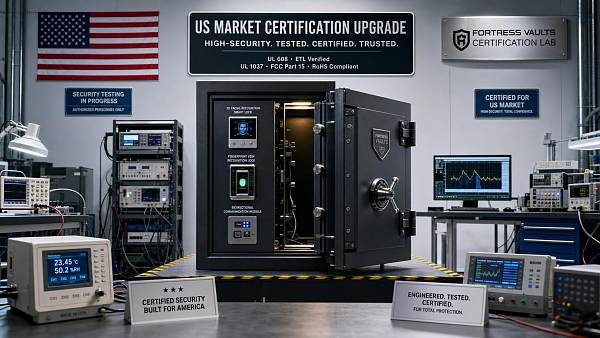
UL Solutions announced a revision to UL 2050 Edition 5 on June 16, 2026, with mandatory enforcement starting December 1, 2026. The update matters to manufacturers, exporters, certification teams, procurement functions, and project delivery participants involved in Jewelry/Gun Safes, Modular Vaults & Doors, and High-security Safes, because it turns two security features into hard compliance conditions: a certified remote duress alarm interface and independently verified liveness performance for certain biometric lock modules.
What the revised UL 2050 now requires
According to the provided event summary, UL Solutions released the UL 2050 Edition 5 revision notice on June 16, 2026, and the new requirements become mandatory on December 1, 2026.
The update applies to product categories including Jewelry/Gun Safes, Modular Vaults & Doors, and High-security Safes.
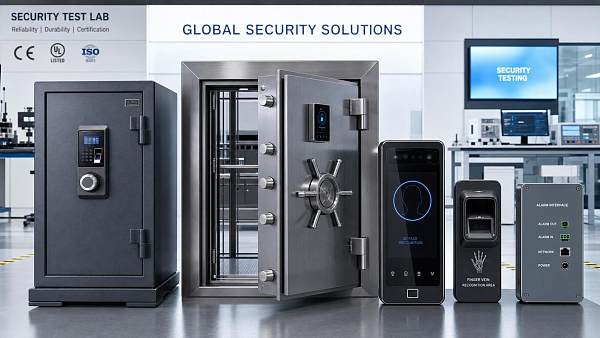
The revised requirements state that these products must integrate a certified remote duress alarm interface. The same update also sets an independent verification requirement for the liveness detection rejection rate of Finger Vein Locks or 3D Facial Smart Locks modules, with RRR required to be no higher than 0.1%.
The provided information also states that this change will affect the system-level certification strategy and module selection of Chinese exporters of high-security hardware.
Where the pressure is likely to appear first
System design and product configuration decisions
From an industry perspective, manufacturers of covered safes and vault products may be affected first because the new rule is not limited to a single component. The requirement for a certified remote duress alarm interface points to a system-level integration issue, which means product architecture, interface compatibility, and certification alignment may all need review before shipment or listing plans proceed.
Export documentation and certification coordination
Export-oriented businesses may need to pay closer attention to how product files, certification materials, and module validation records are organized. Analysis shows that when a standard revision adds both interface and biometric verification conditions, the compliance burden can shift from a simple hardware declaration to a broader package of technical documents, test evidence, and certification coordination.
Procurement and module sourcing choices
Procurement teams and supply chain participants may also face a more practical change: lock-module selection is no longer only a feature or cost question. Where Finger Vein Locks or 3D Facial Smart Locks are used, the independently verified RRR threshold becomes a sourcing consideration. What deserves closer attention is whether selected modules can support the required compliance path without creating delays in certification or delivery.
Testing and conformity service workflows
Certification-related companies and testing service providers may see more review work around interface compliance and biometric module evidence. Observably, the rule change may require closer matching between the finished product certification route and the underlying module verification route, especially where exporters are combining multiple suppliers into one final product configuration.
Practical points companies should track now
Review whether current models match the new certification path
Analysis shows that companies with affected product lines should first check whether existing models already include a certified remote duress alarm interface and whether that interface is aligned with the certification strategy for the complete product, not only for a standalone component.
Recheck biometric module evidence before locking procurement plans
Where Finger Vein Locks or 3D Facial Smart Locks are part of the design, businesses should pay attention to whether independent verification materials for liveness detection and the stated RRR threshold are available in forms usable for certification review, customer technical files, or tender documentation. The provided information does not describe the detailed acceptance format, so this remains a point to monitor rather than a settled execution outcome.
Prepare for possible changes in bid, delivery, and handover documents
For exporters and project suppliers, it is reasonable to watch whether technical specifications, compliance checklists, and handover documentation need updating before the December 1, 2026 enforcement date. This is especially relevant where product delivery depends on pre-approved configurations or customer-side compliance review.
Track implementation language rather than assuming uniform practice
Because the input provides the headline requirements but not the full execution detail, companies should continue to monitor the wording used in certification communication, customer requirements, and related technical review materials. It is more appropriate to understand this stage as a compliance transition period with clear direction, but with execution details still requiring verification.
How this update should be read at this stage
Observably, this is more than a routine wording revision because it turns specific security and biometric performance conditions into mandatory requirements with an enforcement date. At the same time, analysis shows it should not be treated as a complete picture of every downstream execution detail. The strongest current signal is that affected products will need closer coordination between system integration, certified interfaces, and biometric module evidence.
From an industry perspective, the update is best understood as an implemented compliance signal rather than a distant policy discussion, since a mandatory date has already been given. What still needs continued observation is how certification interpretation, customer technical requirements, and market-side acceptance practices develop around that signal.
What this means for the market in the near term
In practical terms, the UL 2050 Edition 5 revision raises the compliance threshold for certain high-security safes and vault-related products by linking system alarm capability and biometric liveness performance more directly to market access. For affected companies, the immediate issue is less about broad market prediction and more about checking product configurations, certification planning, module sourcing, and delivery documentation against the new rule.
It is more appropriate to understand this development as a confirmed rule change with direct operational implications, while the finer points of implementation and market response still warrant continued observation.
Basis of this article and what still needs verification
This article is based on the user-provided title, event date, and event summary. For developments of this type, commonly relevant source categories may include official notices, regulator publications, trade or customs authority information, industry association releases, standards organization documents, and reporting by authoritative media.
No specific official source link was provided in the input, so the exact official link remains to be verified. Continued follow-up is still needed on detailed implementation language, certification interpretation, tender document changes, industry feedback, and how companies execute the new requirements in practice.
Recommended News
 Smart Refrigerated Locker Launch Signals Lower-Volume B2B DemandUnmanned Terminal FellowSmart Refrigerated Locker launch highlights lower-volume B2B demand with low MOQ, multi-temperature customization, and integration-ready features for cold-chain, pharmacy, and fresh e-commerce buyers.
 Refrigerated Locker Report Signals New Audit BenchmarksUnmanned Terminal FellowRefrigerated Locker Report highlights new audit benchmarks for cold-chain suppliers, covering 2°C–8°C control, audit trails, and 72-hour insulation—key insights for compliance, certification, and export readiness.
 Huawei Sets Wi-Fi 7 Royalty at $0.50 per DeviceUnmanned Terminal FellowHuawei Sets Wi-Fi 7 Royalty at $0.50 per Device. Learn how this global export licensing update could impact Wi-Fi 7 costs, OEM/ODM pricing, and CE/FCC compliance planning.
 How to Evaluate a Hotel Lock Systems Supplier for Renovation and New Build ProjectsBiometric Auth ScientistHotel lock systems supplier evaluation for renovations and new builds: learn how to compare compatibility, compliance, integration, service, and total cost before you choose.
 Anti-Theft Lock Technology Price: What Drives Cost in Commercial Access Systems?Dr. Valerius ThorneAnti-theft lock technology price explained: learn what drives cost in commercial access systems, from security levels and certifications to integration, uptime, and lifecycle value.
 Last-Mile Delivery Security Systems for Multifamily Buildings: Common Risks and FixesUnmanned Terminal FellowLast-mile delivery security systems for multifamily buildings: discover common risks, smart fixes, and practical ways to reduce theft, improve access control, and boost resident trust.
 Outdoor Parcel Locker Cabinets: Key Materials, IP Ratings, and Anti-Vandal Features ExplainedUnmanned Terminal FellowOutdoor parcel locker cabinets explained: compare materials, IP ratings, and anti-vandal features to choose durable, secure units that reduce maintenance and improve uptime.
 How to Choose Outdoor Smart Parcel Lockers for Apartments, Campuses, and Retail SitesUnmanned Terminal FellowOutdoor smart parcel lockers: learn how to choose secure, weather-resistant systems for apartments, campuses, and retail sites to improve delivery safety, efficiency, and user experience.
 UL 2050 Fifth Edition Raises Safe Certification BarBiometric Auth ScientistUL 2050 Fifth Edition raises the certification bar for safes with new biometric locks and remote duress alarm requirements. See how it impacts U.S. exports, sourcing, and compliance planning.
 EN 1303:2026 Now Mandatory for EU Lock ExportsSecurity Metallurgy ExpertEN 1303:2026 is now mandatory for EU lock exports. Learn how Anti-picking Lock Cylinders, Multi-point Lock Bodies, and Networked Hotel Locks can stay compliant and avoid delisting.
 Vietnam Enforces QCVN 17:2026 Locker RulesUnmanned Terminal FellowVietnam Enforces QCVN 17:2026 Locker Rules: learn how IP55, 85°C aging, 72-hour backup power, and VSTC testing now affect customs clearance, sales access, and export planning.
 Access Control Systems Standards: Key Compliance Requirements for Specifying Secure EntryDr. Valerius ThorneAccess control systems standards guide secure entry from design to operation. Learn key compliance checks, reduce risk, and specify safer, smarter systems with confidence.