EU CE Rule Adds New Smart Lock Tests
On June 13, 2026, the Official Journal of the European Union (OJEU) published the revised EN 14846:2026 standard, with effect from July 1, 2026 for certain smart lock products entering the EU market. The change matters because Networked Hotel Locks, Finger Vein Locks, and 3D Facial Smart Locks now face added CE certification requirements tied to anti-coercion access and multimodal liveness detection, which directly affects certification readiness, export clearance, sales timing, procurement screening, and delivery planning across the supply chain.
What the revised EN 14846:2026 now requires
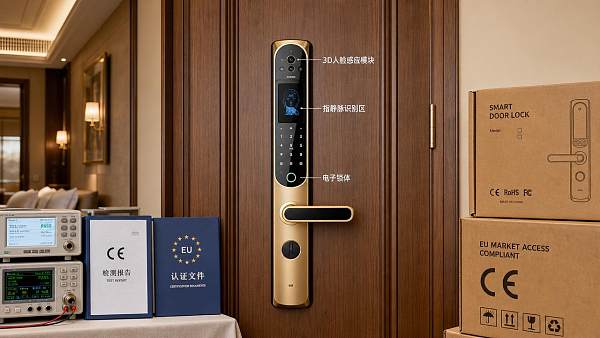
The confirmed change is limited but operationally significant. According to the event summary, the revised EN 14846:2026 was published in the OJEU on June 13, 2026. From July 1, 2026, all Networked Hotel Locks, Finger Vein Locks, and 3D Facial Smart Locks intended for the EU market must pass two newly added mandatory tests: anti-coercion access and multimodal liveness detection based on IR, 3D depth, and pulse. Products that do not obtain an updated CE certificate under the revised standard will be barred from customs clearance and sale.
Where the pressure is likely to appear first
Export shipments face a direct compliance gate
From an industry perspective, exporters and direct trading companies are likely to feel the impact immediately because the rule change is tied not only to market access but also to customs clearance. This means the practical focus shifts to whether product files, certification status, and shipment documentation are aligned with the revised EN 14846:2026 requirements before goods move.
Manufacturers may need to revisit test readiness
For manufacturers of the listed lock categories, the main issue is not only product design but testability under the new CE pathway. Analysis shows that the added anti-coercion access and multimodal liveness detection requirements may affect technical documentation, product validation schedules, and handoff timing between development, compliance, and export teams. What deserves closer attention is whether products currently in production or close to shipment are supported by certification materials that match the revised standard.
Procurement and channel decisions may tighten
Buyers, distributors, and channel partners serving the EU market are also likely to adjust their screening criteria. The reason is straightforward: a product without the updated CE certificate cannot be cleared or sold. Observably, this can move compliance review earlier in the procurement cycle, including checks on certificate version, test coverage, supporting reports, and supplier qualification status before orders are confirmed or delivery slots are reserved.
Testing and certification services move closer to transaction timing
Certification-related firms and testing service providers may become more directly involved in delivery schedules and market-entry decisions. The immediate concern is whether the new mandatory tests are reflected consistently in application materials, technical files, and certificate review workflows. For companies relying on third-party testing support, this raises the importance of confirming scope, timing, and document completeness before export commitments are made.
What companies should review now
Check whether affected product lines are in scope
Companies selling into the EU should first confirm whether any current or planned products fall within the listed categories: Networked Hotel Locks, Finger Vein Locks, and 3D Facial Smart Locks. Analysis shows this is the starting point for deciding whether certification, shipment, and sales plans need immediate adjustment.
Reconcile certificates and technical files against the new tests
What deserves closer attention is whether existing CE documentation already reflects the newly required anti-coercion access and multimodal liveness detection tests. If the available documentation predates the revised requirement, companies should closely review certificates, test reports, technical files, and product compliance statements for alignment with EN 14846:2026 as revised.
Reassess delivery commitments and purchasing schedules
Observably, the July 1, 2026 effective date makes delivery planning a practical issue, not just a compliance issue. Exporters, suppliers, and procurement teams may need to review order timing, shipment readiness, contract milestones, and receiving requirements where products are intended for EU customs clearance and sale. The event summary does not provide execution details beyond the mandatory certification condition, so companies should treat timetable impacts as a risk area requiring case-by-case review.
Watch for changes in tender language and after-sales documentation
From an industry perspective, companies should also monitor whether customer specifications, tender documents, product declarations, and after-sales support materials begin referencing the revised test items more explicitly. The current information confirms the new testing requirement, but it does not define how every downstream commercial document will be updated in practice.
Why this looks like an execution signal, not a distant policy discussion
Analysis shows this development is better understood as a near-term market-access requirement rather than a general standards update with a long observation window. The reason is that the event summary ties the revised standard to a clear effective date and to concrete consequences for customs clearance and sale. At the same time, it remains appropriate to keep watching how certification interpretation, document expectations, and buyer-side implementation develop in practice, because those operational details are not fully described in the provided information.
How to read the change at this stage
At this stage, the most balanced reading is that the revised EN 14846:2026 creates an immediate compliance checkpoint for specific smart lock categories entering the EU market. It is more appropriate to understand this as a rule already moving into execution, while still recognizing that market participants need to keep tracking certification practice, procurement wording, and transaction-level implementation before drawing broader conclusions about longer-term commercial impact.
Basis of this article and points still requiring verification
This article is based on the user-provided news title, event date, and event summary. For developments of this kind, relevant source types typically include official notices, regulator publications, customs or trade authority updates, industry association releases, standard-setting documents, and reporting by authoritative media. No specific official source link was provided in the input, so the exact official link still needs to be verified. It also remains necessary to monitor any later clarification on certification interpretation, enforcement approach, tender wording, industry feedback, and company-level implementation.
Recommended News
 Outdoor Parcel Locker Installation Cost: Budgeting for Site, Power, and Network WorkUnmanned Terminal FellowOutdoor parcel locker installation cost explained: budget smarter for site preparation, power, network, delivery, and commissioning to avoid costly surprises.
 How to Evaluate Secure Storage Solutions for High-Value Assets and Controlled AccessVault Structural ArchitectSecure storage solutions: learn how to assess physical protection, controlled access, audit trails, reliability, and supplier evidence for high-value assets.
 Security System Integration Services: What Multi-Site Facility Projects Need to SpecifyUnmanned Terminal FellowSecurity system integration services for multi-site facilities: specify workflows, data ownership, resilience, cybersecurity, and testing for reliable operations.
 How to Specify Smart Mortise Lock Bodies for High-Traffic Access DoorsSecurity Metallurgy ExpertSmart mortise lock bodies for high-traffic doors: learn how to specify durable, secure, code-aware solutions for reliable access, egress, and long-term performance.
 Industrial Explosion-Proof Safe Testing: Standards, Methods, and Acceptance CriteriaVault Structural ArchitectIndustrial explosion proof safe testing guide covering standards, ignition-risk methods, certification checks, and acceptance criteria for compliant hazardous-area installations.
 How to Evaluate Near-Infrared Vein Recognition Scanners for Secure Access ControlBiometric Auth ScientistNear-infrared vein recognition scanner evaluation guide: compare accuracy, liveness detection, secure integration, and real-world reliability for access control.
 How to Choose Mortise Lock Bodies for Door Type, Backset, and Security NeedsSecurity Metallurgy ExpertMortise lock bodies guide: match door type, backset, cylinder, handing, fire ratings, and security needs for reliable installation and smarter lock selection.
 How to Choose Physical Security Systems for Banks: A Practical Buyer’s GuideDr. Valerius ThornePhysical security systems for banks: learn how to assess risk zones, choose tested barriers, define access rules, and build resilient, compliant protection.
 How to Select Outdoor Unmanned Logistics Terminals for 24/7 Delivery SitesUnmanned Terminal FellowOutdoor unmanned logistics terminals: learn how to select durable, secure, connected solutions for reliable 24/7 parcel delivery, lower downtime, and better lifecycle value.
 How to Choose Anti-Tailgating Speed Gates for High-Traffic Building EntrancesAccess Control StrategistChoose anti-tailgating speed gates with confidence. Compare real throughput, detection accuracy, safety, integration, and lifecycle value for high-traffic entrances.
 How to Select Office Security Turnstiles for High-Traffic Corporate EntrancesAccess Control StrategistOffice security turnstiles for high-traffic corporate entrances: compare barriers, throughput, access integration, tailgating control, and emergency egress.
 How Touchless Visitor Flow Management Improves Access at High-Traffic FacilitiesAccess Control StrategistTouchless visitor flow management helps high-traffic facilities reduce queues, strengthen security, streamline access, and manage exceptions with confidence.